Jincheng-待加图片
( chinadaily.com.cn )
Updated: 2012-11-16
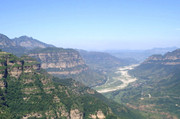
The city of Jincheng is located in the southeastern part of Shanxi province, with the Henan provincial border to the east and south and the city of Changzhi to the north. Mountains and hills are a major part of the city, with the mountainous area mainly in western, eastern, and southern parts, and undulating hills laced with basins in the northern and central parts.
Jincheng has a long history. It’s where the mythical Shennong, the god who invented farming helped the ancestors of modern-day Chinese make the transition from a pastoral-nomadic life to farming. It’s also where Nuewa, a goddess, made a patch-work in the sky of huge colorful stones, and where the state of Qin destroyed the state of Zhao during the Warring States period (dates) and unified China. It also has a great many historical relics and a long cultural history.
In addition to that rich history, the city is known for its high-quality anthracite. It contains a quarter of China’s total anthracite reserves. The anthracite is smokeless and odorless when burning and was once chosen by British Royalty as a heating source. The coal is also good for chemical materials and sells well at home and abroad.
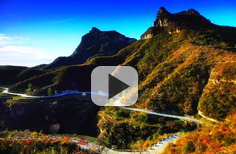
Jincheng has a unique geographic location with some marvelous scenery, such as Qizi Mountain, the reputed home of the game of Go game; Wangmang Ridge, the largest virgin forest in northwestern China; and Baiyun carve, the largest karst carve in northern China.
Attractions: Manghe Macque National Nature Reserve: This is located in Yangcheng county, and was established for the express purpose of protecting the macaque monkeys and subtropical vegetation.
Jade Emperor Temple: This is a Taoist site famed for the 28 tutelary gods of the 28 constellations of Taoism.
Dai Temple: This is the earliest theatrical stage from the Jin Dynasty (1115-1234).
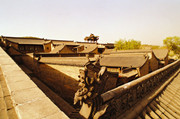
House of the Huangcheng Chancellor: This residence of Prime Minister Chen Jingting was once visited by the Kangxi emperor of the Qing Dynasty (AD1644-1911). It is a complex of buildings with a more than 500-year history and a great number of Chen's works and the emperor's calligraphy.
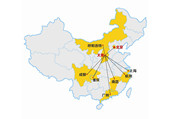
Getting there: Jincheng is a five-hour ride from Taiyuan, the capital of Shanxi province and only 120 kilometers (75 miles) from the city of Zhengzhou, by expressway. Because of the distance to Taiyuan and the smaller number of flights to Changzhi, visitors often choose Zhengzhou as the transfer stop on the way to Jincheng.
Climate: Jincheng has abundant sunshine and annual average temperatures of 10 C (50 F).
Souvenirs: Hua Gu (a type of Chinese mushroom) and the monkey-head mushroom of Qinshui county, as well as pears, persimmons, and hawthorn fruit.
Administrative arrangement: 1 urban district, 4 counties (Zezhou, Qinshui, Yangcheng, Lingchuan), and 1 county-level city (Gaoping)
Useful phone Numbers:
Tourist complaints: 0356-2057555
Weather forecast: 121
Zip code inquiry: 184
Bank of China: 0356-2022329