Xinzhou: A sacred land of kind people and uplifting sights (待修改)
By Wang Junjing ( China Daily )
Updated: 2010-05-06
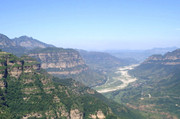
Xinzhou in Shanxi province is located in the Loess Plateau through which flows the Yellow River. The highland not only nurtures people known for being kind and diligent, but is also famous for its unique natural beauty and unparalleled cultural heritage.
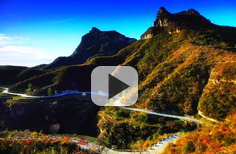
One of its top attractions is Wutai Mountain, a popular summer resort and a Buddhist holy mountain, home to many of the country's most famous temples. The mountain draws huge crowds in the summer, the peak season for visitors.
To maintain their sanctity, the selling of souvenirs and Buddhist artifacts is restricted to outside the temples.
If lucky, you may even catch sight of yuan guang, a special ring-like rainbow that appears on sunny days above the mountain. What makes it more fascinating is that you can see reflections of animals, temples, Buddhas, and even yourselves, in the ring. This mysterious phenomenon is considered one of "the treasures of Wutai Mountain".
While the landscape of Xinzhou is a feast for the eyes, its many local delicacies are bound to tease your palate. Taimo, mountain mushrooms, are a mouth-watering treat, either simply fried or stewed with chicken, and they are available at most local restaurants.
Xinzhou's quiet ambience and beautiful landscape make it a perfect long-weekend getaway, and a range of accommodation - from hotels to homestays - is available.
Another place of interest is the home of Diaochan, one of the Four Beauties of ancient China.
According to local legend, the peach trees in this village stopped blossoming three years before Diaochan's birth during the Han Dynasty (206 BC-AD 220), in deference to her beauty.
Xinzhou's Yuwang (King Yu) cavern gets its name from Dayu, the first ruler and founder of China's first dynasty, Xia Dynasty (c. 21st century-16th century BC).
The mountain where Yuwang cavern is located is called Jizhou, which means fastening a boat. It is believed that Dayu anchored his boat near this mountain to fight the Yellow River floods. Nobody knows how deep the cavern is, but everybody who has been here talks of how mysterious and beautiful it is.
Numerous animal and plant species can be found here, besides many uniquely shaped rocks.
Known as "Home of wrestling" and "Sea of Folk Songs", Xinzhou's annual Wrestling Festival in September, is another big tourist draw.
Errentai, a kind of folk song, are familiar to many here, especially the elderly.
Mount Wutai
Mount Wutai is among the top four famous Buddhist Mountains. The five peaks of the mountain are quite flat on top, and therefore the mountain was named Wutai, which means five platforms. You can have a glimpse of the gorgeous natural sceneries here from the names for the five peaks. The east peak is called “ Wanghai Peak”, which means to enjoy the beautiful sea views while the west one is named “ Wangyue Peak”, which means to appreciate the clear and bright moonlight. The south peak has its name as “Jinxiu Peak”, which means have a panoramic view of splendid sceneries here and the north peak is called “Yedou Pea”, which means the leaves here are luxuriantly green. The central peak, the highest one with the altitude of 3061.1m, is “Cuiyan Peak”, which means the rocks here have a color of emerald green. Quite interesting, isn’t it? As you climb higher and higher to the mountain top, the temperature becomes lower and lower, and therefore it is a great place to avoid hot summers.
Guancen Mountain National Forest Park
Situated in the Dongzhai village in Shanxi province, the Guancen Mountain National Forest Park occupies an area of 3.3 million hectors and half of the area is covered with forest. There are abundant resources of plants and animals in the park including various kind of national first class protected animals: leopards, sika deers, golden eagles, to name a few and green food such as forest mushrooms. Besides, you will be fascinated by the strange peaks, clear springs and limpid lakes here.
Yanmen Pass Yanmen Pass, also known as Xijin Pass, is among the top 3 Passes in China and was classified as one of the national level historical sites by the State Council in 2001. It was built on the Yanmen Ridge, which is only a small part of the Mount Heng. The lofty and winding Mount Heng stretches north to the Yanbei Plateau and south to the Xinding Basin and the great wall on it is just like a line of jewelry inlayed on a jade belt. Although the pass is only a small point in the great wall, it plays quite a vital role in defending against invaders in ancient China.
Yuwang Cave
Yuwang Cave, also known as Xianren Cave got its name from the stone figure, which resembles Yu emperor very much. Although about 7000m has been exploited, it still remains unknown how deep the cave really is and for its feature of bottomless, the cave is rated as top karst cave in central China. Along the winding cave, you will find colorful rocks in strange shapes, the suppressingly beautiful crystal palace and the fairy bridge from where you may see the Arcadia sceneries. Outside the cave, you can enjoy the lofty mountains with green forest, fragrant flowers and singing birds. The mountain here is a good place for exploration. Facilitated with the well-designed cableway, you can have a adventurous trip in the sky from Yuwang Cave to the South Moutain. The forest park is rich in animal species and plant types and therefore can display different sceneries all the year round.
Getting there:
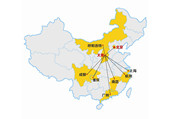
Transportation in Xinzhou is convenient. Taiyuan is only 75 kilometers (47 miles) from the city and can be reached in thirty minutes. With the construction of an expressway network around this area, only two to four hours are needed from Xinzhou to Beijing, Tianjin, Tangshan and many other cities in Hebei province.
Visitors can take a bus from Taiyuan Bus Station and Taiyuan Railway Station directly to Wutai Mountain, a trip of three hours. Xinzhou city proper is about two hours' drive to the mountain. During the sixth to the seventh lunar month, high season to travel to Wutai Mountain, towns and counties around the mountain will open tourist bus lines.