|
Poland, Tibet to boost cultural exchange
Scholars from Poland and China's Tibet autonomous region on Wednesday expressed the wish to boost cultural exchange projects. |
|
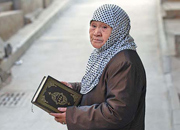
Mosques give women a major say
Only China has women's mosques and this phenomenon offers a special place for religious worship. |
|
Young living Buddha grows up amid intense expectations
Although this is his third time to attend China's most important political event, the 11th Panchen Lama still draws attention from his fellow political advisors |
|
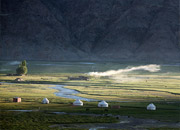
Experiencing Xinjiang (III)
Experiencing Xinjiang Uygur autonomous region. |
|
Experiencing Xinjiang (I)
Experiencing Xinjiang Uygur autonomous region. |
|
Women's art show opens in Xinjiang
The 2nd Xinjiang Contemporary Women Arts Exhibition in Urumqi, capital of Northwest Xinjiang Uygur autonomous region, Mar 6,2011. |
|
First free cyber bar opens in Tibet
The first public "green cyber bar" in Tibet autonomous region was recently opened in Dargye Village, Taktse of Nyingchi Prefecture. It has quickly become a hot topic among neighboring villages. |
|
Tibetan Culture Museum opens in Beijing
The opening ceremony is taking place in Beijing Sunday for China's Tibetan Culture Museum, which will showcase traditional Tibetan Culture and History. |
|
Tibetan Culture Museum, entrance of Tibetan culture
An opening ceremony for Tibetan Culture Museum of China Tibetology Research Center & "Snowy Land Treasure" was kicked off in Beijing, capital of China on March 28 marking the 51st anniversary of democratic reform in the Tibet Autonomous Region. |
|
Ethnic handicraft shines
Dubbed as "the Thangka county", the Sagya county of Xigaze prefecture has developed Thangka industry with the boom of tourism and the Sayga Tourism Development Co., Ltd engaged in Thangka has been established. |
|
Tibetan folk and tourists dance in Shangrila
|
|
Ethnic Yi people sacrifice to 'fire god' in Yunnan
An ethnic Yi man and a Russian tourist jump over a fire during a sacrificing ceremony in Honghe autonomous prefecture in Yunnan province on March 18. |
|
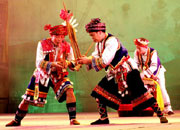
Culture festival celebrated in SW Yunnan
Ethnic dancers perform on stage during a Nanshou Culture Festival in Weishan county, Yunnan province on March 23, 2010. Over 310,000 ethnic people joined in the pageant. |
|
People celebrate Eid al-Fitr in China
People celebrate Eid al-Fitr in China |
|
Cidan Duoji: teach Tibetan Opera until the last moment
The 600-year-old Tibetan Opera has stayed intact from globalization and has been protected and developed well thanks to the substantial support from the government, a leading Tibetan Opera master told China Daily during an exclusive interview. |