



From poison to wonder cure
Hong kong's first homegrown anti-cancer drug has saved hundreds of lives. Shadow Li talks to Professor kwong Yok-lam about his 30-year journey to develop the treatment.









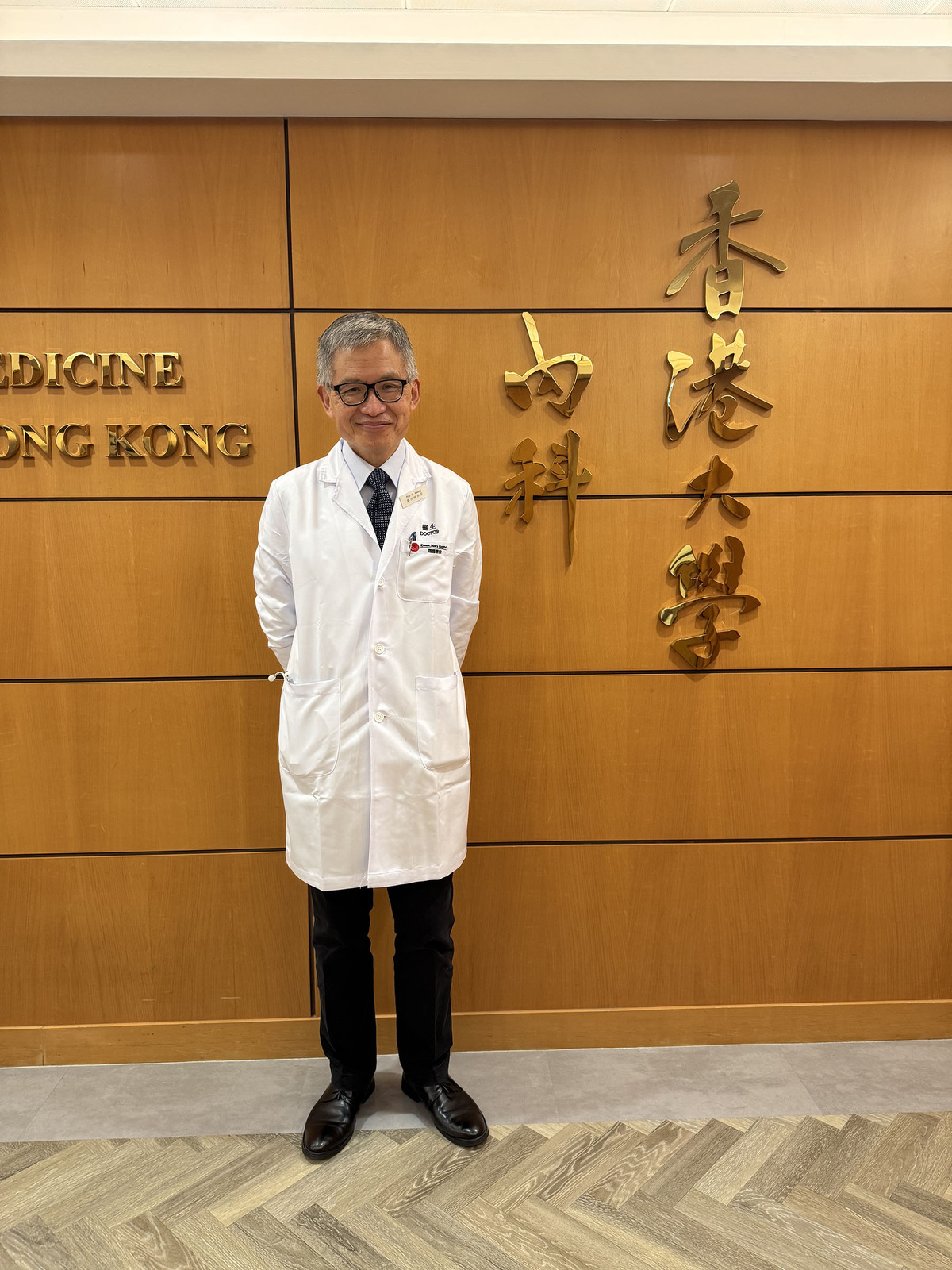
Editor's note: The future belongs to those who dare to shape it. In this series, China Daily highlights the bold thinkers and doers transforming industries and breaking barriers. Meet Kwong Yok-lam, an eminent Hong Kong hematologist known for developing oral-ATO, the city's first homegrown anticancer drug derived from arsenic trioxide.
A pale-faced patient battling with leukemia flew from the Philippines to Hong Kong in search of a cure for the deadly blood cancer disease. He owes his life to eminent Hong Kong hematologist, Professor Kwong Yok-lam who miraculously saved him with a prescription of arsenic trioxide — a newly-developed drug for acute promyelocytic leukemia, a once incurable disease.
Blood results had shown that his level of hemoglobin — a protein that reflects the amount of red blood cells in the body — was extremely low, just one-third that of a normal healthy person, warranting immediate medical treatment.
Professor Kwong recalls how the patient pleaded with him, gasping with a trembling voice, and said: "I had spent all I had borrowed for a return air ticket to come and see you. I had to catch a plane back to the Philippines right away as I don't even have enough money to spend a night in Hong Kong."
The man's plight moved Kwong who immediately prescribed him with a month's oral formulation of arsenic trioxide, or oral-ATO; ARSENOL®. Within a month, the patient's health had dramatically improved and, by the following month, he had almost fully recovered.
Patients' hope
Oral-ATO is Hong Kong's first homegrown prescription anti-cancer drug. In February last year, it obtained orphan drug designation from the United States Food and Drug Administration and the European Medicines Agency, as well as an investigational new drug designation from the FDA, becoming Hong Kong's first self-developed drug to receive such recognition and marking a significant step towards wider global adoption.
Three decades of perseverance in developing the wonder drug had paid off for Kwong, who helms the hematology, oncology and bone marrow transplantation unit at the Department of Medicine, School of Clinical Medicine, the University of Hong Kong, and his team.
In 1997, Kwong, then a young doctor, had read an international paper by a Chinese mainland medical team about arsenic trioxide's success against acute promyelocytic leukemia. Intrigued, he raised it with his mentor who then revealed a local medical archive — Hong Kong had, in fact, used an oral arsenic trioxide formula for the disease in the 1950s with exceptional results. "We had very few drugs for leukemia then," Kwong recalls. "One of them was oral arsenic trioxide, and it worked powerfully against cancer cells."
However, the drug, which was once produced at Queen Mary Hospital where Kwong worked, had been lost. This drove him to reinvent an oral formulation. While clinics on the mainland had administered arsenic trioxide intravenously, Kwong wanted to do his best for patients with an oral version that would spare them the emotional and financial strain of having to be hospitalized for two weeks.
He sought samples from the mainland and, as a meticulous scientist, he wanted to see the effects firsthand. Carefully kept in a bubble wrap, the sealed glass container with the samples was nearly intact as a token and living embodiment of the start of a three-decade journey. He would bring it with him every time he met with the media.
With a precise dose, the efficacy of arsenic trioxide — a toxic compound — had been proven, having been successfully applied to leukemia patients. But, in the long run, relying on the mainland for supplies of the drug wouldn't be sustainable, considering the not-well-established infrastructure and difficulties in cross-boundary logistics at the time. Moreover, Hong Kong had then lost its technology and formula for the oral formulation.
Kwong knew that a local solution was essential. "Without it, my hands would be tied in treating my patients," he says. With the help of another pharmacology professor, Kwong spent nearly three years pulling it off. Despite a demanding schedule of treating patients and teaching, he devoted his spare time to developing the drug. With Hong Kong having virtually no pharmaceutical industry then, Queen Mary Hospital had to produce it itself. By 2001, an oral arsenic trioxide formulation was available again as an in-house preparation.
Hong Kong records 25 to 30 new cases of acute promyelocytic leukemia each year. With oral-ATO, newly diagnosed patients can expect an overall survival rate of 97 percent, compared with an up to 30-percent fatality rate using traditional therapies. As of February last year, more than 430 patients had received oral-ATO treatment, with 90 percent of them cured.


- AI-enhanced weather forecasting boosts disaster preparedness in China
- China's wheelchair racing team makes adjustments as Asian Para Games preparations ramp up
- Mainland criticizes Taiwan's actions against fishing vessels near Dongsha Islands
- Mainland imposes sanctions on companies tied to Taiwan separatists
- Intl journalists' hat journey in Nantong
- Teachers and students in conversation: The Global Center for Women's Capacity Building





