



Newly declassified archives add evidence to Japan's wartime crimes against China









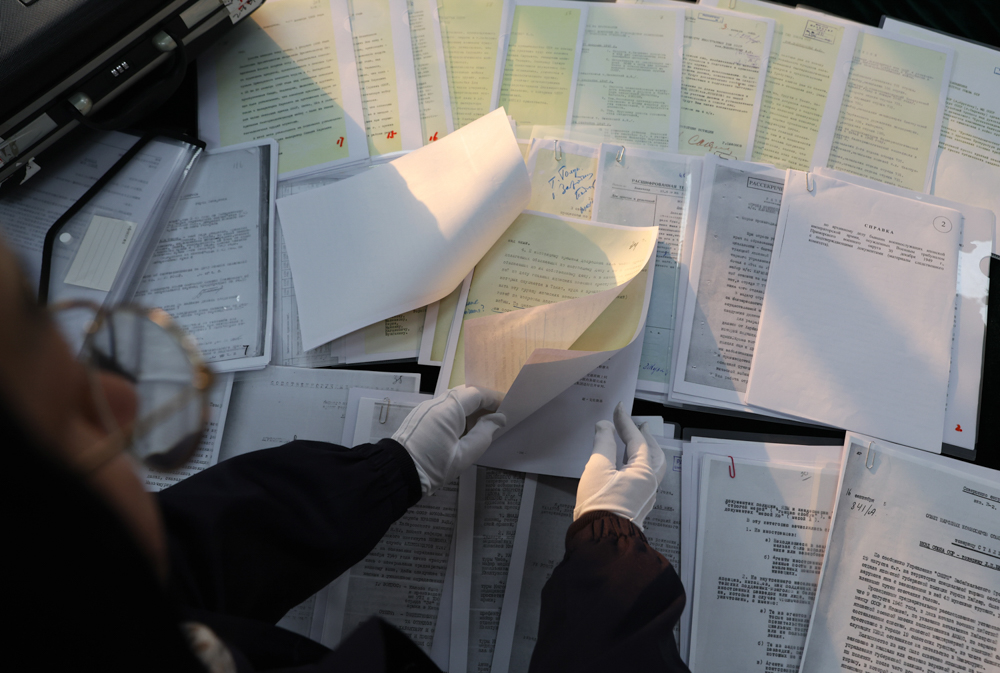
The archives revealed that the cultivation of pathogenic bacteria by Unit 731 of the invading Japanese army was not for the production of vaccines, but for the mass destruction of human life.
The forensic conclusion reached by Soviet Union's experts in medicine, microbiology and parasitology through comprehensive analysis stated that "the (cultivation) process concluded with the production of live, active, toxic bacteria, which were then deliberately used to infect large populations. In contrast, when manufacturing vaccines, these toxic bacteria must be killed."
Moreover, the archives showed that Unit 731 conducted three bacteriological warfare operations outside Northeast China. These included air-dropping fleas carrying plague bacteria in Ningbo, Zhejiang province, in 1940, and in Changde, Hunan province, in 1941, and contaminating reservoirs, rivers, ponds and fields with deadly bacteria along the Zhejiang-Jiangxi Railway in 1942.


- China Coast Guard condemns Philippine resupply mission in South China Sea
- Giant flower basket draws crowds at Tian'anmen Square
- Experts: SEZs serve critical role in preparedness, trade, and innovation
- Technological innovation empowers XPCC's leading agricultural production
- New high-speed rail section to link Xiong'an, Shangqiu
- Chinese doctors perform first ENT surgery in a flying hospital in Kyrgyzstan





