



Folk song journey event attracts tourists to library









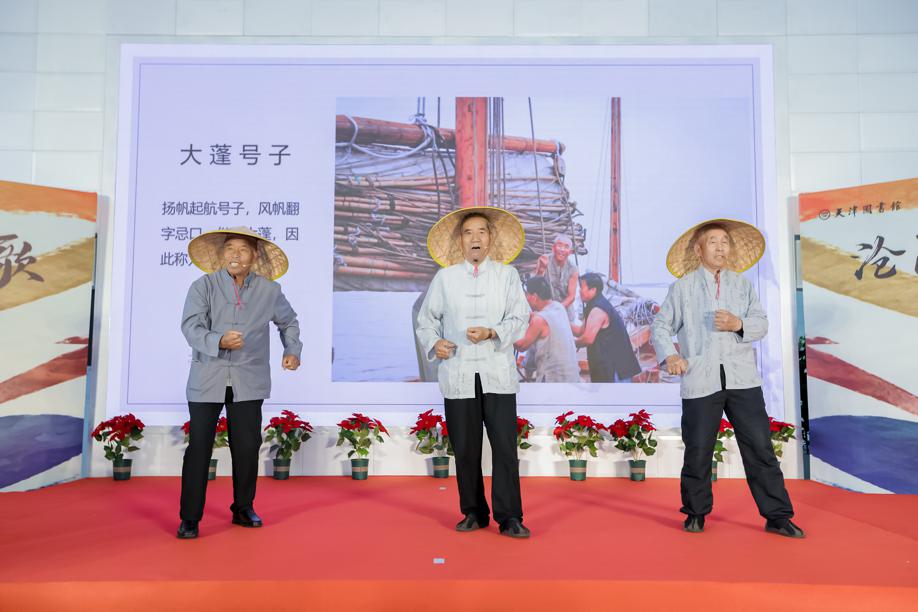
On Tuesday, the second event of a folk song cultural tour, initiated by the Capital Library of China and co-organized by Tianjin Library, Hebei Library, Shanxi Library, and Inner Mongolia Library, opened at Tianjin Library and was livestreamed nationwide. Enriched by the unique charm of Tianjin folk songs, the event attracted about 200 on-site participants and over 100,000 online viewers.
One of the nation's earliest and most historic provincial-level public libraries, Tianjin Library plays a significant role in public cultural services such as reading promotion and art education, with particular advantages in musical and artistic resources. Tianjin folk songs integrate local geography, dialect and habits, forming a precious cultural memory of the city. As early as 2004, a book The Anthology of Chinese Folk Songs: Tianjin Volume had included 609 Tianjin folk songs. Professor Zhao Zhenling from Tianjin Conservatory of Music served as the guide and interpreter, offering an in-depth analysis of the vocal styles, melodies, and evolution of Tianjin folk songs, providing the audience with a comprehensive understanding of the culture behind.
Eighty-year-old fisherman Zhao Jialing, along with brothers Liu Cuixiang and Liu Cuibo, performed traditional fishermen's work chants, which reminded listeners of the perilous waters of the Bohai Sea, evoking the heroism of fishermen's labor while showcasing the simple coastal life of Tianjin.
The Tianjin version of Jasmine Flower incorporated local musical characteristics on the basis of its shared folk origins, creating a distinctive charm. The familiar yet reinvented melodies allowed the audience to touch the warmth of urban memory through local tunes, demonstrating the resilience and vitality of Tianjin folk songs in their inheritance and innovation.
As a vivid carrier of regional culture, folk songs carry historical memories and humanistic sentiments. In the upcoming journey, the traditional folk songs of Beijing, Tianjin, Hebei, Shanxi, and Inner Mongolia will continue to shine with renewed vitality through mutual exchange and appreciation.


- Documentary traces Myanmar fraud crackdown
- Wuxi lights up holidays with dazzling fireworks
- Aviation body urges protection of cabin crew after viral in-flight incident
- 7 killed in illegal mining incident in Chongqing
- Traditional Zhuang brocade regains fresh vitality today
- Food an emotional bond with one's hometown





