



Telescope elevates China's polar research









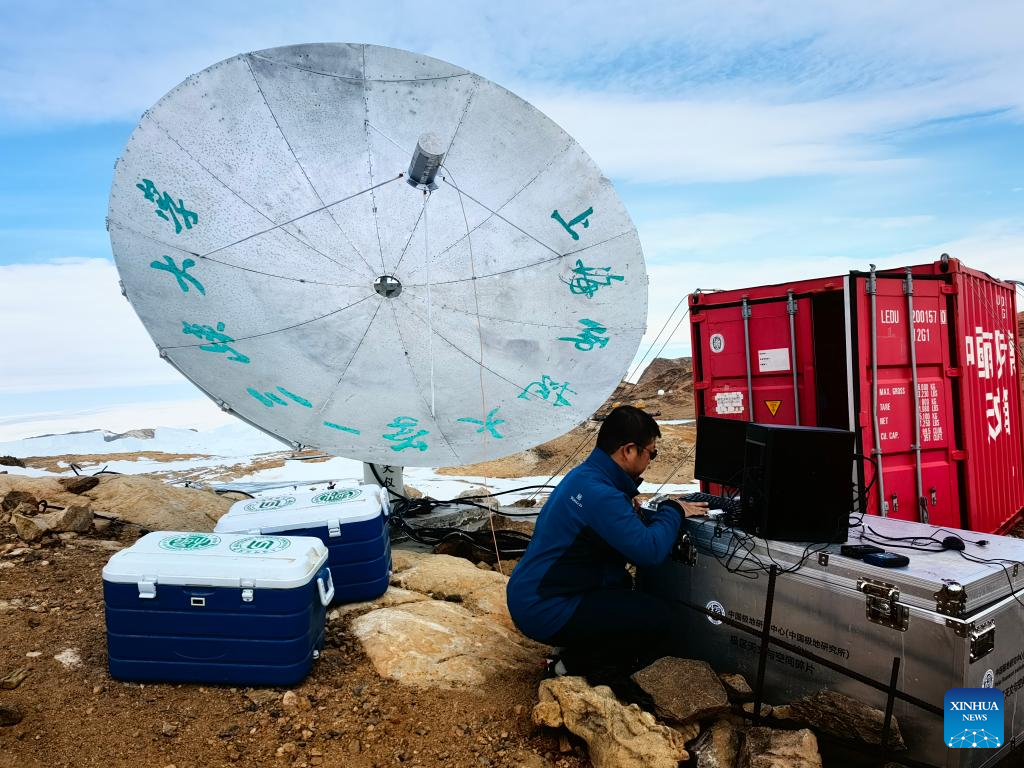
WUHAN — China has unveiled the "Three Gorges Antarctic Eye", a 3.2-meter aperture radio/millimeter-wave telescope, at a scientific research station in Antarctica.
Officially launched at the country's Zhongshan Station in Antarctica on April 3, the telescope, codeveloped by China Three Gorges University and Shanghai Normal University, further cemented China's advancements in Antarctic astronomy.
The Three Gorges Antarctic Eye has officially begun scientific observations of the Milky Way's neutral hydrogen and ammonia molecular spectral lines, providing vital data to help unravel the dynamics of interstellar gas and the processes of star formation, CTGU told Xinhua on Monday.
"This telescope has broken through key technical bottlenecks in Antarctic observatory construction, laying the foundation for future submillimeter-wave telescopes in Antarctica," said Zhang Yi, an associate professor at SHNU and a member of China's Antarctic expedition team currently working on the continent.
He added that the device will expand observations across radio to low-frequency millimeter-wave bands, driving technological advancements for next-generation Antarctic astronomy tools.
Zeng Xiangyun, an associate professor at CTGU, noted that Antarctica is the coldest continent on Earth, and the extreme cold and strong winds pose significant challenges for the development and installation of radio telescopes.


- Quake-hit county steps up resettlement
- World Young Scientist Summit highlights emerging talent in embodied intelligence
- 5.7-magnitude quake hits SW China's Xizang: CENC
- British father and son witness Wuxi reach Suchao final
- Emergency supplies, prefabricated houses reach quake-hit Xizang township
- China plays key role in advancing traditional medicine globally





