China's Tiandu satellites conduct Earth-Moon transmission, routing experiments









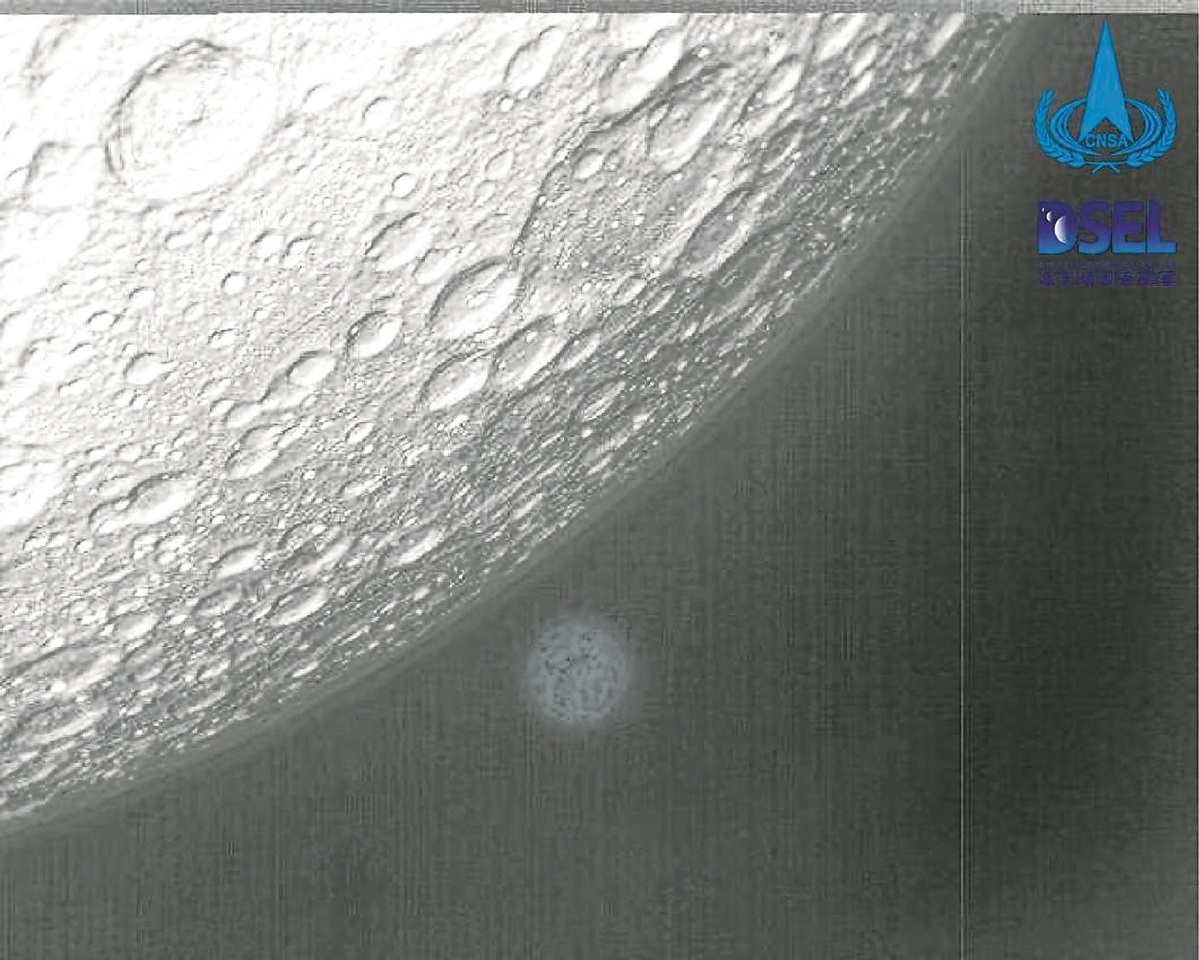
BEIJING -- China's communication and navigation technology test satellites, Tiandu 1 and Tiandu 2, have successfully carried out experiments on new technologies such as highly reliable Earth-Moon transmission and routing, according to Science and Technology Daily on Monday.
The telemetric data showed that the test project could effectively improve the accuracy of spacecraft in determining the lunar orbit.
The two satellites were sent into space together with the Queqiao 2 relay satellite on March 20. They entered their target circumlunar orbits on March 29 and separated on April 3.
On April 8, Tiandu 1 started flying in formation with Tiandu 2, remaining at a distance of about 200 kilometers. The two satellites operate in normal communication, stable attitude and energy balance.
They laid an important foundation for carrying out a series of communication technology test missions, according to the report, noting that Tiandu 2 has captured and sent back Earth-Moon group images.
Queqiao 2, Tiandu 1, and Tiandu 2 all use a highly elliptical lunar frozen orbit as their target orbits. This kind of orbit is stable, ensuring the spacecraft travels with minimum trajectory deviation.


- Protecting pristine NW China plateau lake from waste
- Chinese universities set to launch embodied intelligence majors to fill talent gap
- 10 foreign domestic helpers killed, 3 injured in Hong Kong residential fire: HKSAR govt
- Chinese scholars lead formulation of intl organoid standards
- Paleontologists uncover ancient elephant relative in Ningxia
- YRD charts high-quality development