



New Beidou satellite launches into orbit









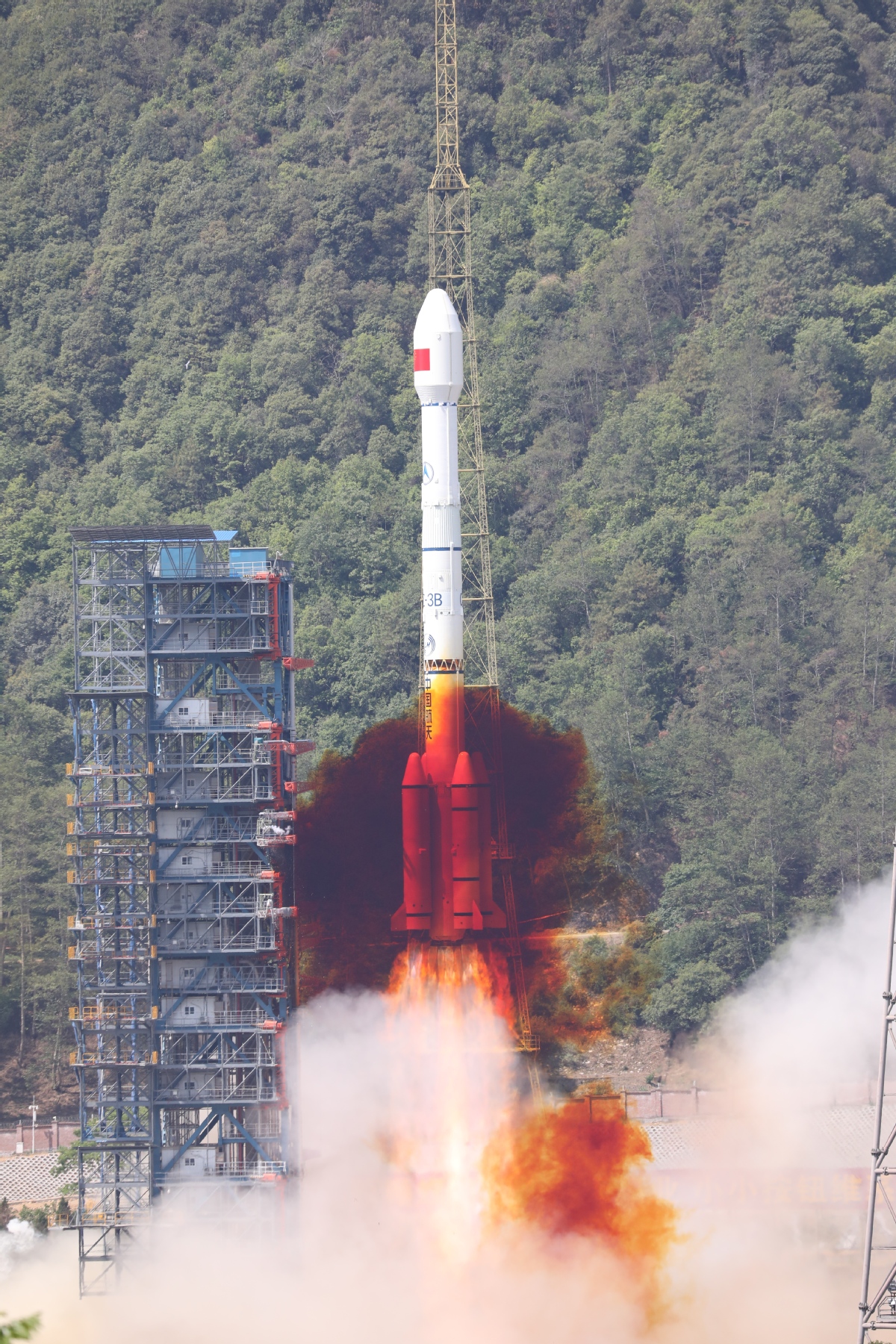
China launched a Long March 3B carrier rocket on Wednesday morning to transport a satellite into space for the country's Beidou Navigation Satellite System, marking the first deployment of a Beidou satellite in three years.
As the countdown ticked down to zero at 10:49 am at the Xichang Satellite Launch Center in the southwestern mountainous region in Sichuan province, eight engines on the Long March 3B's first stage and four boosters sprang to life and unleashed dazzling orange flame as they lifted the 20-story-tall gigantic vehicle into clear skies.
Shortly after the liftoff, the rocket successfully placed the satellite, the 60th in the Beidou system and the first backup craft for the third-generation Beidou network, into a geostationary orbit, announced Deng Hongqin, director of the Xichang center.
Designed and built by the China Academy of Space Technology, the satellite has typical functions of any third-generation Beidou satellite - positioning, navigation and timing. Compared with previous Beidou satellites, it has some upgraded hardware and features stronger signal, faster transmission speed and higher operational stability, said Chen Zhonggui, chief designer of Beidou's third-generation satellites.
Despite being called a backup, the satellite is designed to start working as soon as it enters orbit. Its primary tasks are to expand the service areas of Beidou's short-messaging function, enhance Beidou's positioning accuracy as well as improve the network's operational continuity and reliability, he noted.


- 100-day countdown begins for 23rd China-ASEAN Expo
- New Honglian hybrid rice set for summer planting in Pakistan
- Lhalu Wetland sees major recovery thanks to conservation efforts
- China targets cosmetic surgery, drug procurement violations in healthcare crackdown
- Beijing warns external backing for Taiwan 'independence' will fail
- Defense spokesman warns Japan, Philippines over maritime move





