



Gig economy offers more freedom and choice









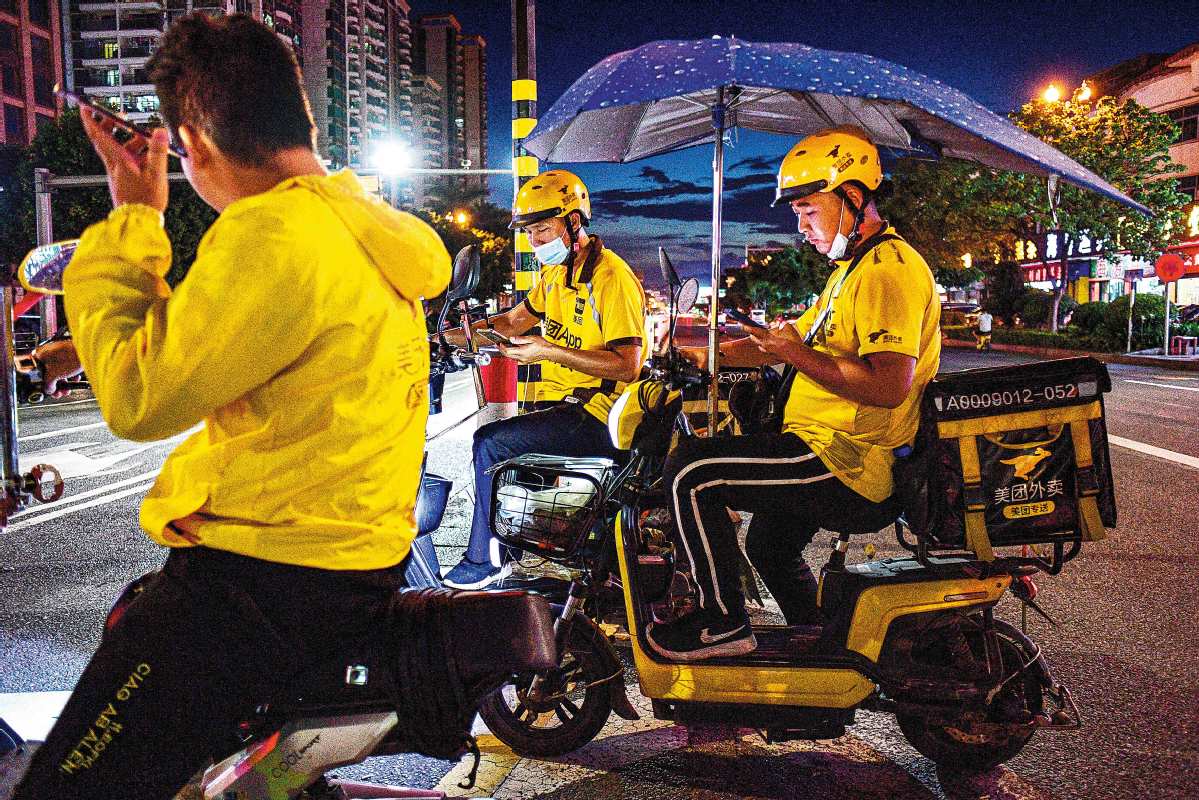
When Diane Mulcahy, author of The Gig Economy: The Complete Guide to Getting Better Work, Taking More Time Off, and Financing the Life You Want, was asked to define the idea of the gig economy during an interview in 2017, she said anyone who is a consultant, contractor, freelancer, part-time worker or on-demand worker, is part of this economy.
Basically, there are many ways to describe gig workers, but they all point toward a shift in the way people operate, with more of them deciding their working hours.
In China, while the concept of flexible employment is increasingly favored, particularly by younger people, gig workers are mostly fostered through robust development of the internet and technology.
Bao Chunlei, associate researcher at the Chinese Academy of Labour and Social Security, or CALSS, said flexible employment refers to working hours, locations and payments that are not fixed, different from a conventional employment format based on industrialization.
At a Ministry of Human Resources and Social Security news conference in May, it was disclosed that China had some 200 million workers in flexible employment.
China is advancing its economic transition, and these workers reflect a nationwide trend. The services sector has most flexible employment, and it contributes to 54.5 percent of China's GDP.


- Gen Z returnee finds a sweet future in hometown's green transition
- Rice paddy art transforms Yellow River Estuary village into gallery
- Ningxia expands stargazing tourism with cross-regional travel routes
- National Day holiday boosts tourism with 826 million domestic trips
- Over 300m rail passenger trips recorded during 16-day travel rush
- Macao sets National Day holiday records for average, single-day arrivals





