



Flocking to catch a glimpse of the flock









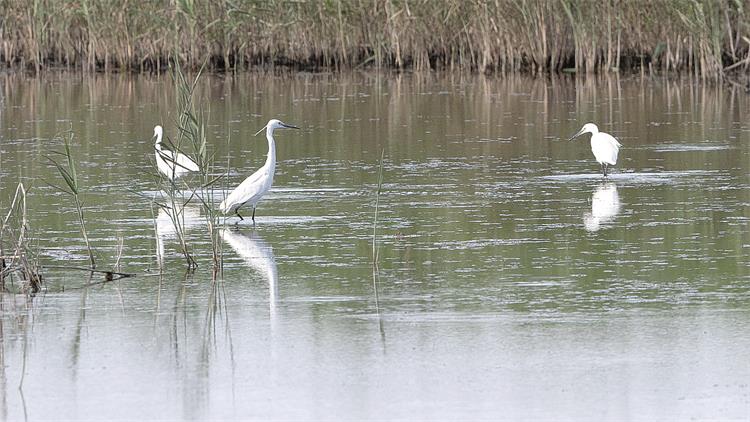
For the most part, birdwatchers and photographers have been well-behaved. In fact, some of them have even proactively lent a hand to the protection of these environments.
In 2004, Yao and nine other like-minded individuals founded the Wild Bird Society of Shanghai, a non-governmental organization with 200 members under the leadership of the Shanghai Wildlife Conservation Association. The members conduct surveys, monitor wild birds in Shanghai and the surrounding areas, as well as help protect them and their habitats.
"The society organizes birdwatching activities in the city once or twice per month. It also helps to promote birdwatching by teaching people how to identify birds in the park," said Yao.
"For example, bird-watchers should wear dark-colored attire instead of light colors which may scare the birds. Also, you should not make loud noises when in a birdwatching zone."
He Xin, a research assistant at Natural History Research Center of Shanghai Natural History Museum, became a birdwatcher in 2006 during his days as a zoology undergraduate at the school of biology at East China Normal University.
"It was difficult to identify the bird species at first, because they all look the same. But after years of studying their features, I can identify birds just by listening to their chirps or seeing how they fly," said the 33-year-old.
"Birdwatching is a part of my life now, and I always travel to the places where various species can be found."


- Missile maker develops fire escape breathing device
- One mine worker killed in Shanxi
- Former senior official sentenced to 11 years for taking bribes
- China's TP200 long-endurance drone completes maiden flight
- Beijing's power grid hits record load as heat and humidity push demand
- China's science facility achieves rare isotope observation





