Filmmakers stress universality and collaboration in the age of AI









Jason Squire, professor emeritus at the University of Southern California's School of Cinematic Arts and former visiting professor at the Beijing Film Academy, reflected on nearly two decades of engagement with China's film community, dating back to his 2007 invitation to preside over one of the first meetings at the Shanghai International Film Festival.
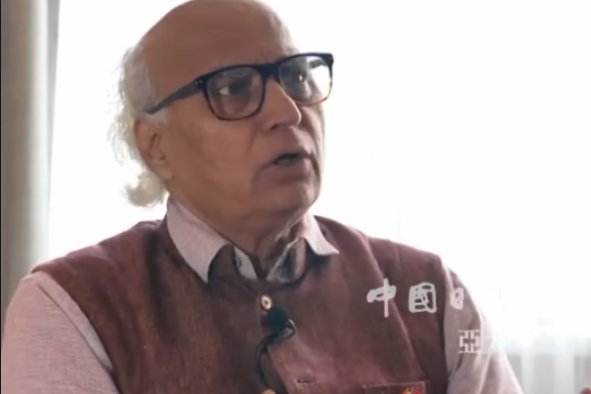
"Despite shifts in technology, we all speak the same language, the language of cinema," he told China Daily at the summit A New Era of Screen Storytelling: The Path to Survival for Chinese and American Film during the Chinese American Film Festival earlier this month in Los Angeles.
Squire recalled early exchanges with Chinese filmmakers that revealed deep similarities in creative instincts and professional aspirations, saying "there are so many similarities that it's very touching and very pleasant."
He noted that technological change continues to reshape global storytelling, pointing to emerging forms such as vertical short-form narratives and the increasing integration of AI tools into production.
"Verticals are a brand-new technique of storytelling," he said. "AI … is certainly, in my view, merely a tool to save money and energy."
When addressing the state of US-China film cooperation, Squire acknowledged the growing challenges facing co-productions.
"The co-production cannot be separated from the politics that also ebb and flow, and it's a real challenge," he said, noting that strong partnerships remain the foundation of successful joint projects.
He added that many filmmakers instinctively avoid political themes, even when such themes might shape cross-border narratives. Still, the international nature of production continues to define modern filmmaking.
"There are so many international filmmakers from all centers of culture," Squire said. "They go among different countries in order to shoot at different locations, in order to find international crew. That's exhilarating."
Executive Producer Randy Greenberg described AI as both a practical necessity and a creative challenge. He noted that virtual production tools are already reducing costs and simplifying logistics.
"Your production strategy is changing dramatically with AI," he said. "But it's really about storytelling in the end. If AI makes it less visually acceptable, that's a problem."
On the future of global storytelling, Hollywood screenwriter Bob Underwood argued that the most powerful force connecting audiences is not technology but the universality of human emotions.
"You look at different cultures that succeed in movies, there is no place like Middle Earth, you know," Underwood said. "And yet people all around the world buy into that culture and those characters, because they're like human beings."
The cultural specificity of a story does not limit its global potential, according to Underwood. "You can take Chinese stories that have gone back 5,000 years, and people in America can relate to them, if you keep in mind the universal things about the stories … and just focus on what is universal," he said.
Underwood added that many Chinese stories already resonate strongly with global audiences, even when cultural details differ.
"When I have watched those movies and taken the time to follow them, I relate to them perfectly," he said. "They're eating slightly different food, they look slightly different, but everything they're going through is the same as what we're going through."
Underwood suggested that sometimes adapting a story for global viewers may simply mean adjusting the cast to reflect local audiences. Still, he believes Chinese filmmakers are well positioned to create films with broad international appeal.
"I believe the road to having universally appreciated projects is very clear for China," he said. "I believe that they will, in the future, create more projects that people around the world appreciate as much as they do in China."
Alongside the discussion of emotional universality, veteran producer Andre Morgan encouraged filmmakers to think concretely about the opportunities such technologies create. He noted the role AI could play in expanding cross-cultural reach.
"Can you think of an example of a story that could be told in a better way to the marketplaces of the world," he asked, "whether it's a classic Chinese story being told to the world, or a story from the world being told in the Chinese context?"
Jason Brenek, CEO of Meta Media, said the industry's initial fear of AI mirrors past technological disruptions in media production. Over time, he said, such tools have consistently enabled broader distribution and higher-quality storytelling.
"I do hope AI can bring a much healthier industry and much more cross-border movement of stories and content," Brenek said, noting that the most successful innovations will be those that help great stories reach audiences wherever they choose to watch.