China delivers another letter to UN chief over Japan's remarks on Taiwan









China's ambassador to the United Nations on Monday delivered another letter to the United Nations chief, rejecting what Beijing calls Japan's "unreasonable arguments" over Taiwan and reiterating its position on the issue.
In the letter, Fu Cong, China's permanent representative to the UN, said China "firmly opposes" Japan's letter to the UN and called it "dodging the key issues, while groundlessly accusing China and seeking to shift blame."
The latest move comes amid an exchange of letters between the two missions. Fu recently sent a letter to UN Secretary-General Antonio Guterres, prompting a response from Japan's UN ambassador Kazuyuki Yamazaki, who also wrote to the UN.
Fu said the direct cause of the "serious differences" between the two countries was the recent remarks by Japanese Prime Minister Sanae Takaichi on Nov 7, who suggested during a Diet session that a "Taiwan contingency" could constitute a "survival-threatening situation" for Japan and implied possible military involvement.
Fu said such remarks challenge the outcomes of World War II, undermine the post-war international order and violate the purposes and principles of the UN Charter.
In its letter to the UN, Japan has said that it adheres to its "consistent position". Fu urged Japan to clarify what it calls its "consistent position" on Taiwan. "The Japanese side has continued to evade the question and has yet to give China a direct answer. Can the Japanese side provide the international community with a complete and accurate explanation of its 'consistent position' on the Taiwan question?"
The ambassador cited the Cairo Declaration, the Potsdam Proclamation and the Japanese Instrument of Surrender as legal instruments confirming China's sovereignty over Taiwan.
He also referred to the 1972 Sino-Japanese Joint Statement, which states that "the Government of Japan recognizes the Government of the People's Republic of China as the sole legal Government of China" and "The Government of Japan fully understands and respects" China's stand that Taiwan is "an inalienable part of the territory of the People's Republic of China".
Fu also rejected Japan's claim in its letter saying that Japan adheres to a "passive defense strategy, which is exclusively defense-oriented", and asserts that Takaichi's remarks were grounded in this position.
"Takaichi linked Japan's 'survival-threatening situation' with a 'Taiwan contingency', implying the use of force against China. This clearly goes beyond its claim of 'passive defense strategy' that is 'exclusively defense-oriented'. The Japanese side's arguments are self-contradictory and are intended to mislead the international community," Fu said.
He also warned Japan's attempts to "expand its military capabilities and revive militarism". Fu said Japan had increased defense spending for many years, adjusted arms-export principles and was debating nuclear-related policies.
"Takaichi's erroneous words and deeds have severely undermined the mutual trust between China and Japan and damaged the political foundation of China-Japan relations," Fu said.
Japan should "clearly reaffirm the one-China principle, faithfully uphold the spirit of the four political documents between the two countries and its political commitments, immediately retract the erroneous remarks, and take practical steps to honor its commitments to China," he said, warning that the Japanese side should "bear all the consequences arising therefrom".
Fu asked that his latest letter be circulated as an official document of the UN General Assembly under agenda item 120.
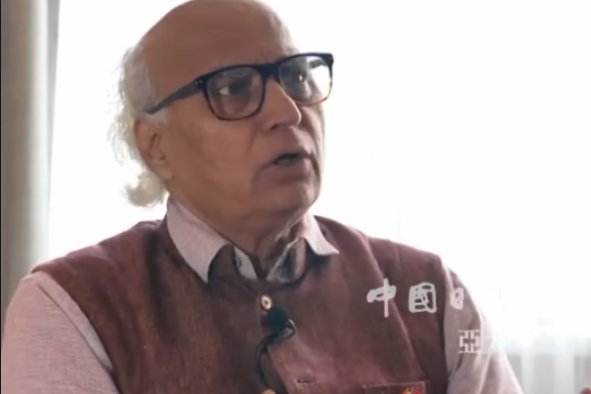
Munir Akram, a seasoned diplomat and former permanent representative of Pakistan to the United Nations in New York and Geneva, told China Daily in a recent exclusive interview in New York that Takaichi's remarks on Taiwan were "not appropriate".
"I think everybody realizes how sensitive China is on the issue of the one-China principle and on any indication of encouragement of separatism from Taiwan," Akram said. "It is my hope that good sense will prevail, and that our friends in Japan will have realized that perhaps this was not the most appropriate way to address an issue China considers to be internal."
"It is difficult to understand why the remark was made because, both from a legal point of view and from a historical point of view, Japan of all countries should have been more careful because of the history involved," he said.