
The China Story
at your Fingertips
OPEN

China's 15th National Games will open on Nov 9 across the Guangdong-Hong Kong-Macao Greater Bay Area, marking the first time three regions have co-hosted the country's premier multi-sport event.
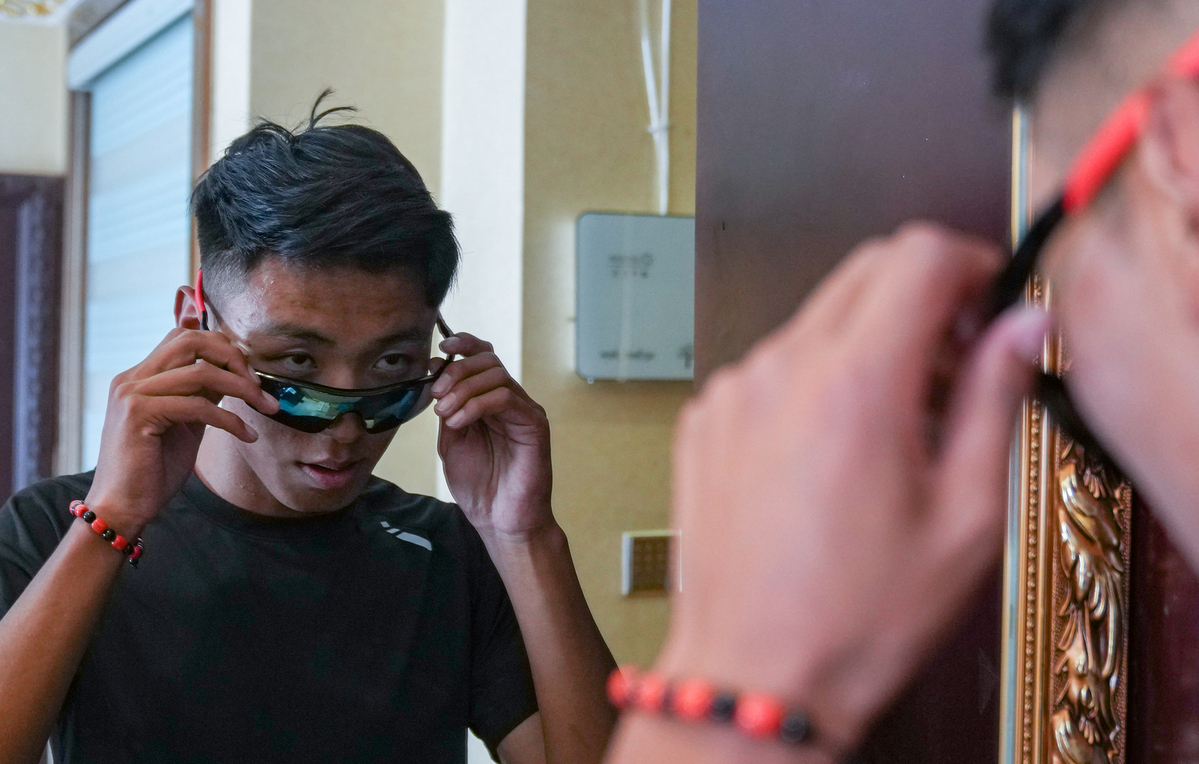
The December cold is sharp enough to sting the lungs before sunrise in Lhasa. Nineteen-year-old runner Sonam Gyaltsen squinted toward the eastern horizon, put on sunglasses and started his morning training, unaware that the quiet routine would mark the final chapter of one journey and the beginning of another.
The next day, Sonam left the Qinghai-Xizang Plateau for the first time to compete at China's National Games for Persons with Disabilities and the National Special Olympic Games in Guangzhou.
Born with low vision and learning difficulties, Sonam was about to run on a national stage that once felt impossibly far away.
For Sonam, light has always been complicated. He grew up in Nagchu, deep in the northern mountain areas of Xizang autonomous region, where the average altitude exceeds 4,500 meters and sunlight is both abundant and unforgiving.
"As a child, everyone at school called me 'wuba'," Sonam said softly, using the Tibetan word for owl. Like an owl, his vision was worse during the day and slightly better at night.
At the Nagchu Special Education School, physical education teacher Thubten Kelsang noticed something others overlooked. Despite his limited eyesight, Sonam had long, powerful limbs and a natural sense of rhythm.
"He couldn't see well," Thubten recalled, "but you could tell the track was where he belonged."
Convincing Sonam's family was far more difficult. His father, Tsering Dorje, worried about injuries and doubted whether athletics could ever be a realistic pursuit for a child with such issues.
"My son can't even herd cattle properly," he said at the time. "If a yak runs off, he mistakes it for a truck."
Shaped by his own upbringing in the 1980s, the father doubted whether sports could offer Sonam a real future — at that time, disability sports in Xizang were still in their infancy, focused mainly on basic rehabilitation rather than competition.
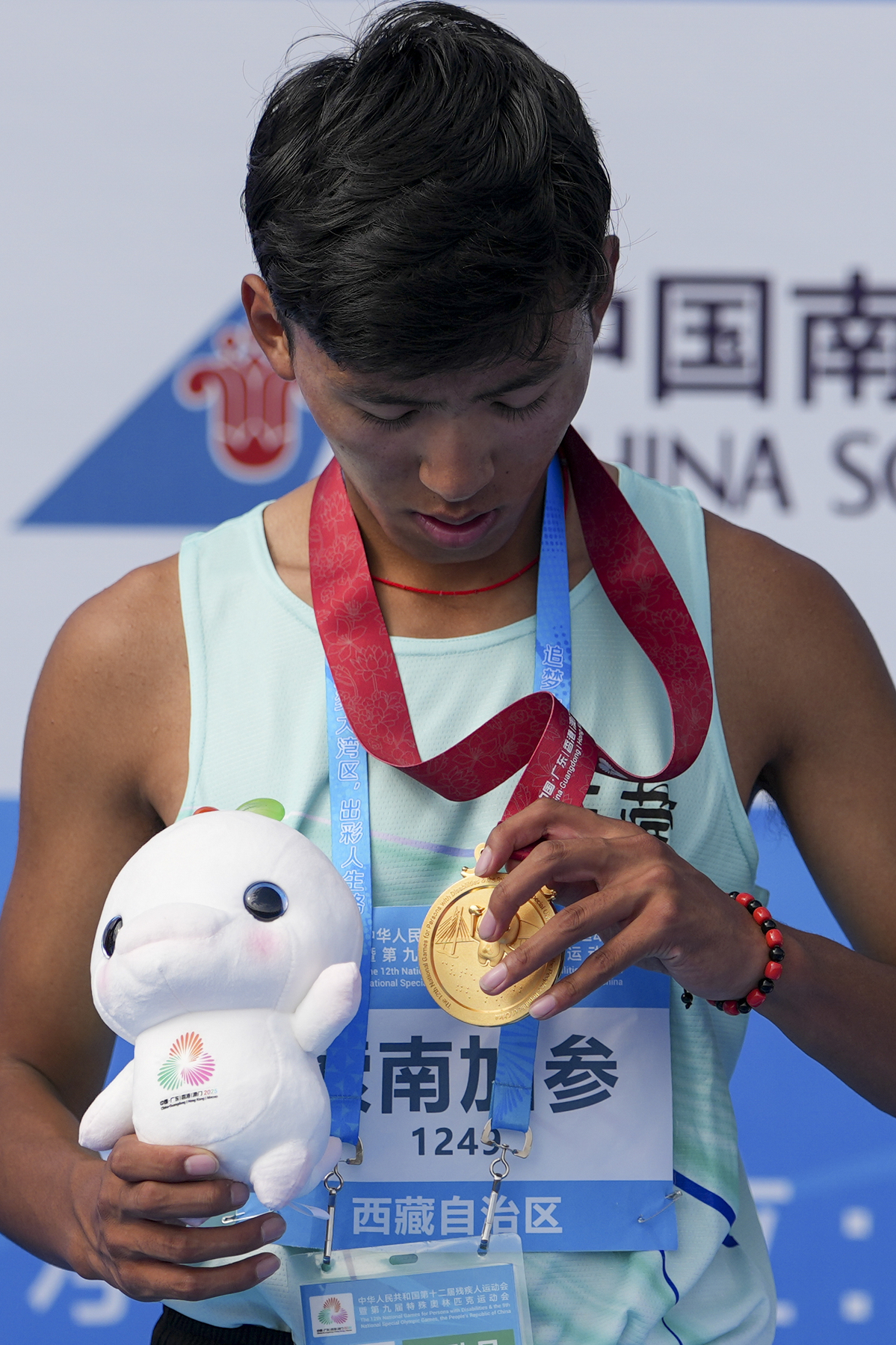
It took repeated home visits and quiet persistence from the coach before the family finally agreed to let Sonam try.
The first months of training were filled with hesitation. Sonam ran with his eyes half-closed, unsure of the space ahead, only feeling secure when his feet struck the ground.
Everything changed, however, when Thubten gave Sonam his first pair of sunglasses.
"With them on, every run felt safe,"Sonam said. "That's when I began to trust myself."
Over five years, one pair of sunglasses broke after another. The skin around his eyes, protected by the frames, grew noticeably lighter than the rest of his face, a visible record of countless hours under the plateau sun.
Like many teenagers, Sonam sometimes wavered. Once, after missing a local horse racing festival, he stopped training for a week.
The setback was immediate and sobering.
"That's when I understood," he said. "If I stop, I fall behind."
"Horses can run fast," Sonam added, thinking of home, "but they may only run on the grasslands. If I keep going, I can run beyond the plateau."
His persistence earned him a place on the Xizang team and, eventually, a ticket to the National Games.
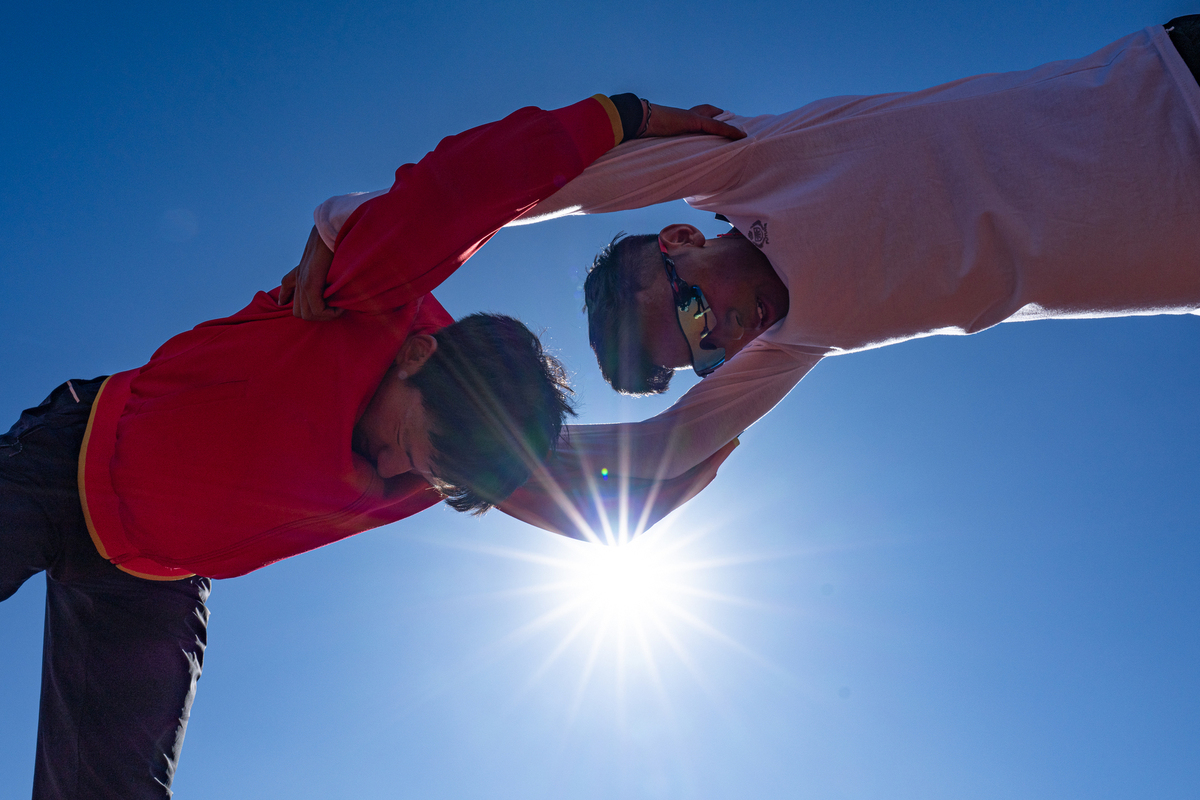
Before Sonam left for Guangdong province, his father traveled from the pastoral areas of Nagchu to Lhasa to see him off. He brought dried yak meat from home and meat buns made by Sonam's mother.
"Be careful. Don't fall," his father repeated. "It doesn't matter what place you get. Just come back safe."
Sonam listened in silence. He admitted he avoids talking too much about his family. "If I say more," he explained, "I'm afraid I won't be able to hold back my tears."
In southern China, far from the thin air of the plateau, Sonam initially struggled. The abundance of oxygen left him constantly drowsy. But once he stepped onto the track, the heaviness disappeared.
When the starting gun fired in the men's 800m for athletes aged 16 to 21,Sonam surged forward. This time, he ran without sunglasses, guided purely by muscle memory and instinct, and crossed the finish line first in his heat. Under the southern sun, the boy once nicknamed "wuba" was no longer an owl hiding from daylight. He was now running freely beyond the mountains that once defined his world.
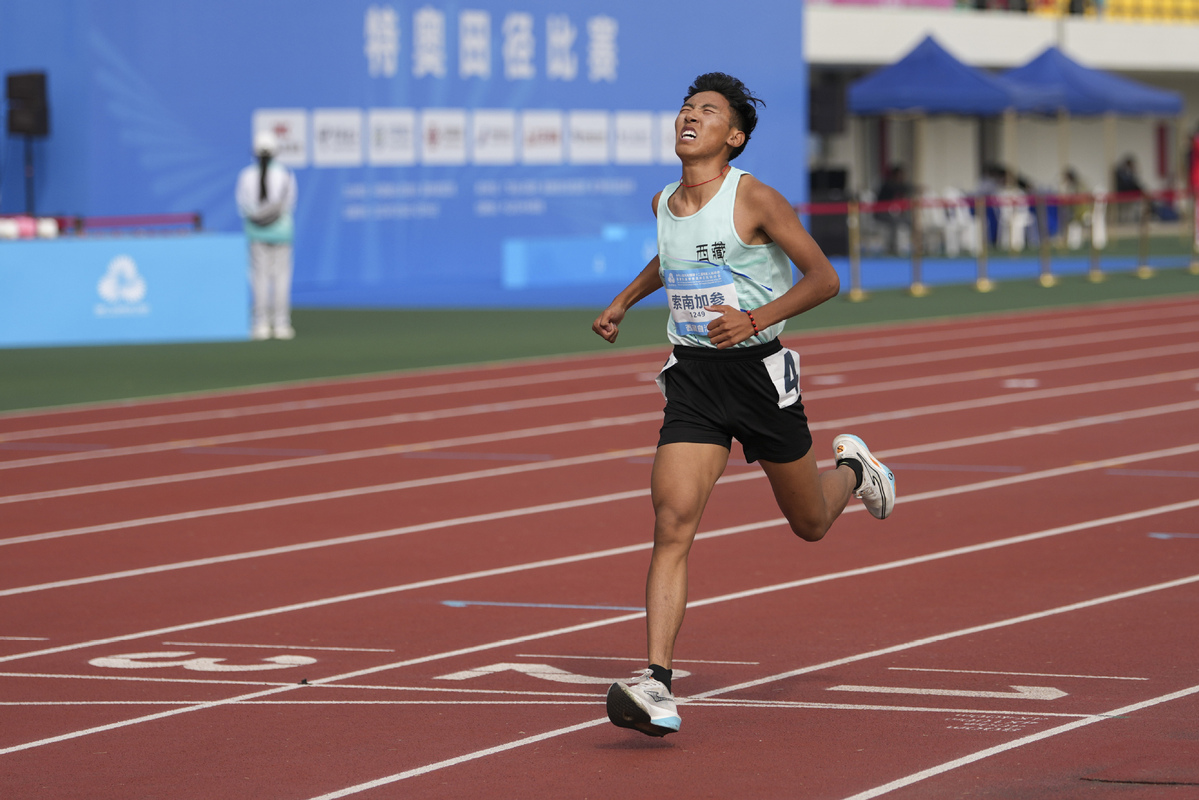
At this year's National Games for Persons with Disabilities and the National Special Olympic Games, the Xizang delegation fielded 73 athletes across nine sports, including athletics, wheelchair basketball and weightlifting.
Sonam was one of them, and his journey reflects a broader transformation in Xizang, where expanding support for disability sports is opening new paths for young athletes. Training stints beyond the plateau have shown him, and many others, just how wide the world can be.
"There's always someone stronger,"Sonam said. "But that just means I have a longer road ahead."
For a teenager who once struggled to see clearly in the light, he envisions a road stretching far beyond the plateau where his journey began.
Xinhua



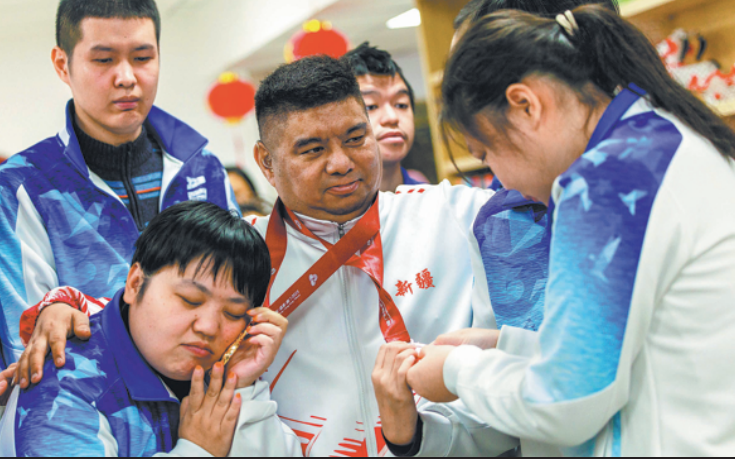

A video of a visually impaired athlete's breathtaking jump-rope performance recently went viral thanks to its remarkable display of athleticism and determination.
The video features 21-year-old Zhou Yuhong, a graduate of the Chongqing Special Education Center, who achieved an astounding 208 skips in just 30 seconds to earn a gold medal on Tuesday at the 12th National Games for Persons with Disabilities.
Zhou's success is the result of focused preparation. "Intensive training started half a year ago, with four-hour daily practices all the way up until the start of the competition," said her coach, Zhou Weilin.
Zhou shared the accomplishment with her teammate, 24-year-old Yang Hui, who clinched gold in the male side of the same category. Yang achieved 212 skips to earn his third consecutive national championship in this event.
Coach Zhou expressed deep admiration for the athletes. "The disabled can also be extraordinary," he said. "Competing in sports can help them find their own worth in life's journey."

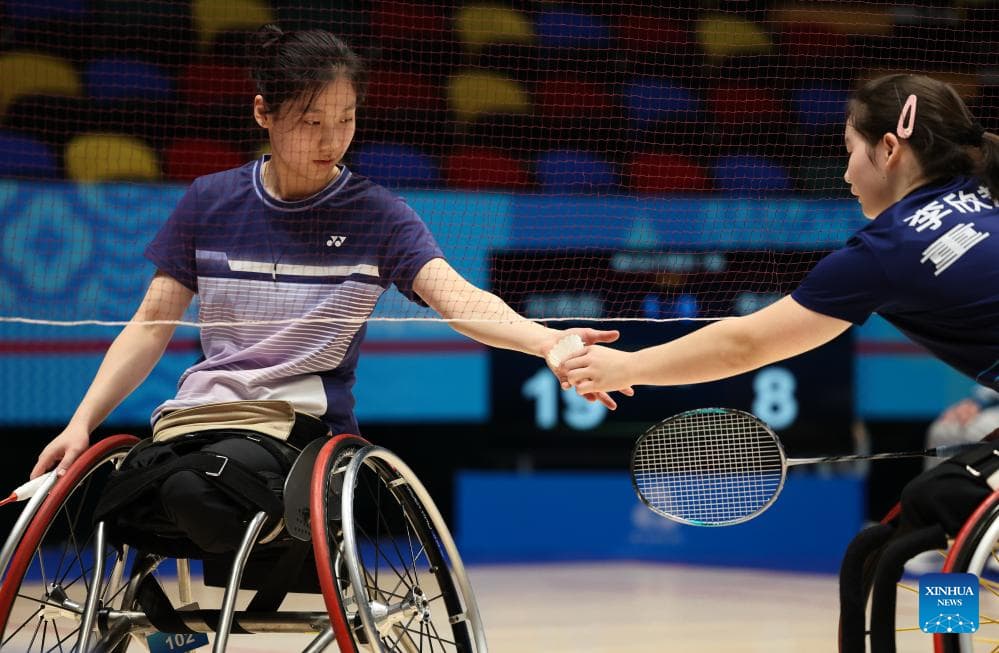
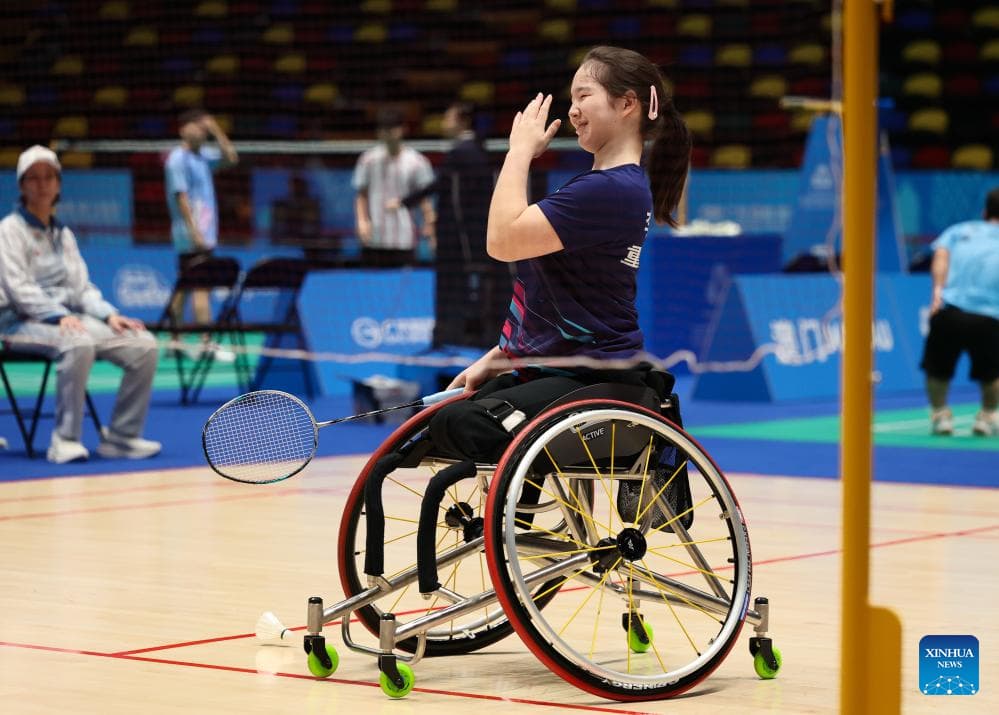
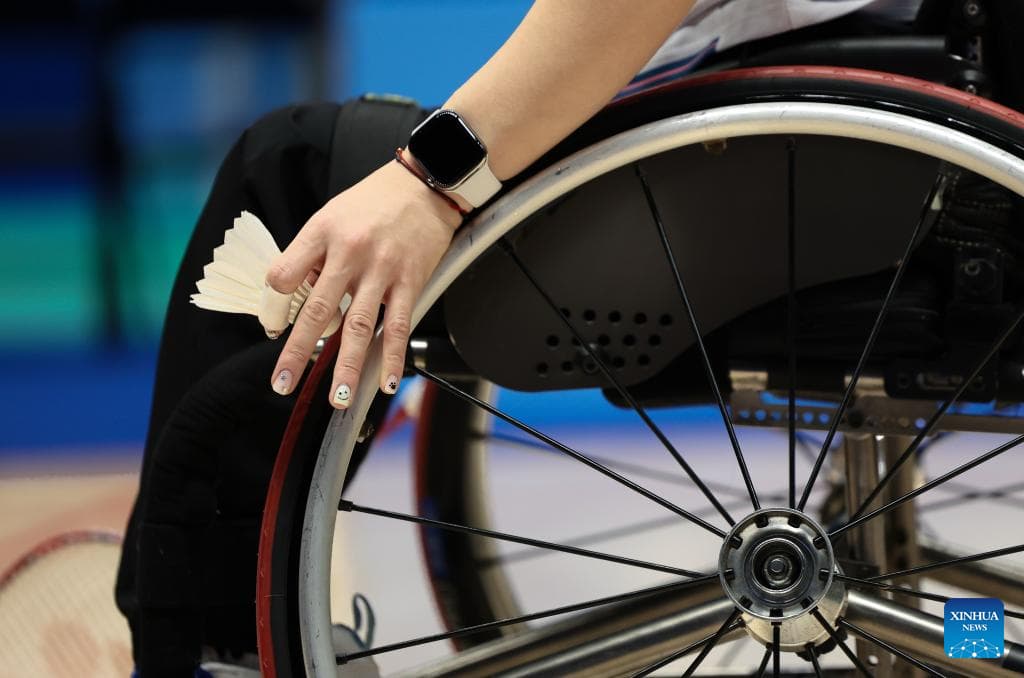
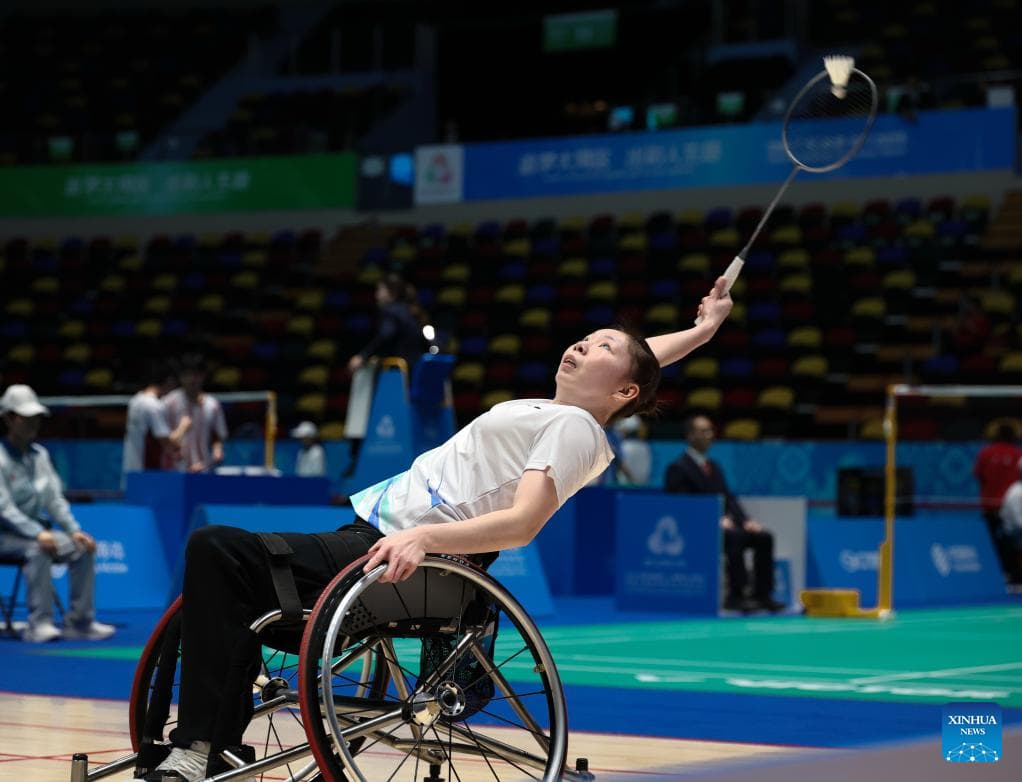
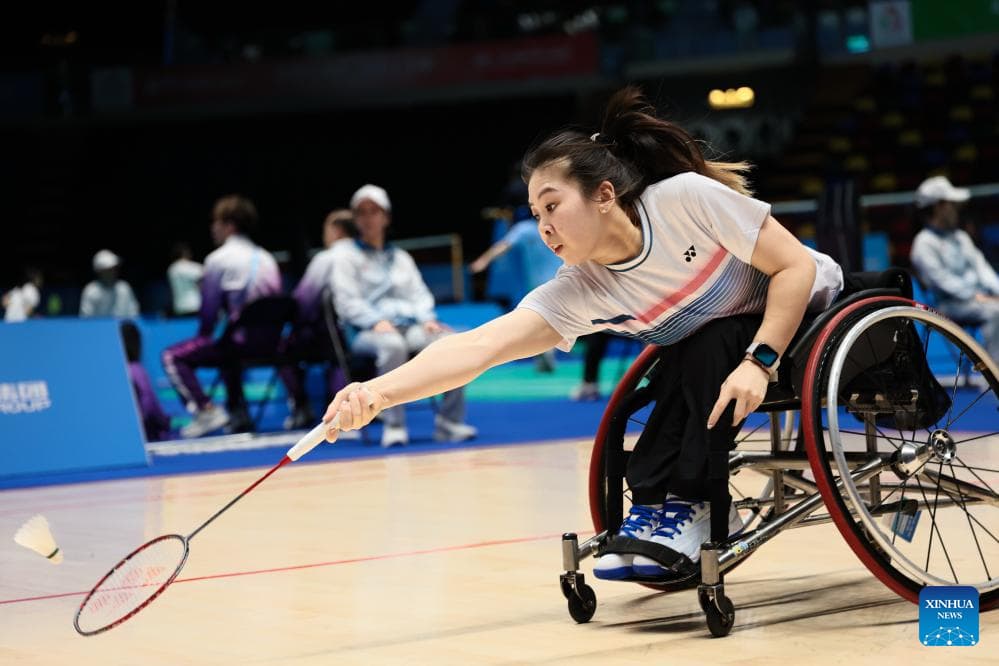
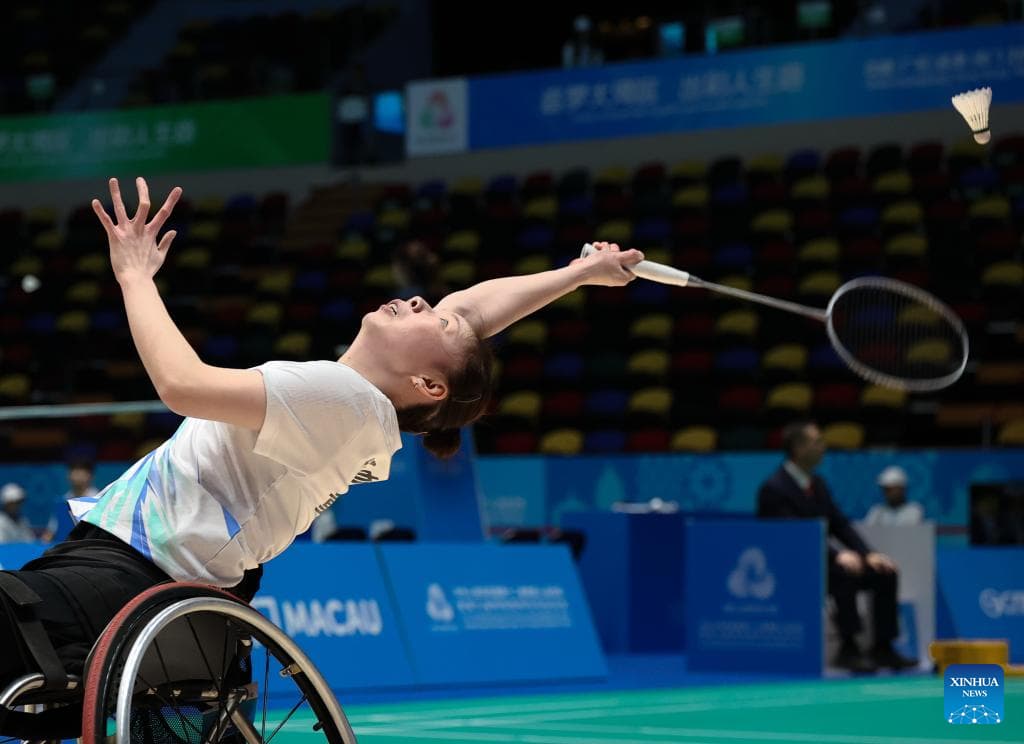


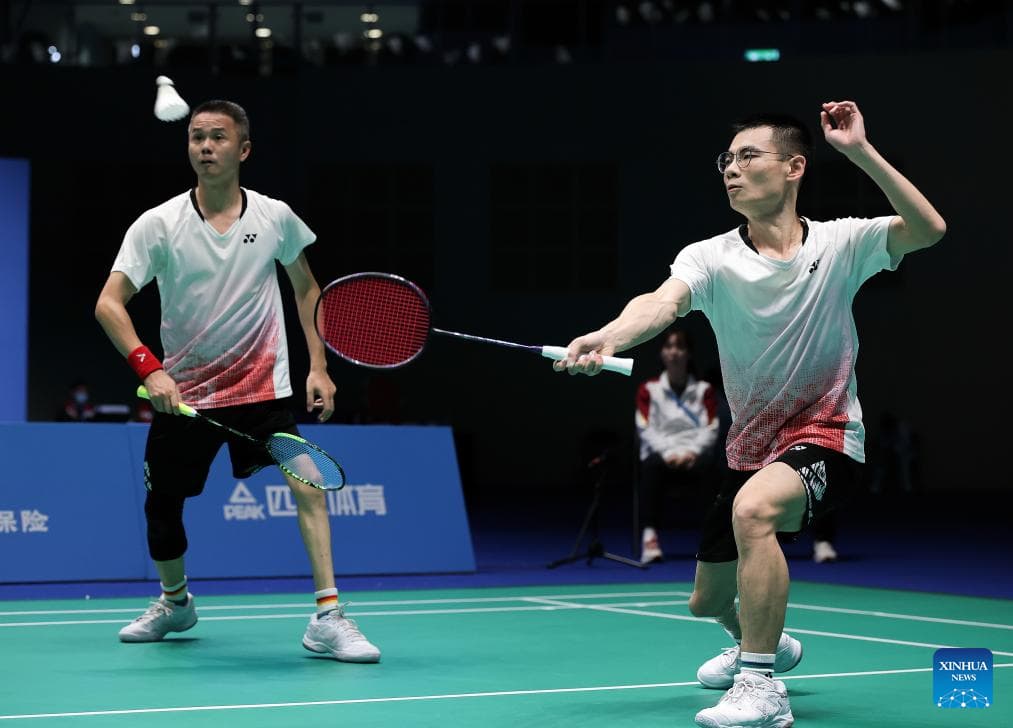
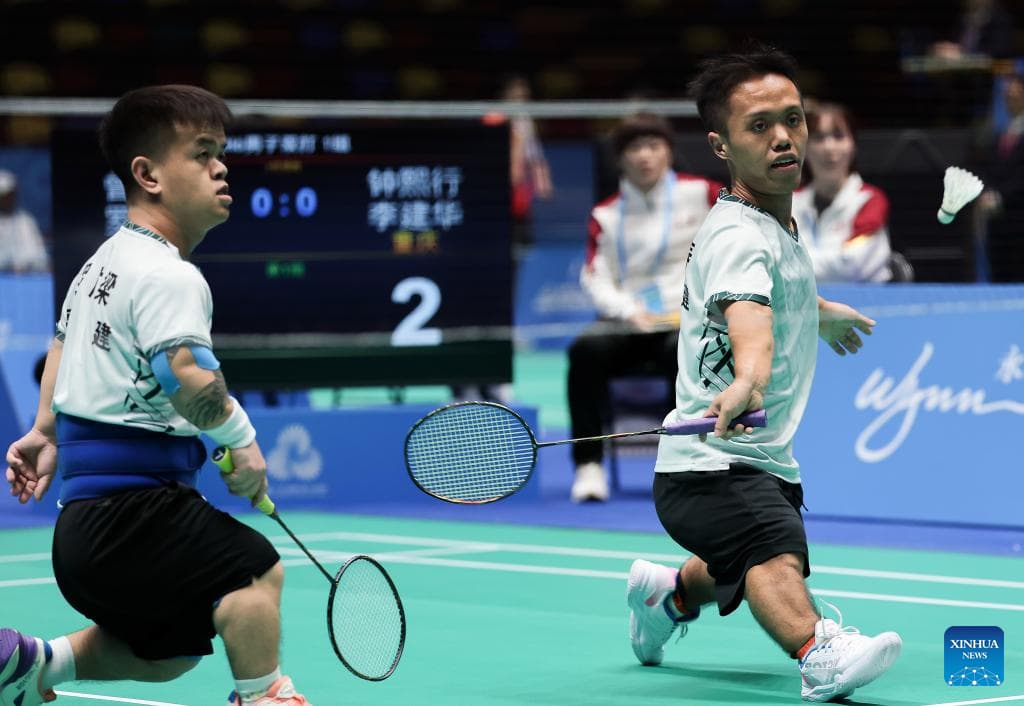
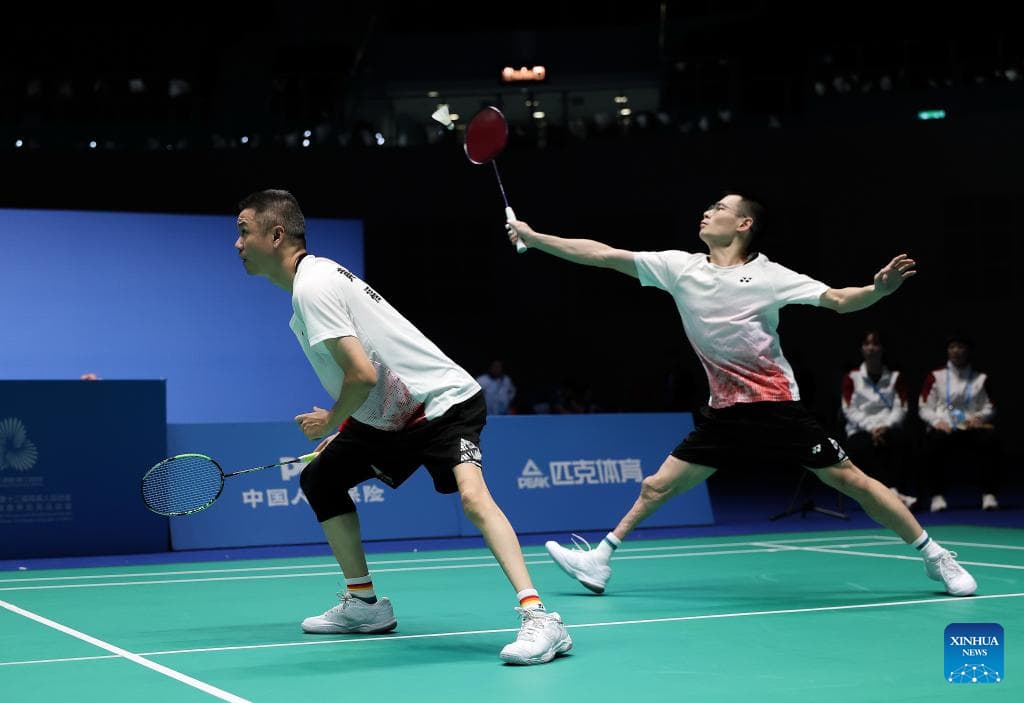

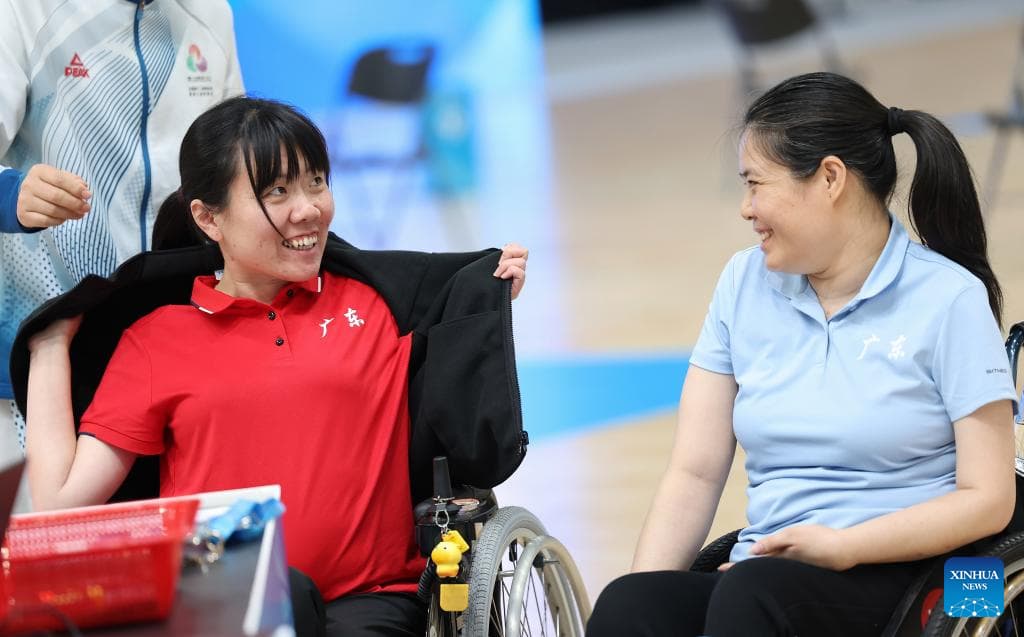
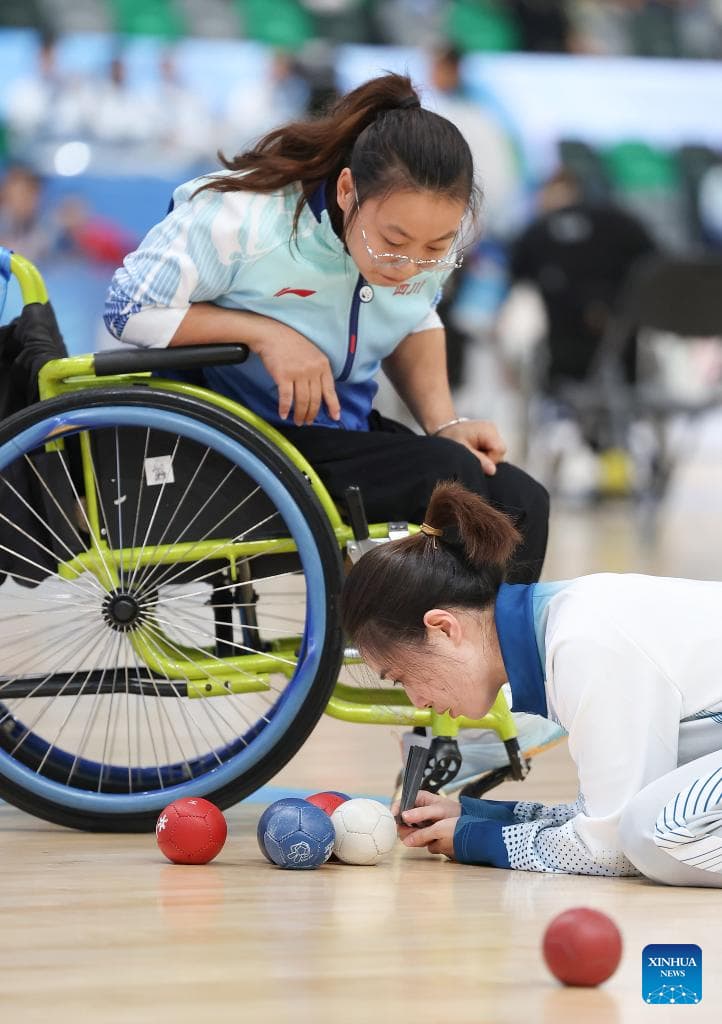
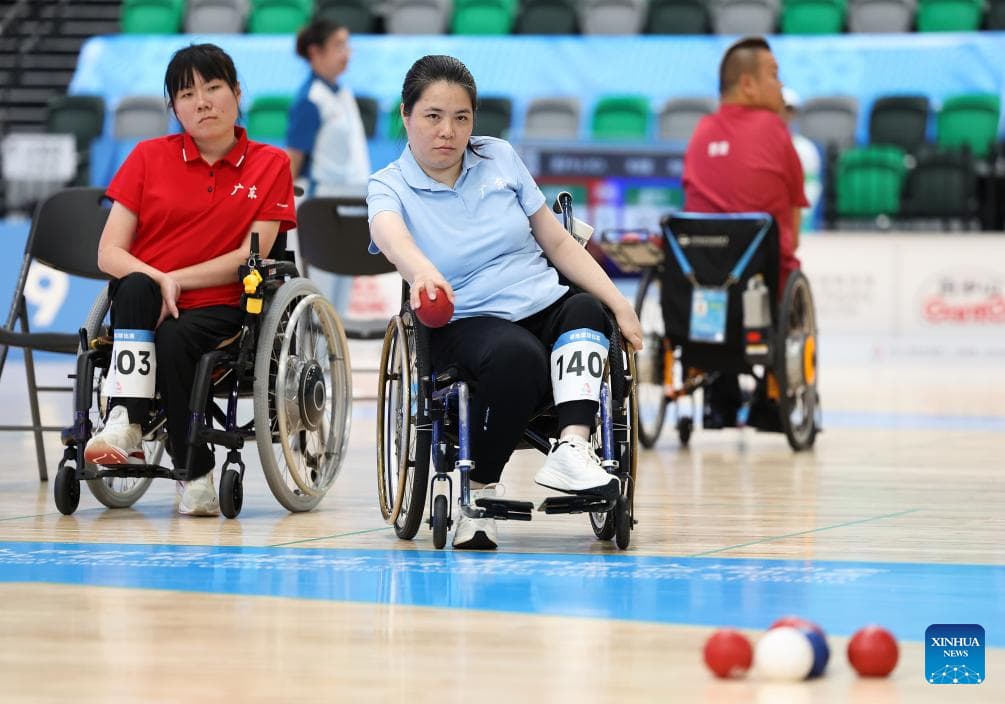


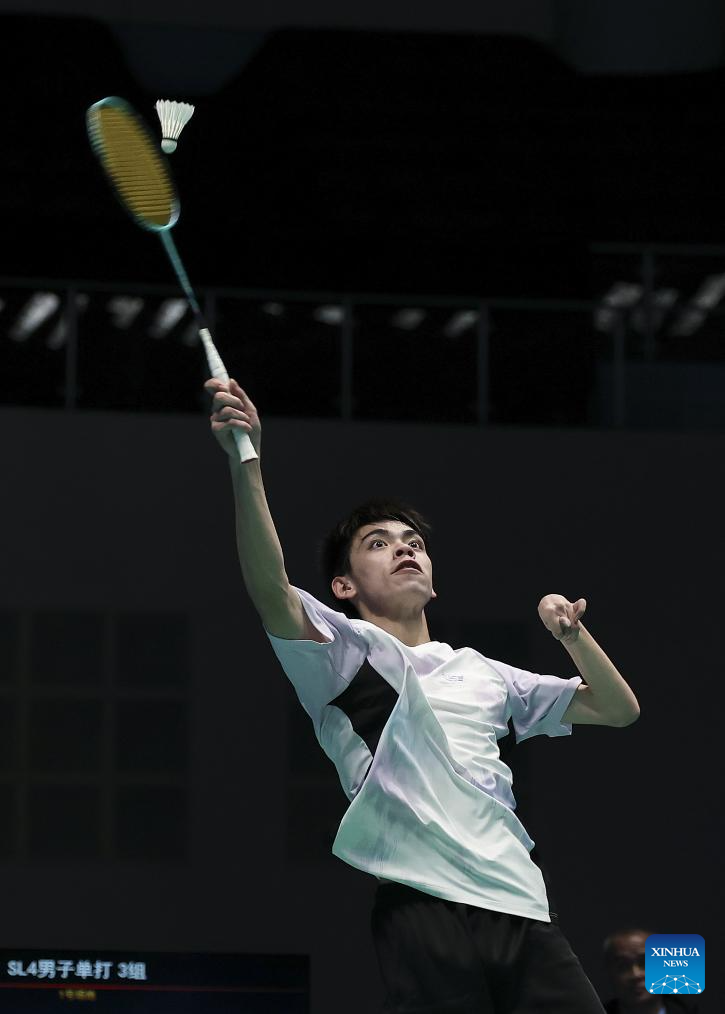
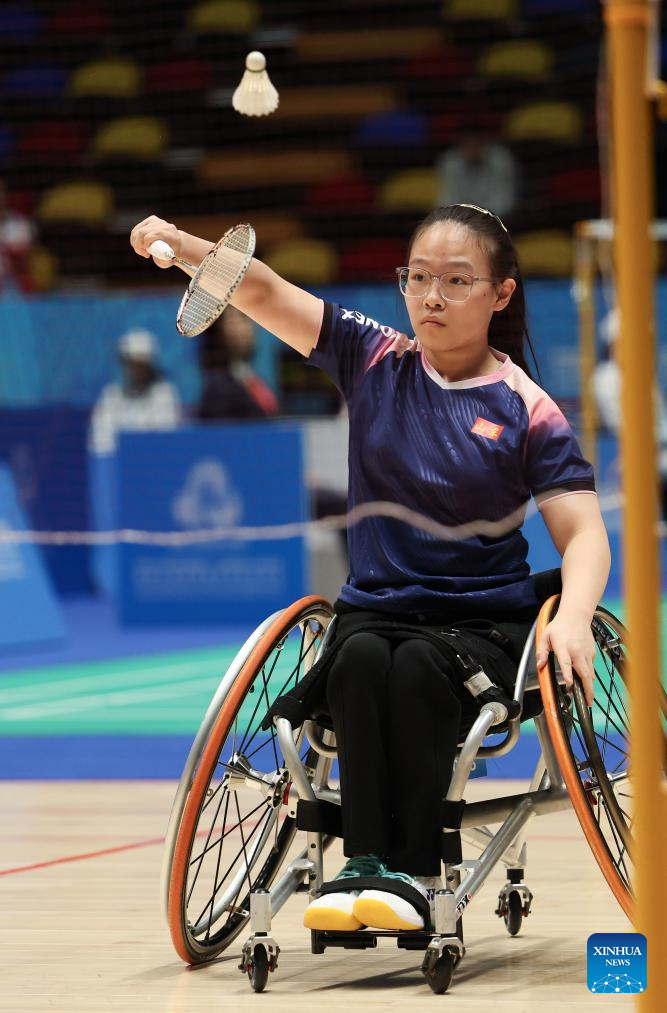
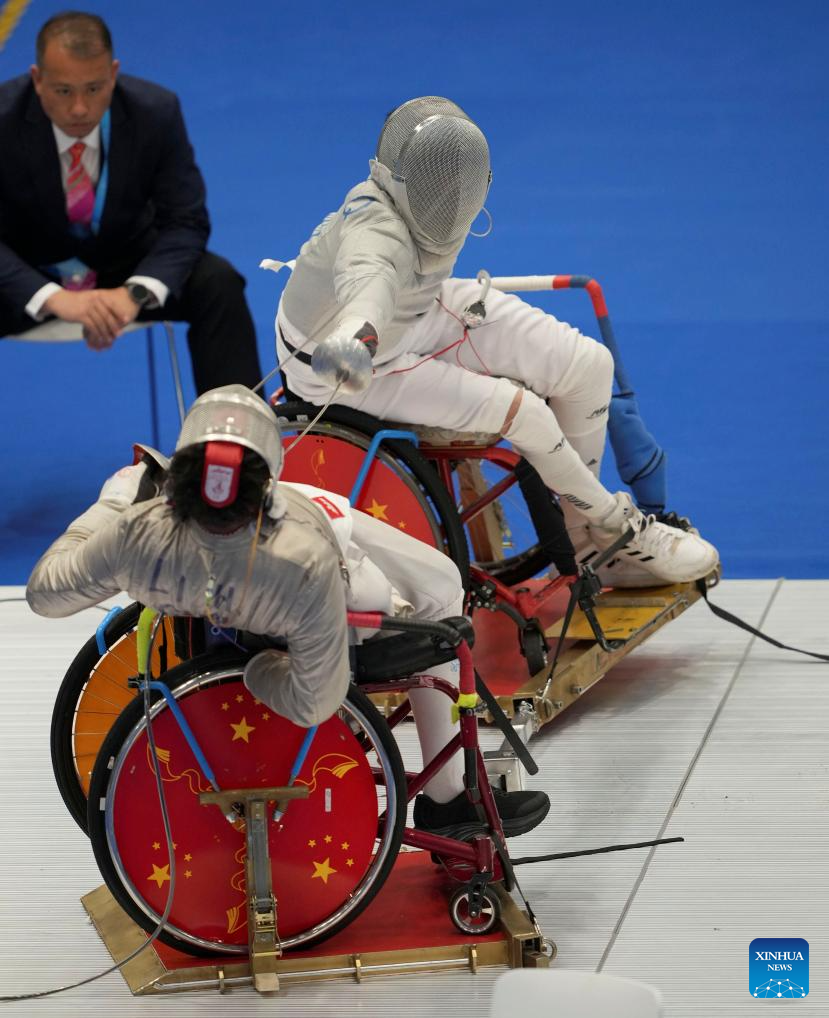
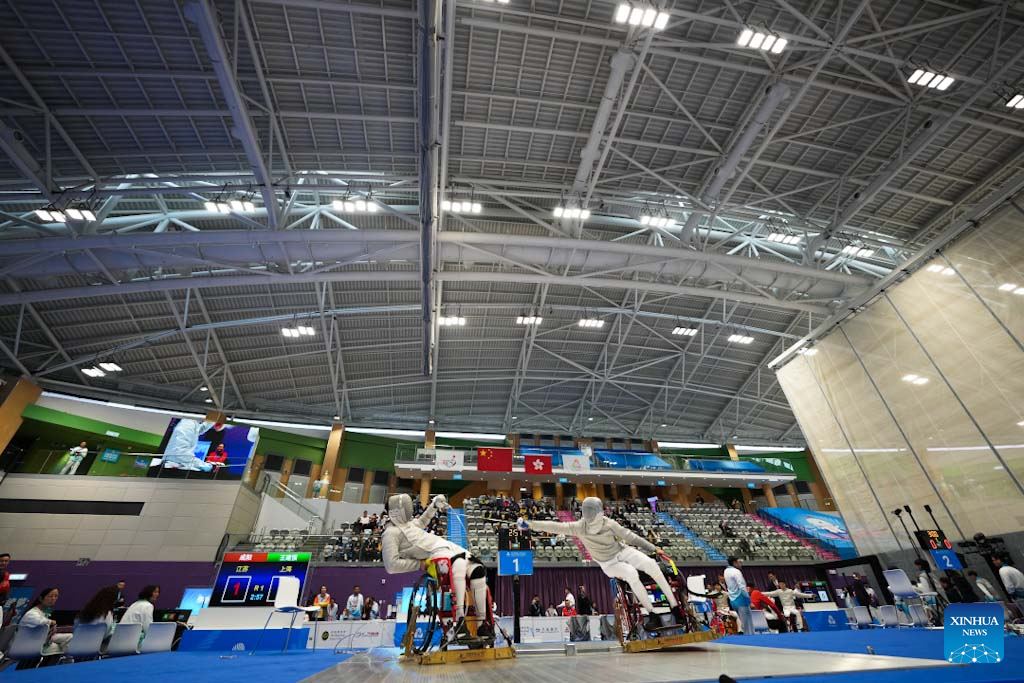
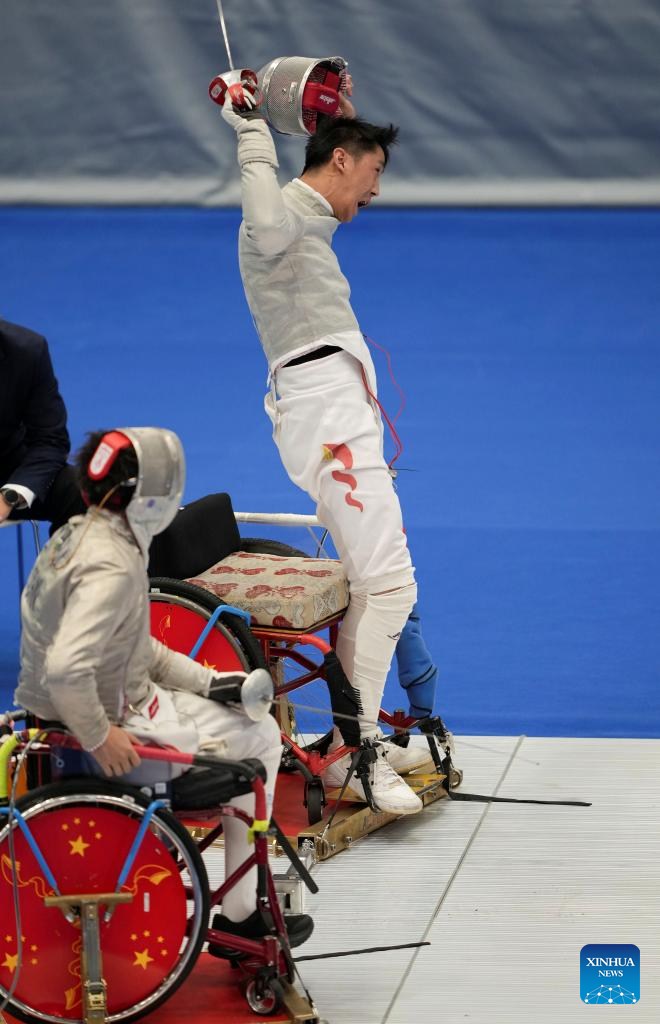
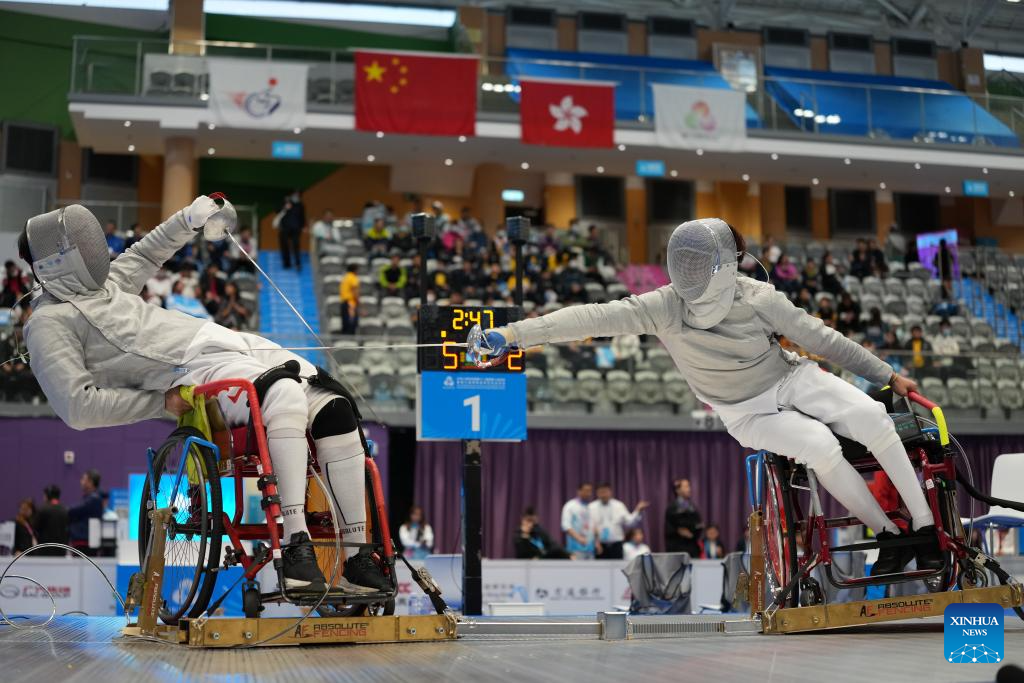
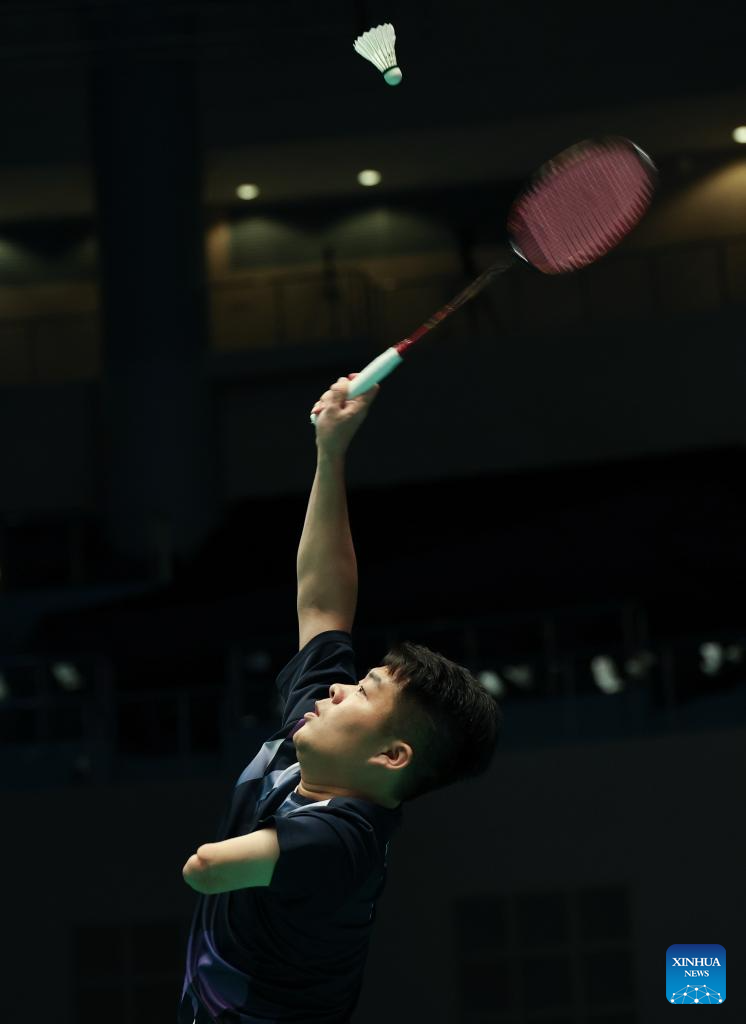
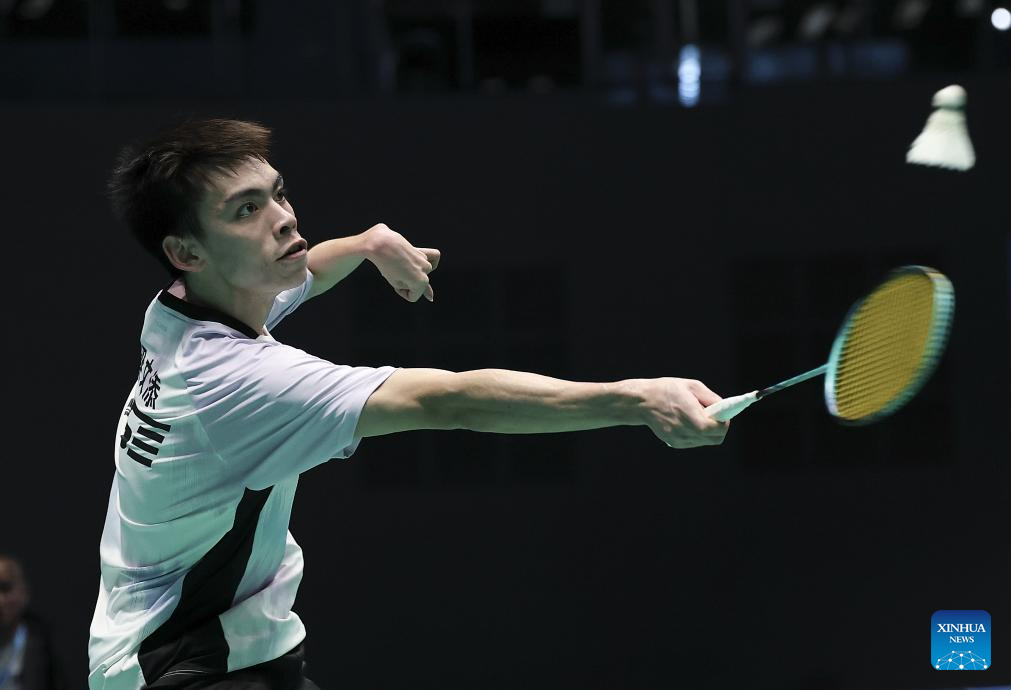
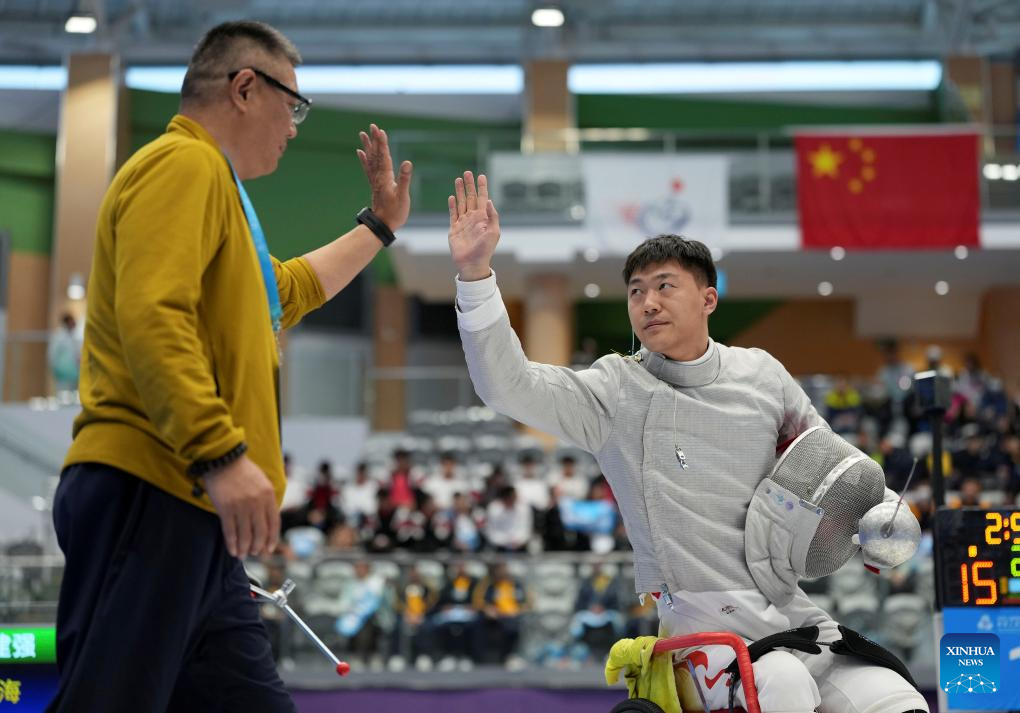

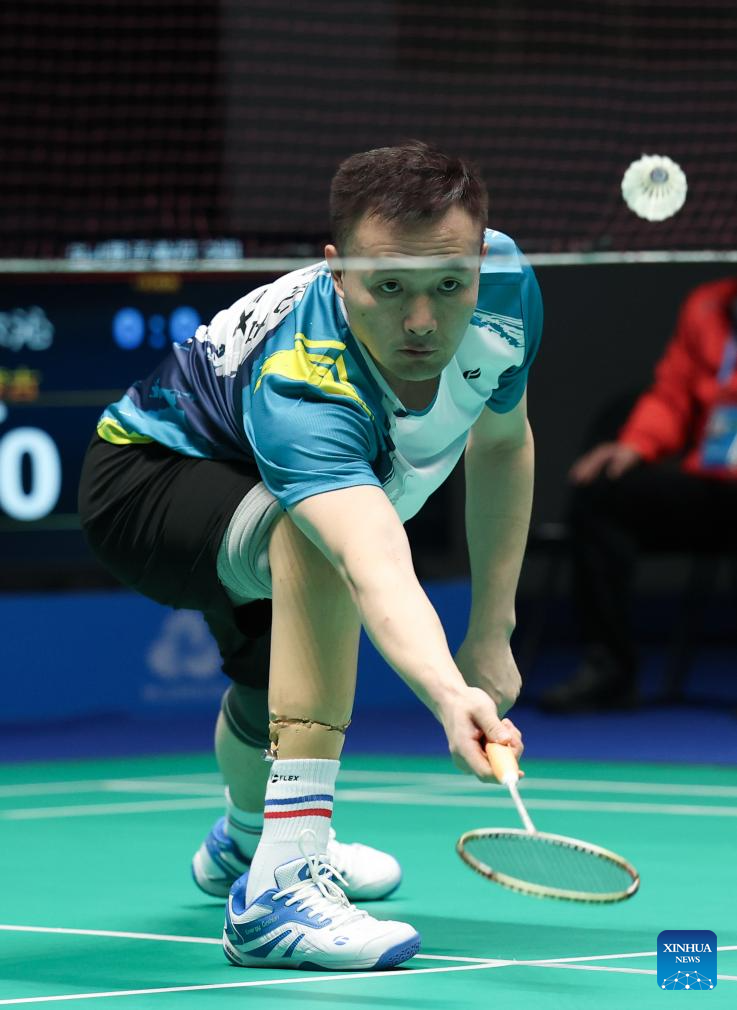
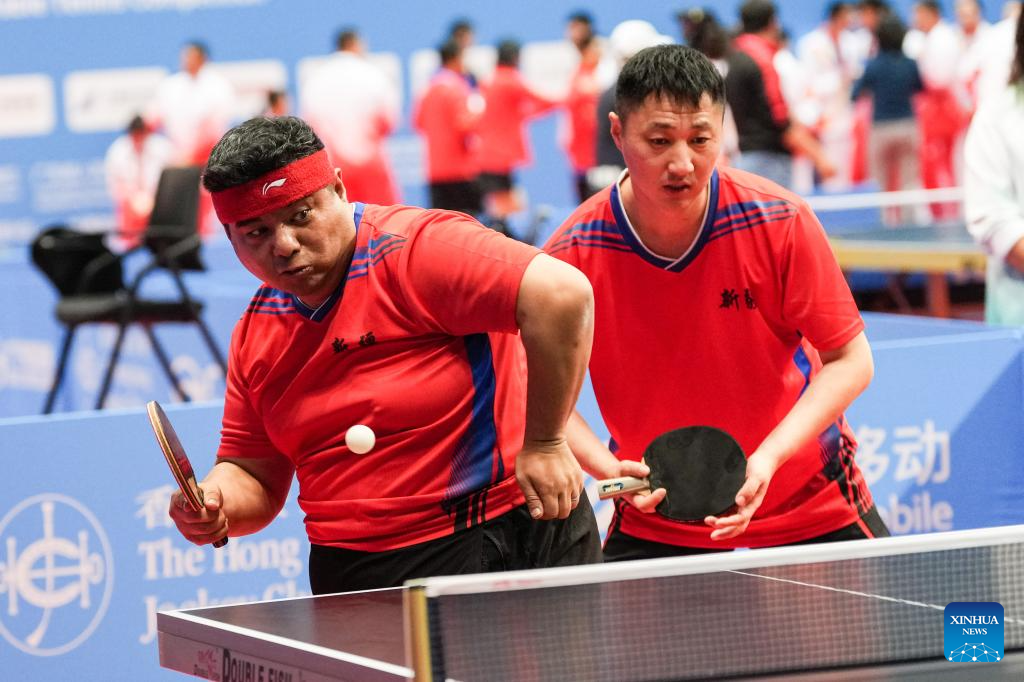
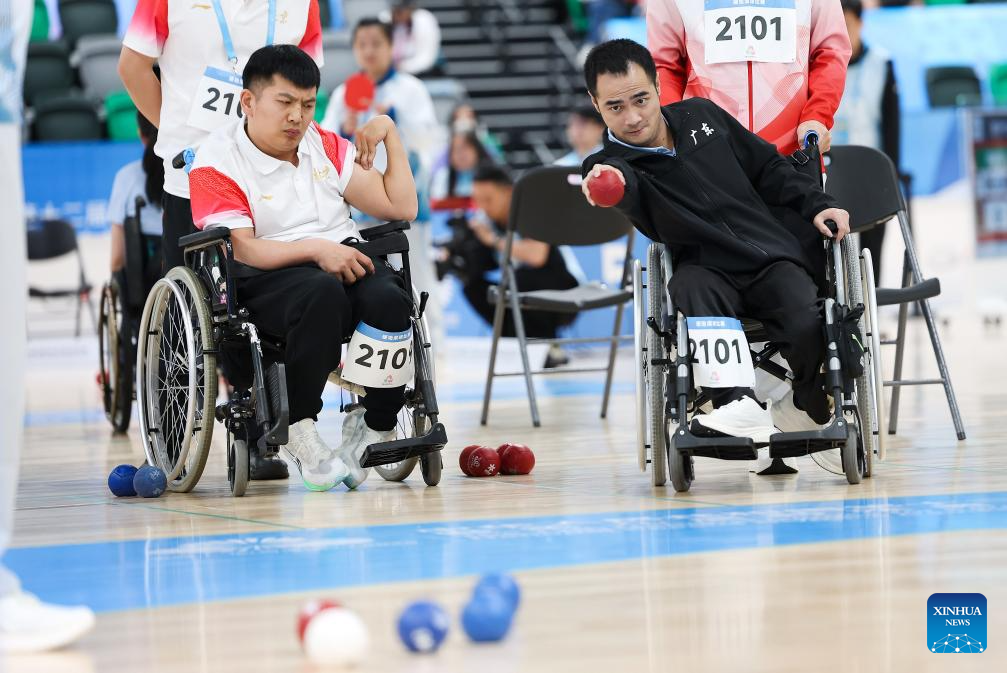
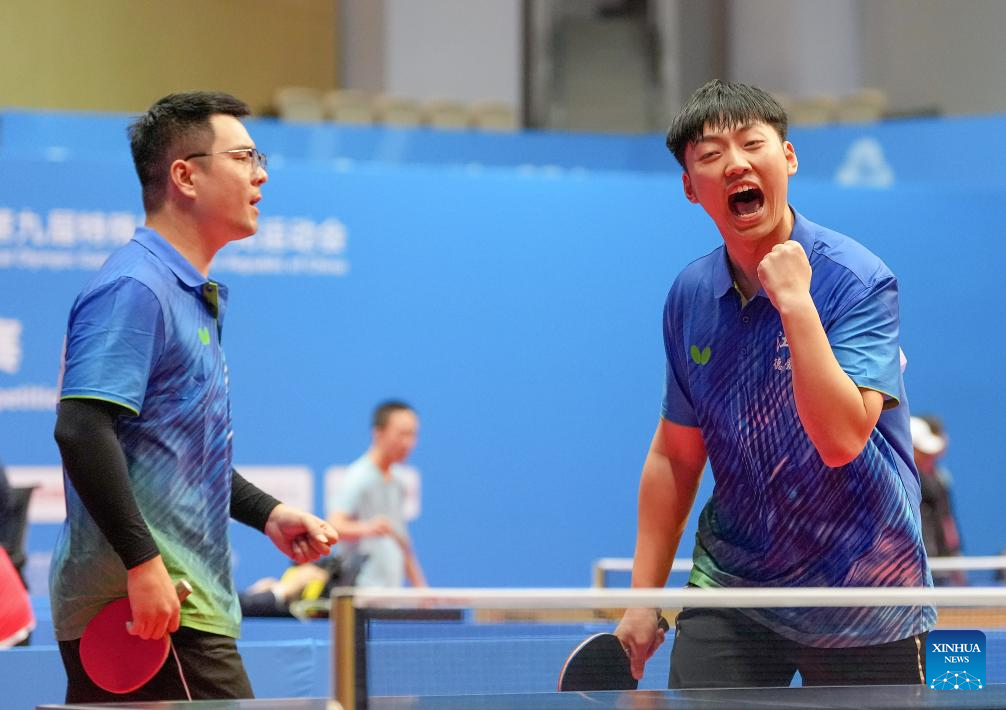
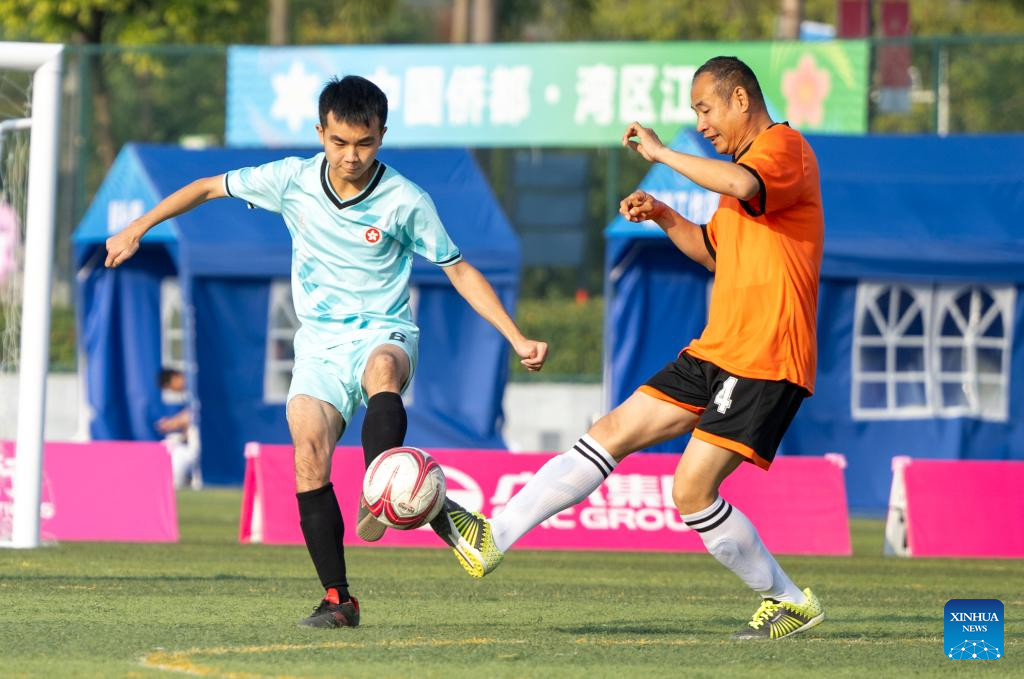
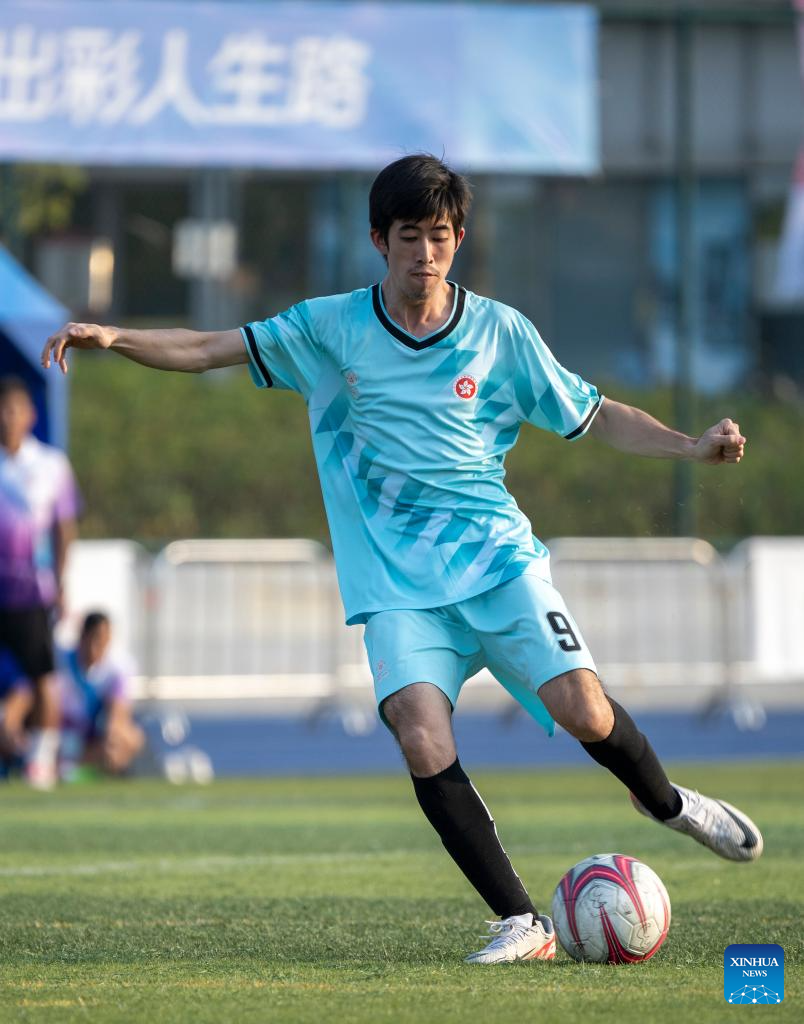
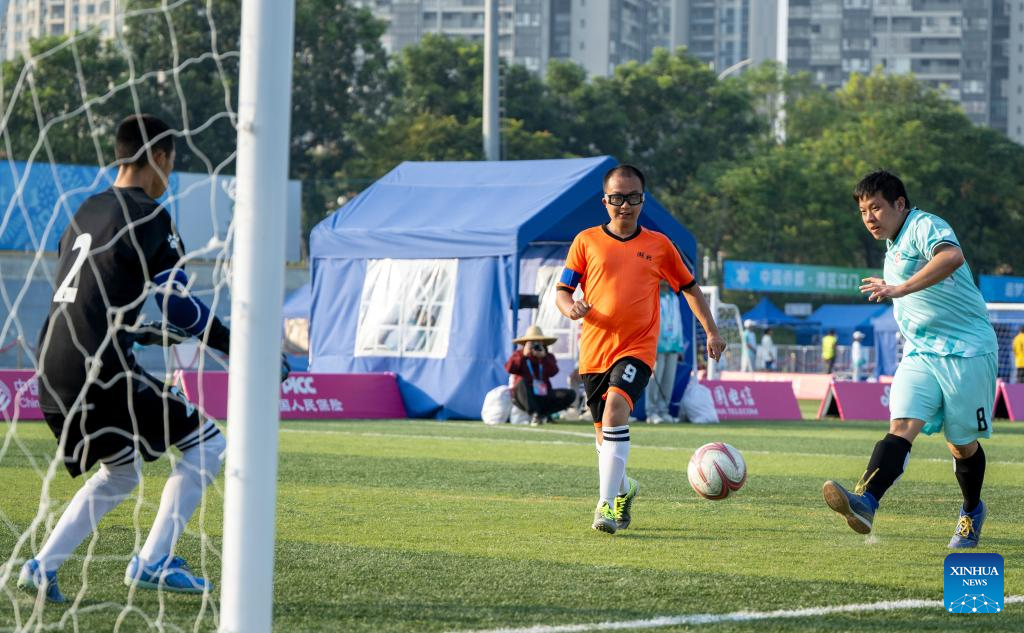
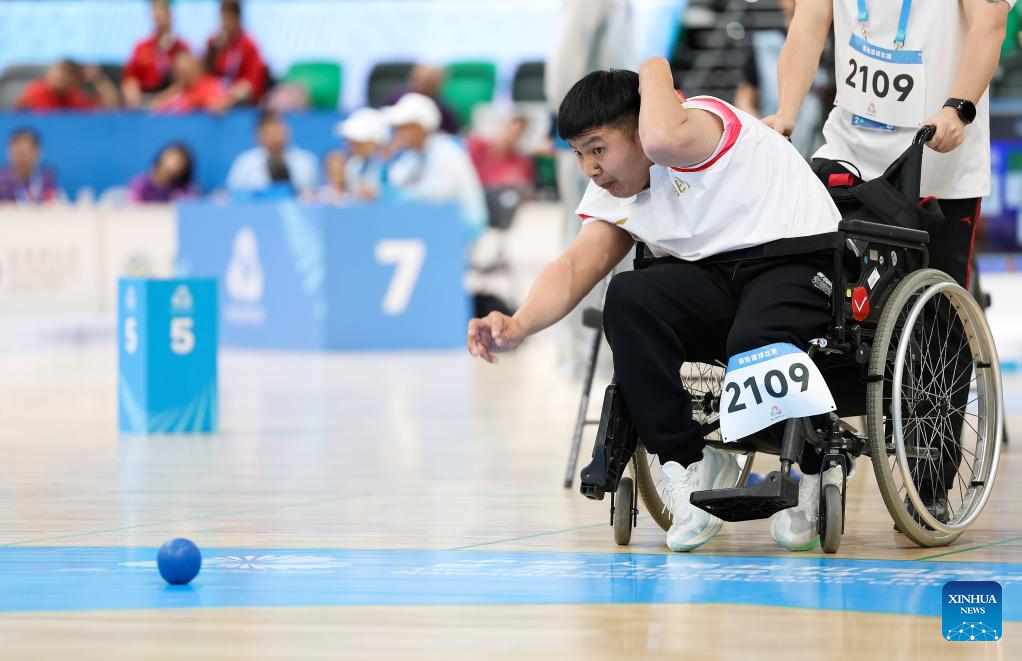
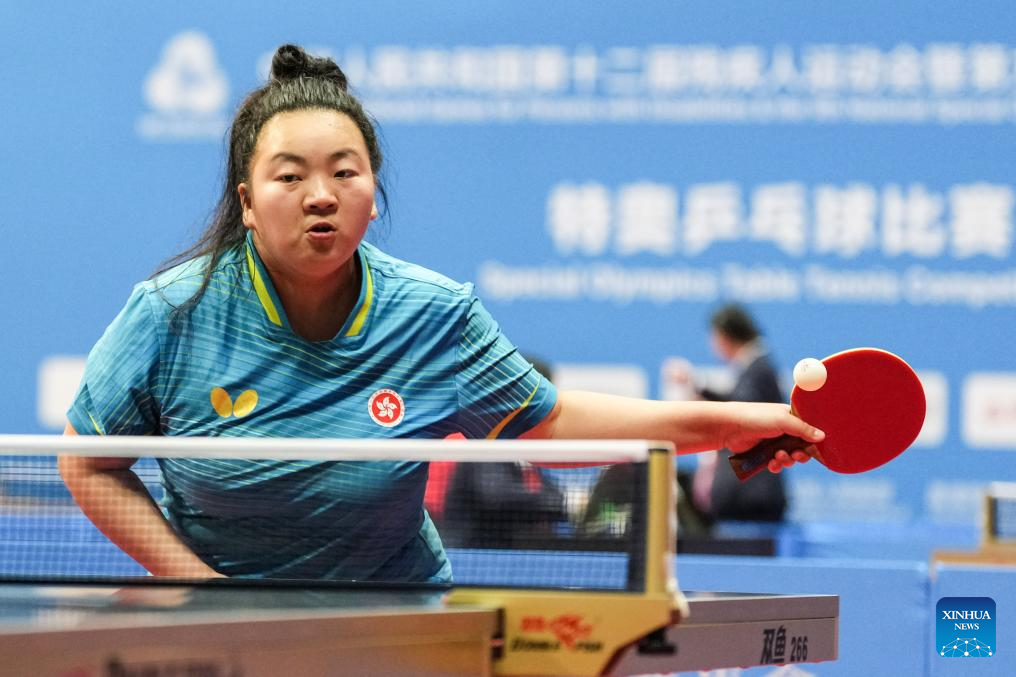

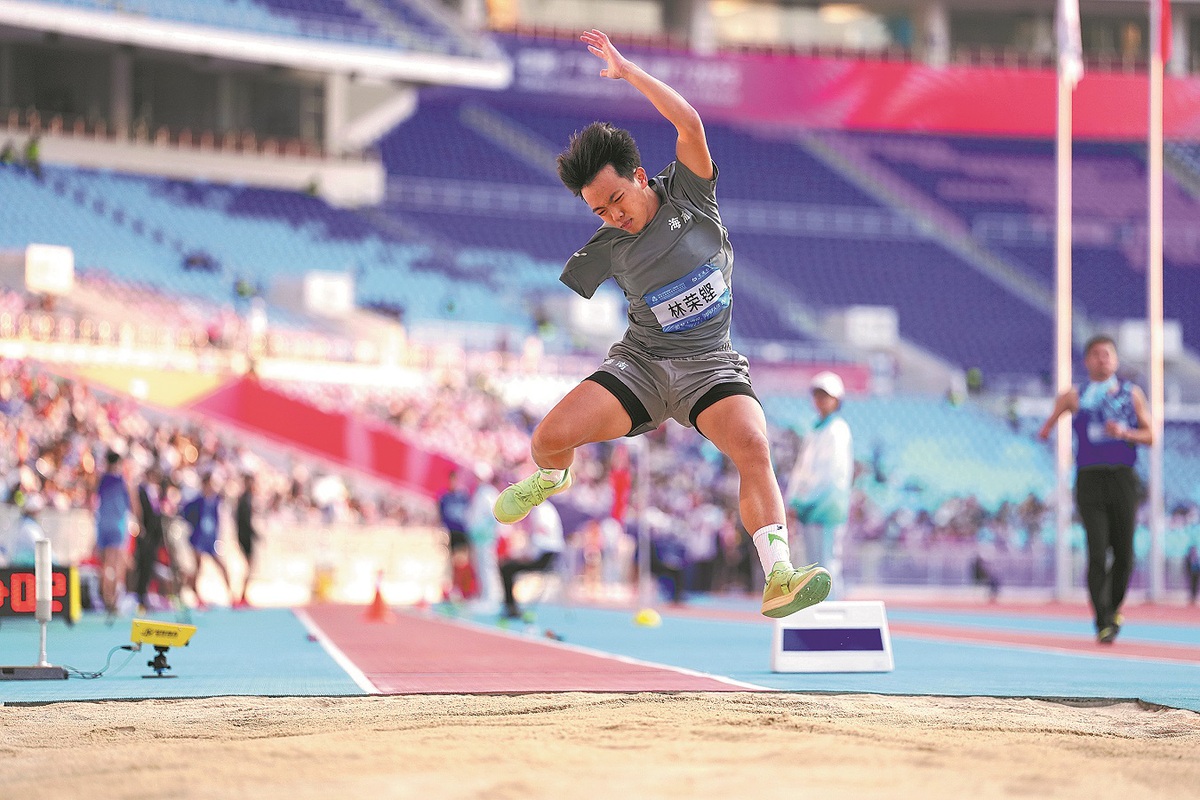
Organizers of China's 12th National Games for Persons with Disabilities and the 9th National Special Olympic Games said the events will further advance the integration of disability initiatives across the mainland and the Hong Kong and Macao special administrative regions.
The two Games, jointly hosted by Guangdong, Hong Kong and Macao, will also help foster disability inclusion and showcase the resilience of people with disabilities in China, organizers said at the opening ceremony of the athletics competitions.
Li Yun, vice-governor of Guangdong province, said he hopes para athletes will perform at their best, demonstrate good sportsmanship and display their abilities during the Games, which are being held in the Guangdong-Hong Kong-Macao Greater Bay Area until Monday.
Li attended the opening ceremony and presented awards to medalists.
Para athletes showcased their abilities and enjoyed the competition on the first day of the athletics events at the Guangdong Olympic Sports Center in Guangzhou on Tuesday.
Jiang Yanhong of Guangdong said she was very happy just to stand on the field after winning the first gold medal of the athletics competition for the host team.
"To participate in the Games, I have prepared for more than two years, including more than half a year of closed training," she said.
Jiang said she is satisfied with the result in her debut at the Games and hopes to continue improving ahead of her next event, the women's 100m race in class T64.
Hu Yutao of Sichuan shared a heartfelt embrace with his wife Wang Wenjie after winning the men's 100m final in class T64. "I am so thankful for my wife's support and encouragement," Hu said.
Wang said Hu had trained for four years and that she feels he is the best.
Li Lu of Henan said the gold medal she won in the women's 400m final in class T47 was the best birthday gift she could receive.
The 31-year-old previously trained at the Guangdong Olympic Sports Center in 2015 and won a gold medal at the 2016 Paralympic Games in Brazil. She is also competing in the women's 100m and 200m.
Liu Cuiqing from the Guangxi Zhuang autonomous region said she cherishes every day of training and every competition she has the opportunity to take part in.
Liu said she overcame numerous challenges caused by injuries and advancing age to win the women's 100m title in class T11.


The 12th National Games for Persons with Disabilities and the 9th National Special Olympic Games officially kicked off in the Guangdong-Hong Kong-Macao Greater Bay Area on Monday, highlighting regional cooperation and steady advances in support of people with disabilities.
It is the first time that the two weeklong events have been jointly hosted by Guangdong province and the Hong Kong and Macao special administrative regions, reflecting the significant and far-reaching importance of demonstrating the strengths of the "one country, two systems" policy, according to Yong Zhijun, executive deputy-general of the organizing committee of the two events.
"It will further showcase the new achievements in China's disability cause during the 14th Five-Year Plan period (2021-25), promoting the development of sports for persons with disabilities and advancing the coordinated growth of GBA," he said at a news conference in Guangzhou, Guangdong's provincial capital, on Monday.
The program features 46 major sporting events and 1,876 subevents. These include 11 mass participation sports and nine Paralympic disciplines. A total of 7,824 athletes from 34 delegations across the country have registered.
During the main competition period, more than 11,000 people, including athletes, referees, classifiers, coaches and support staff members, will take part, an increase of about 30 percent compared with the previous edition, Yong said.
Eleven cities across the Greater Bay Area are involved in hosting events. Yong added that competitions for six winter sports were completed in Beijing, Hebei and Jilin provinces, as well as the Xinjiang Uygur autonomous region ahead of the official opening ceremony.
Chen Xuejun, deputy director of the executive committee for the Guangdong division, said the games demonstrate the Greater Bay Area's capacity to host complex, large-scale sporting events while advancing high-quality development for people with disabilities.
Guangdong is using 36 competition venues, including 22 utilized during last month's 15th National Games, while 14 are dedicated specifically for the two games, maximizing the efficient use of existing venue resources.
Chen said all venues meet national accessibility standards and have been fitted with facilities such as ramps, accessible lifts, tactile paving, adapted toilets, wheelchair seating, sign language interpretation systems and smart information services. "Thus the venues ensure that individuals with accessibility needs can fully participate in and enjoy the competitions, demonstrating a commitment to humanistic care," he said.
Yeung Tak-keung, head of the Hong Kong event coordination office, said the event goes beyond sport by promoting wider social inclusion. He added that closer cooperation between Guangdong, Hong Kong and Macao is helping to break down physical and administrative barriers through resource sharing.
"This lays a solid foundation for jointly hosting more large-scale sports events for persons with disabilities in the future," said Yeung.
Pun Weng-kun, coordinator of Macao's preparatory office, said Macao has established green channels at four designated entry and exit ports to provide convenient customs clearance services for games participants and technical officials.
Around 1,500 volunteers will be sent to various service positions, Pun said, adding that they have completed specialized training for the events, covering skills such as sign language communication and assistance for amputees. "During the games, they will provide a wide range of services, including competition support, venue logistics, on-site guidance, as well as reception and hospitality," he said.
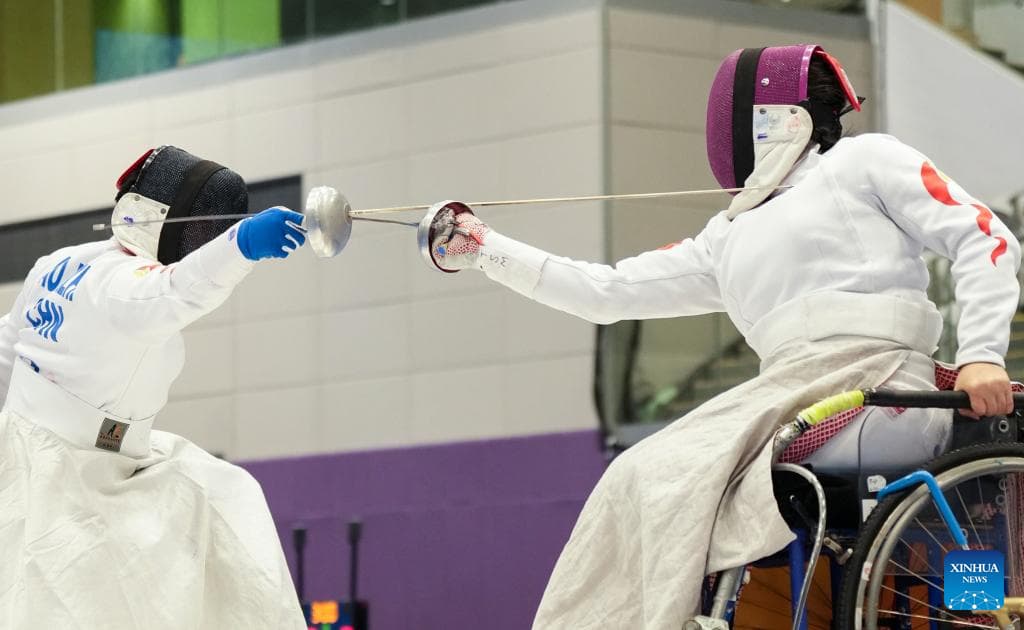
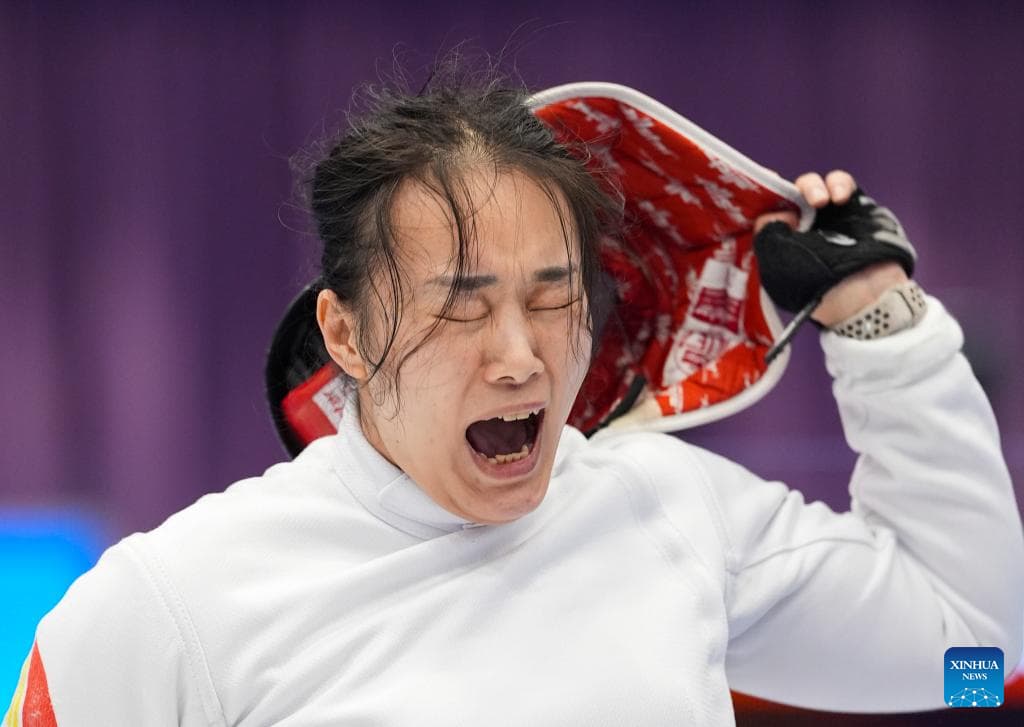
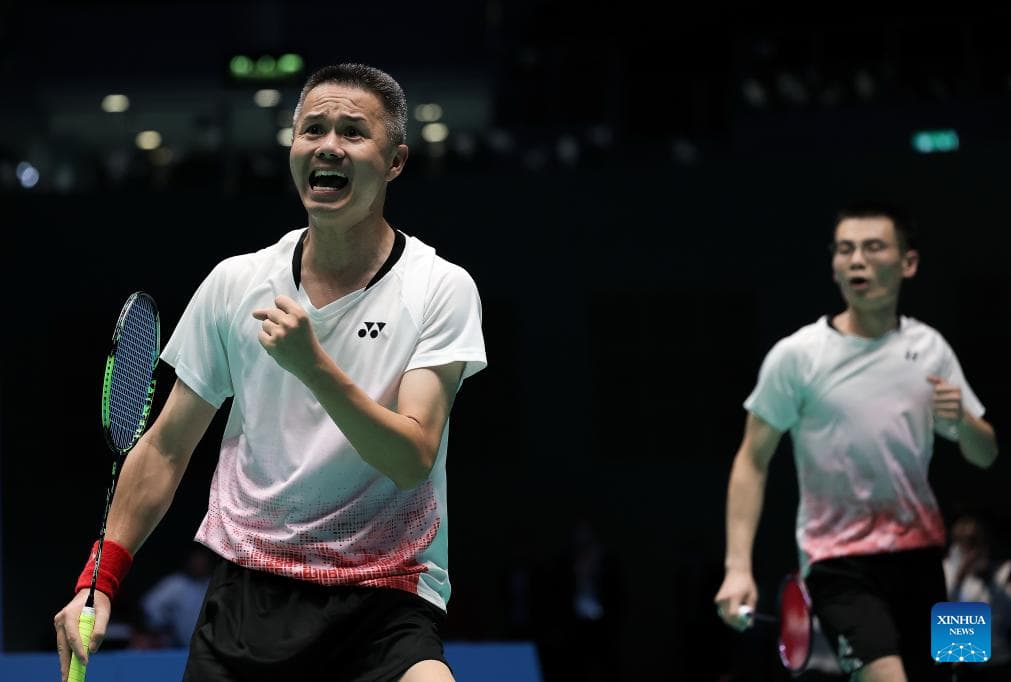
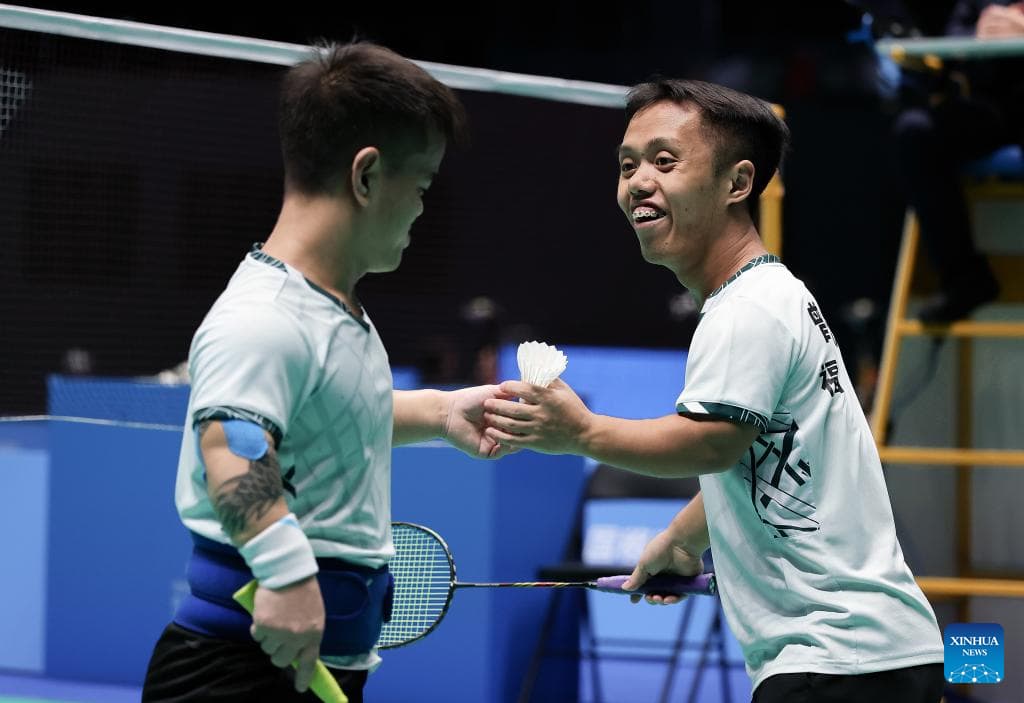
Hong Kong will host four events, including three Paralympic events — boccia, wheelchair fencing and table tennis (Class TT11) — as well as one Special Olympics table tennis round, while Macao hosts the badminton contests.
zhengcaixiong@chinadaily.com.cn

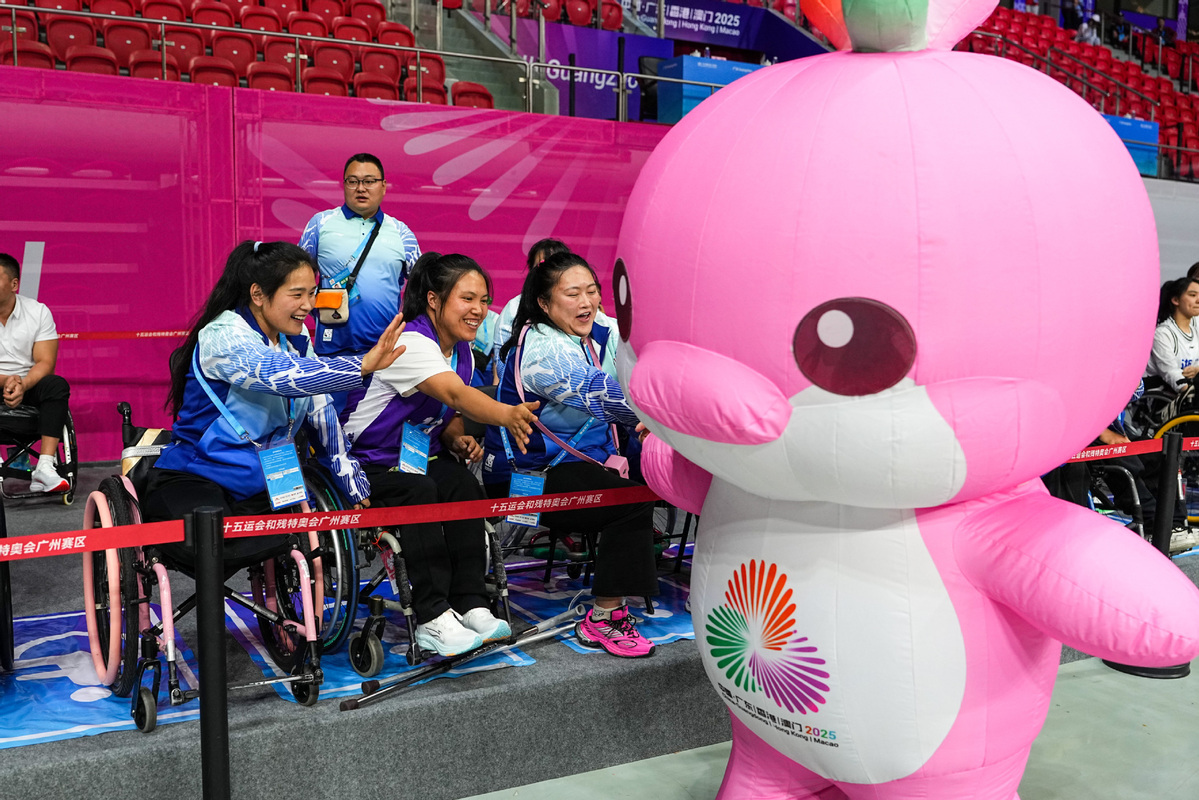
GUANGZHOU -- A total of 7,824 athletes from 34 delegations have registered for China's 12th National Games for Persons with Disabilities and the 9th National Special Olympic Games, with the main competition schedule beginning Tuesday across Guangdong, Hong Kong and Macao.
It is the first time the two events have been jointly hosted by the three regions of the Guangdong-Hong Kong-Macao Greater Bay Area. The Games feature 1,876 events across 46 sports, with competitions in six winter sports having already been completed. The program includes 131 events in 11 mass-participation sports and 599 events across nine Special Olympics sports.
Venues are spread across Hong Kong, Macao and nine cities in Guangdong province. Guangdong will host competitions in 34 sports. Hong Kong will stage boccia, wheelchair fencing, para table tennis (TT11) and Special Olympics table tennis, while Macao will host badminton for both Games.
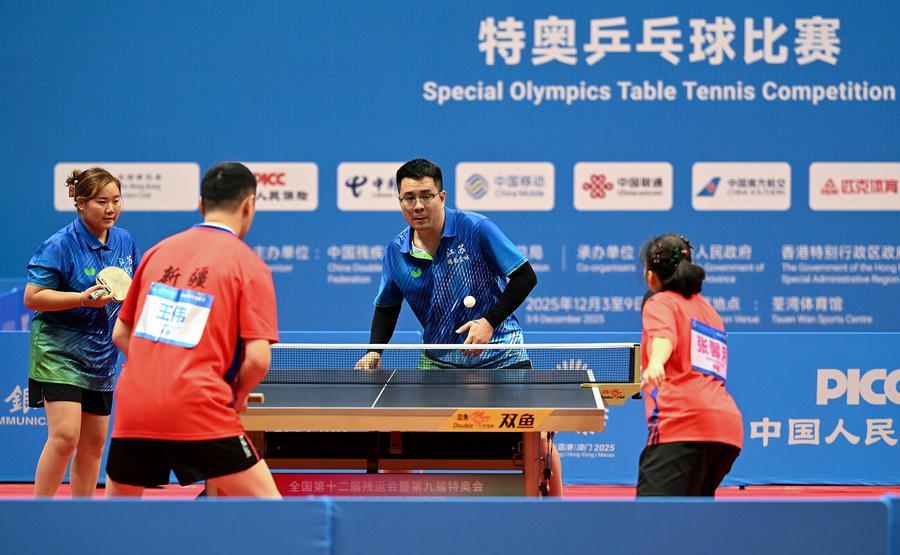
The organizing committee said more than 11,000 athletes, coaches, referees and staff from across the county are taking part from December 8 to 15.
Volunteer services have been fully deployed, offering guidance, sign-language interpretation and other assistance for athletes and spectators. Around 45,000 volunteers are supporting the Games in Guangdong alone.
Under the slogan "Passionate National Games, Vibrant Greater Bay Area," the Games are also being used to promote innovation in assistive technologies. A range of advanced products will be put into use during competition, helping move technologies from laboratories into real-world testing and market application.
Chen Xuejun, deputy secretary general of the organizing committee, said the Games provide an opportunity to better integrate disability services into broader social development.
"We aim for higher-quality and more sustainable progress, so that people with disabilities can look forward to a brighter future," Chen said.

GUANGZHOU -- The torch relay and opening ceremony for the upcoming 12th National Games for Persons with Disabilities and 9th National Special Olympic Games, jointly hosted by Guangdong, Hong Kong and Macao, have been canceled, the Games' organizing committee announced on Friday.
According to the organizing committee, the decision was made after comprehensive consideration of various factors. A simplified closing event will be held after the competitions conclude.

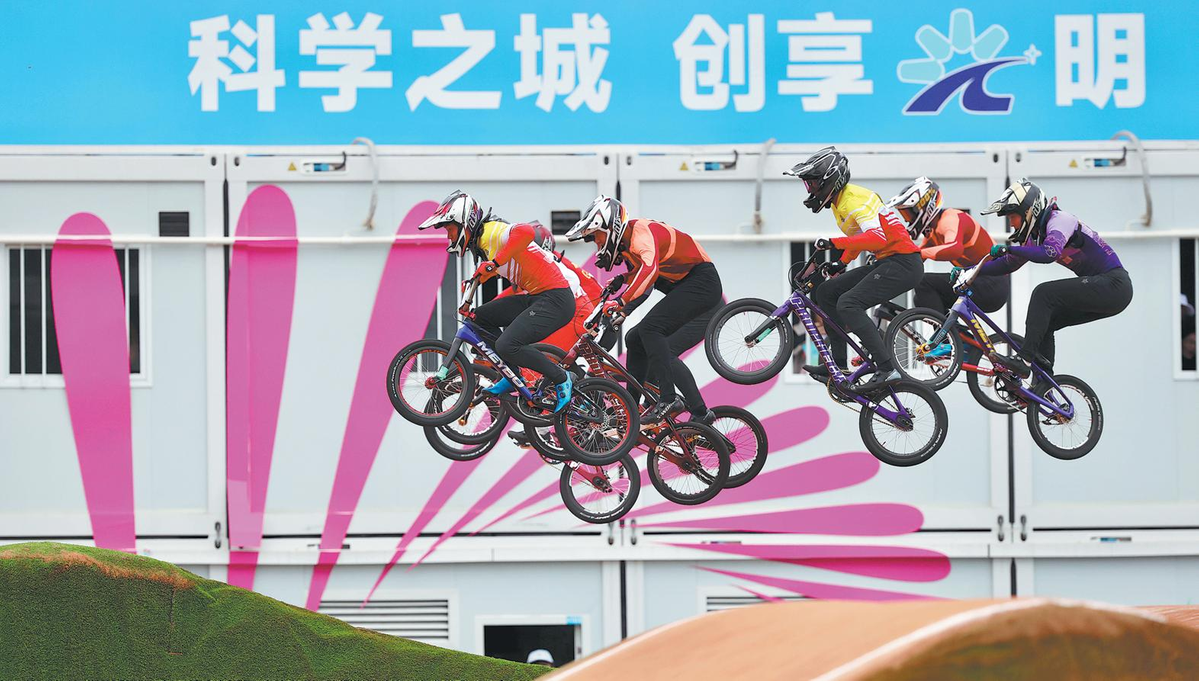
Although Team Shandong's Lin Haochao defended his men's BMX racing title at the 15th National Games in Shenzhen, Guangdong province, he acknowledged the growing challenge from the younger generation of athletes, noting that the competition level of the sport in China is rising quickly.
"Over the past four years, it feels like the sport has been continuously developing. I have realized that, because the younger team members are always progressing, if I don't put in enough effort, I will be overtaken," said Lin, who also won gold at the last edition of the Games held in Shaanxi province in 2021.
He added that the development of younger cyclists is moving particularly fast. "Now, many children are getting involved in BMX freestyle and pump track racing. Also, many BMX programs have been introduced across the country, and China is hosting a lot of events. I believe BMX has a bright future."
Defending his title and winning the gold at the National Games was the goal from the off, said Lin, who crossed the finish line in 32.928.
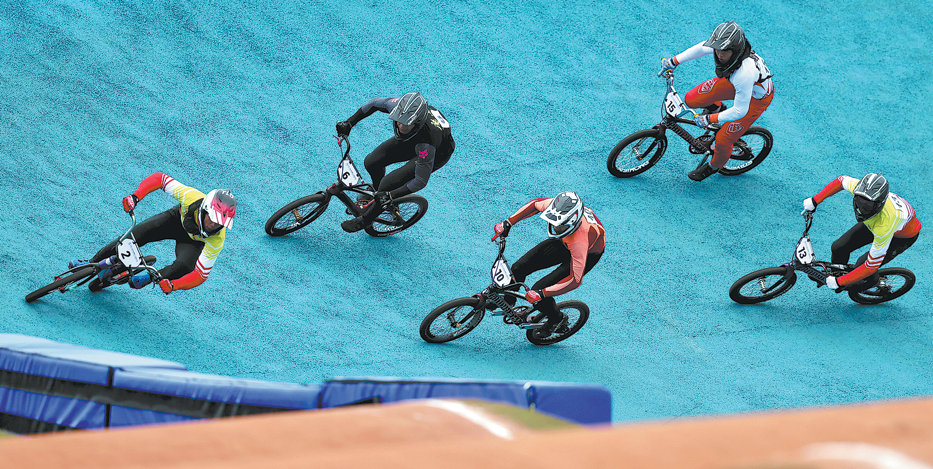
"There are many uncertainties in BMX racing. A slight mistake could negate four years of effort. On the track, I could feel the years of accumulated experience coming into play. At the end of the day, it's the passion of the sport that keeps me progressing."
Meanwhile, Guangdong's Liao Wanyi won gold for the Games co-host in the women's BMX racing. She still couldn't believe that she won after crossing the finishing line in 34.788.
"Before the competition, my coach kept reminding me to focus on myself and not to worry too much about rankings or results," Liao said. "In the past two years, I've fallen many times during competitions and I was worried that my efforts would be in vain, but I kept telling myself to persevere, to relax and to enjoy every moment in the spotlight."
Liao's coach, Ma Liyun, who raced at Beijing 2008, remains the only BMX racing cyclist from Team China to have competed at the Olympics.
"I hope Liao can broaden her perspective, gain more confidence to tackle upcoming competitions and reach a higher platform — and become the second BMX racer from our team to participate at an Olympics," Ma said.
Ma added that the popularity of BMX has continued to grow at the grassroots level in China, with tracks built in many provinces and thousands of children training regularly at cycling clubs.
"BMX freestyle and pump track racing now have a good grassroots foundation in China, one which is strong enough to support the development of the sport. Many children aged eight, nine and older are now already semi-professional," Ma said.
But there is still room for improvement, she added.
"One area is to broaden our channels for talent selection and provide more platforms for kids who are interested in, or already involved in, cycling. I think giving them more opportunities is important."
On Oct 25, Sun Sibei of Hebei province won the gold medal in the women's cycling BMX freestyle with a score of 94.30 points.
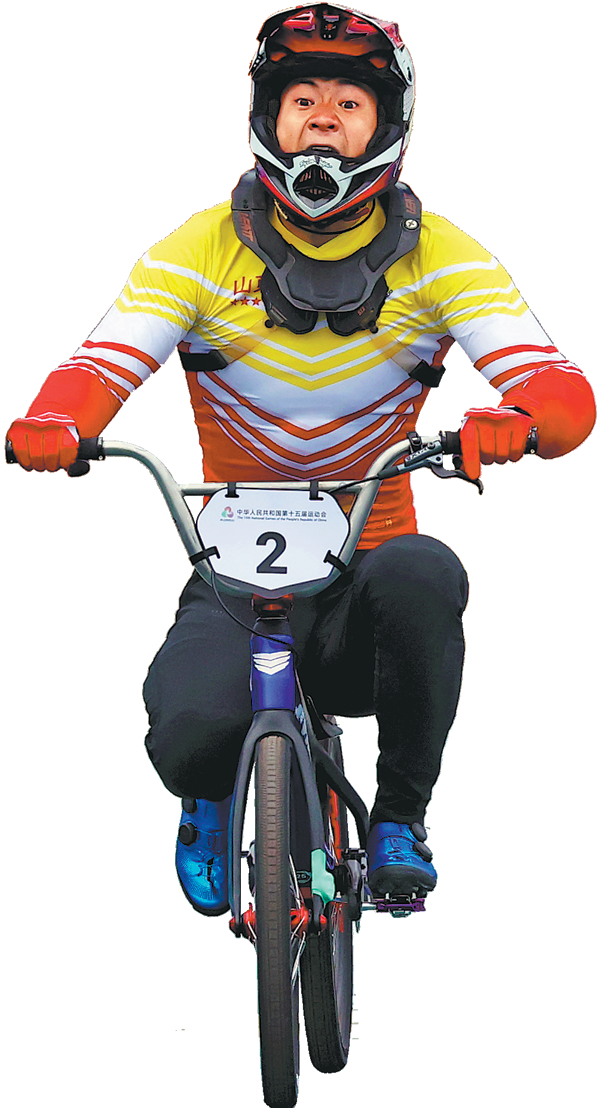
Sun is the reigning world champion, having won the gold medal at the Union Cycliste Internationale Urban Cycling World Championships 2025.
She also was previously a silver medalist at the 2023 UCI BMX Freestyle World Championships and 2024 UCI Urban Cycling World Championships.
Sun narrowly missed out on reaching last year's Paris Olympics, following which, she admits to falling into a period of self-doubt.
The Team China BMX freestyle squad was first assembled in 2018, and, within six years, the youngsters have won numerous awards.
"Winning gold at the National Games is just a small dream that came true. I haven't achieved my bigger dream yet," Sun said.
"My big dream is to stand on the highest podium step at the Olympics. I see taking the National Games gold medal as a new starting point toward my greater Olympic dream."
cuijia@chinadaily.com.cn


Besides cheering for the home team, spectators at Hong Kong's Kai Tak Stadium have not held back in giving their full support to other teams during the men's and women's rugby sevens competitions at the 15th National Games.
With the special administrative region's established rugby pedigree as a key tournament host within the annual worldwide HSBC SVNS series, the passion for the game demonstrated by local players and fans can help boost the popularity of the sport in the Chinese mainland, athletes and coaches said.
Hearing the locals cheer so passionately for their team was incredible, Shandong player and silver medal winner Ma Chong said after his side lost to Hong Kong in the final match of the men's event on Nov 14. The host won 26-19 to claim gold.
"I feel that we've received equal support, which means everything. It helped me become completely locked in during the game," Ma said. "The Hong Kong team are formidable opponents. They put us under constant pressure."
For Hong Kong, the victory represented a redemption story 12 years in the making.
This year marks the Hong Kong rugby team's return to the National Games after a 12-year hiatus. The last time the side participated in the Games, in Liaoning in 2013, the men's team had to settle for the silver medal following a narrow 14-12 final defeat to none other than Shandong.
It was another tense, seesaw battle between the two sides this time around, too. The scoreline remained tight throughout, with both sides trading tries and the lead changing hands multiple times.
With the clock winding down, and the teams locked at 19 points apiece, Hong Kong's Cado Lee Ka-to broke through the Shandong defense to dive over for a decisive late try. Hong Kong converted and secured victory, clinching its first-ever gold medal in rugby at the National Games.
Hong Kong's Max Denmark was, naturally, thrilled with his historic gold medal.
"Proving that Hong Kong is the best at rugby sevens is important, as it inspires everyone in Hong Kong that they can play rugby and follow in our footsteps. And being at home, it feels like you have an extra player on the team. Whenever the crowd reacts to you, you get an extra bit of energy."
Chongqing men's team player Dai Zhendong said he has never felt an atmosphere quite like it.
"I can feel people's passion for rugby. I wish the sport could have such popularity in the mainland."
Zhu Siyuan of Sichuan women's team also lauded the enthusiastic support.
Her team claimed the bronze medal after defeating Anhui by a single, unconverted try on Nov 14, as Jiangsu claimed gold with a 35-12 win over the Shandong squad.
"It's unbelievable. The medal means so much to us — it's our best National Games result ever. We finished seventh last time, so this is a huge step forward," Zhu said.
It's Zhu's second time participating in the National Games, and she noted that her mindset was different this time around. "Previously, I was one of the younger players on the team, and my older teammates directed me during the matches. But this time, I've become one of the seniors, leading the younger players."
She believes that the National Games provide a great platform to promote the sport. "The National Games have directly boosted rugby's popularity. I see it already — my family and friends are now talking about the sport and want to watch more matches."
Jevon Groves, the coach of the Hong Kong men's team, is also keen to leverage the Games to further promote the sport.
"The ultimate goal for us is to promote and develop our game. That's why the team has given it our all. Hopefully, we put on performances that people sat up and took notice of, and were proud of."
Chong Ka-yan of Hong Kong's women's team said players from the mainland are improving fast. "I think the Games show a very high-level of competition," she said.
The provincial teams have excellent passing skills, which make them difficult for us to break down."
She added that ties among players from Hong Kong and those from the mainland have also been boosted — as well as competition.
"We have been training with, and competing against, many provincial teams, such as Jiangsu. They are very strong and fast, so we must continue to step up our own game."

The torch relay for the 12th National Games for Persons with Disabilities and the 9th National Special Olympic Games will commence simultaneously in Guangzhou, Shenzhen, Hong Kong, and Macao starting Saturday. The games run from Dec 8 to 15.
This year marks the first time in history that the two games will be jointly held in Guangdong, Hong Kong, and Macao.
Chen Xuejun, deputy director of the executive committee for the Guangdong division of both events, said the torch relay adopts a shared flame model combined with the 15th National Games to illustrate the theme of "integration of people with and without disabilities, unity in the Greater Bay Area".
"The torch relay will be run by 200 torchbearers, with 50 running in each city," he said at a Monday news conference in Guangzhou, the capital of Guangdong province.
After the relay, representatives from the four cities will return the flame to Guangzhou, and at 5 pm, the Guangdong Olympic Sports Center will host a flame integration ceremony.
The opening ceremony for the two games will be held in Guangzhou on Dec 8.
According to Chen, each city's route showcases its distinctive characteristics while echoing the overarching theme. Guangzhou, with "Reform and Opening Up · Dynamic Guangzhou" as its main thread, unfolds along the One River, Two Banks area.
"It echoes the integrated practice of the Guangdong-Hong Kong-Macao Greater Bay Area in achieving 'hard connectivity, soft connectivity and heart connectivity'," he said.
The 15th National Games, which were also jointly organized in Guangdong, Hong Kong, and Macao for the first time, came to an end after a closing ceremony in Shenzhen on Friday.

Watching the women's 100m hurdles final at the National Games on Wednesday, I couldn't help but noticed how both the broadcast and commentary were overwhelmingly centered on Wu Yanni - one of the country's top hurdler known as much for being good-looking and confident on track. Even as Wu cleared the final hurdle, the commentator, possibly misled by the camera angle, indicated that Wu, in lane 6, was leading the race, until Liu Jingyang from lane 4 surged ahead in the final meters to finish first.
So, who is Liu Jingyang? An online search turned up little. And even the next day, headlines still leaned toward "Wu in tears on the podium." While it's natural for attention to follow athletes with striking personalities and visuals — and Wu's credentials are unquestionable — the sight of Liu, an unsponsored "dark horse" in faded spikes and no makeup on track, seemed to momentarily silence the public narrative.
In the days since the race, I've been reflecting on what unfolded. Here are a few thoughts:
First, Liu Jingyang is no "dark horse"—we just didn't know her story. Any athlete who reaches a national final has endured years of grueling training and even setbacks. Domestic competitions are often more intense than international ones: not every worthy athlete gets a global stage. At 28, with two previous National Games disappointments behind her and fewer resources than her famous rivals, Liu won that gold through pure persistence. Sports stopwatch doesn't play favorites for anyone—results are earned, plain and simple.
Second, there's nothing wrong with athletes gaining visibility. Recognition can bring better training conditions, resources, and fan support—all of which can boost performance. But when popularity starts to skew media focus, when fan debates turn divisive, and when endorsements eclipse competitive achievement, we risk losing sight of what sport is really about. Athletic history, after all, is written in record books and training innovations—not in the footnotes of fan base.
Finally, ours is an era that values openness—yet emotion can still get the better of us. An athlete's career is short; a shot at a quadrennial event like the National Games may represent their entire youth. Whether they succeed or fall short, their raw, emotional responses are valid. As a nation that has hosted both Summer and Winter Olympics and celebrated world-class successes, we've matured. We have athletes who excel not only in performance, but in character. We've grown enough to temper our reactions. When athletes lay their hearts on the track, let's applaud the champions sincerely, and respect every competitor's journey.

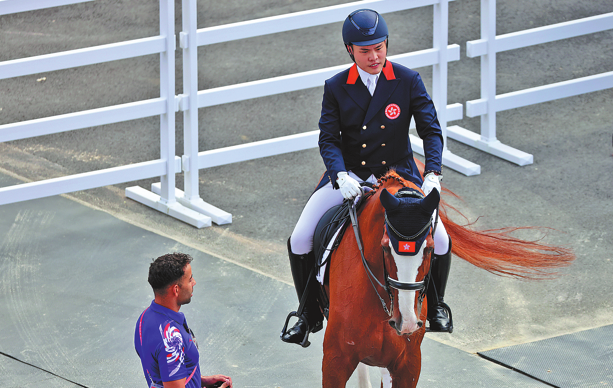
A team of seasoned Hong Kong veterinary surgeons was standing by at the Shenzhen Guangming International Equestrian Center — the hosting venue of the 15th National Games' equestrian competitions — when riders and horses from across the nation were vying for glory from Nov 10 to 19.
The surgeons, who were based at an on-site equine hospital — the first in the event's history — were dispatched from the Hong Kong Jockey Club. Apart from providing standard clinical care, the full-fledged hospital also enabled them to perform surgery, with a fully equipped operating theater and a blood testing laboratory.
As the only sporting event to involve animals at the nation's top level games, the establishment of such a hospital marks a living embodiment of Hong Kong's contribution to the National Games and its equestrian development.
The hospital was a joint effort between the HKJC and the games' organizing committee.
The club provided guidance on its design, lending professional equipment free of cost, while also working with the Chinese mainland and Hong Kong authorities to facilitate the procurement and import of veterinary drugs and equipment.
Home to a world-class horse racing operator, the city has accumulated much experiences and expertise in equestrian development.
Apart from providing the vets and support, the club sent a team of experts from Hong Kong to help ensure the smooth operation of the racecourse for this year's games, co-hosted by Hong Kong and its neighbors Guangdong and Macao.
Ronald Chan Ngok-pang, head of the club's mainland affairs, said the cross-jurisdictional endeavor posed unique operational challenges.
At the Greater Bay Area Conference, a high-profile gathering co-hosted by China Daily in October, Chan said that these challenges prompted the club and other stakeholders to develop more cross-border innovations.
These hurdles could come in different forms. For Hong Kong vets to work on the mainland would need innovative tryouts. An ad hoc mechanism was therefore introduced to allow veterinarians to work and prescribe at the equestrian center, with special approval granted for exporting medications from Hong Kong.
Vet service was just one of the ways the club backed the games. As it marked Hong Kong's debut in co-hosting the event, the club, which is deeply rooted in the city, demonstrated a strong sense of responsibility.
It backed the games with over HK$500 million in funding and had its largest-ever squad of 11 horse-and-rider pairs competing across all categories. Moreover, leveraging its expertise in equestrian sports and extensive experience in organizing competitions, the club offered comprehensive support encompassing horse welfare, venue design, anti-doping protocols, stable management, event services, and more.
Long-term contributions
Long before the recent games, the club had been a significant contributor to the nation's equestrian sector with pioneering initiatives.
For the Beijing 2008 Summer Olympics, the club allocated HK$1.2 billion to venue construction and oversaw the process, while providing round-the-clock veterinary services. At the 2010 Asian Games in Guangzhou, it donated 30 million yuan and provided technical support, particularly in transport logistics and veterinary services. Such support, at the 2022 Asian Games in Hangzhou, became more comprehensive, adding biosecurity, stable management, farriery services, venue operations, and international stakeholder engagement.
Notably, for the Guangzhou Asian Games, the club helped establish the mainland's first internationally recognized equine disease-free zone. This zone spanned from Hong Kong to Guangzhou's Conghua area — the Asian Games' equestrian venue designed and built by the club. The venue was later transformed into the Conghua Racecourse with the club's support and has since been operating as its training center.
Beyond event support, the club keeps expanding its footprint on the mainland. The club recently announced that it had acquired land for an equine transfer center, which will streamline horse importation into the mainland and potentially help foster China's horse breeding industry.
Racing into the future
Also at the GBA Conference, Chan announced a significant update: the Conghua Racecourse will host its inaugural regular race meeting starting from 2026, marking the commencement of world-class racing on the mainland.
The specific date was later confirmed by the club as Oct 31. The club said the timing will allow it to align its planning with China's new five-year national equine industry plan, which is expected to be released in March 2026.
This milestone, Chan said, will further elevate GBA as "a hub of world-class sporting events" and bolster the region's sports entertainment and tourism portfolio.
To further contribute to national equestrian development, Chan believes that international resources and networks, apart from professional expertise, are also Hong Kong and the club's unique strengths, noting that "the best international experts in our field are all willing to come work for the club".
"Marrying Hong Kong's international connectivity with the mainland's resources and experience, we are going to open doors to boundless opportunities," Chan said.
amberwu@chinadailyhk.com

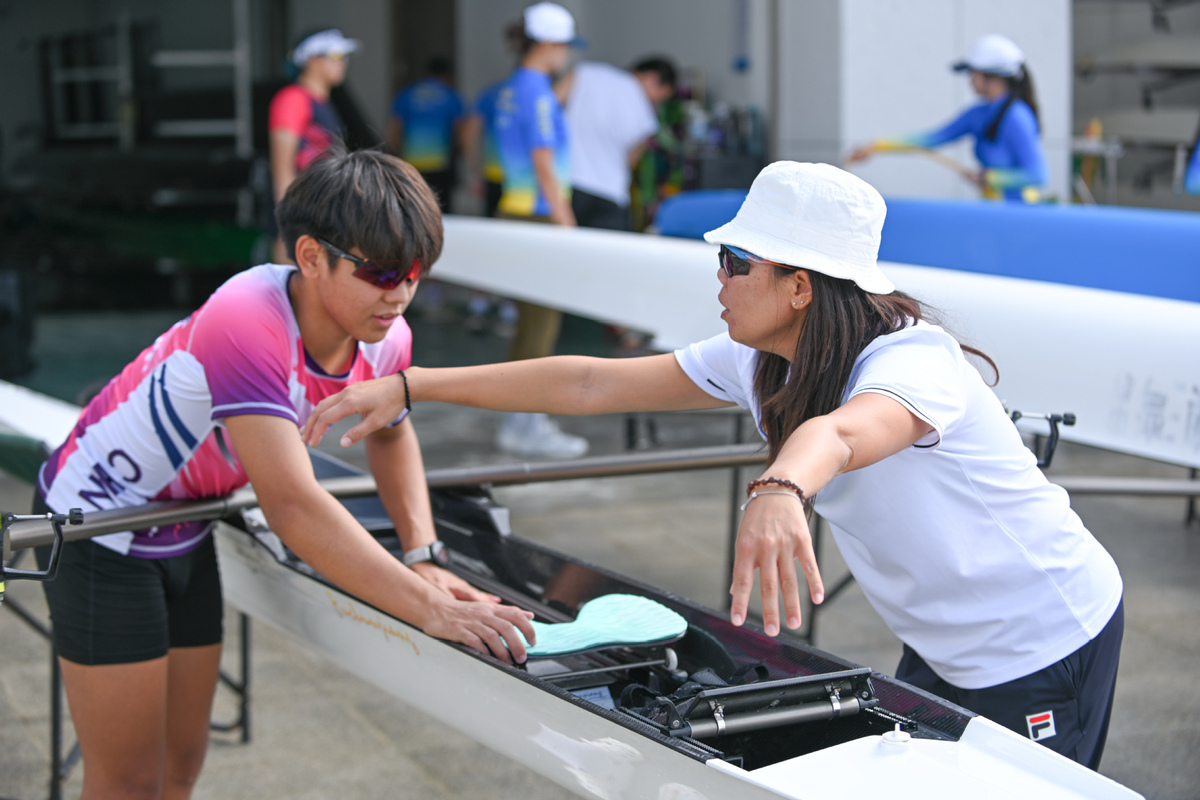
Riding the momentum of the 15th National Games, various cities in Guangdong province are vigorously developing their own distinctive sports events, playing a part in promoting the development of the country's sports culture.
Senior city officials say their residents' enthusiasm for sports will remain intact long after the National Games flame is extinguished.
The games that opened on Nov 9 ended after a closing ceremony in the Shenzhen special economic zone on Friday. The country's largest comprehensive sports event was jointly hosted by various cities in Guangdong and the Hong Kong and Macao special administrative regions for the first time in its history.
"Half of the country's volleyball players come from Taishan city," said late Chinese premier Zhou Enlai in 1972.
"It is an affirmation of Jiangmen's volleyball excellence. More than that, it is the highest praise for the sportsmanship of the city," said Lin Jiansheng, vice-mayor of Jiangmen city, which administers the county-level Taishan city.
Lin promised his city would continue to promote the sport's development in the city even after the National Games.
"Volleyball is not merely an exclusive domain for professional athletes, but a cherished pastime embraced by the entire community in Jiangmen," he said.
Taishan, with a resident population of about 900,000, is home to an impressive 3,300 amateur volleyball teams. Nearly 350,000 residents, or about 38 percent of the population, regularly participate in volleyball activities.
From farmlands to professional courts, people across all professions and age groups engage in the sport, creating a nationwide fervor where "every village boasts a volleyball court and fields its own volleyball team".
According to incomplete statistics, Jiangmen has so far sent 542 elite athletes to provincial and municipal teams across China and nurtured 62 national-level masters of sports. At the recent National Games, 22 athletes from Taishan competed in the volleyball events.
Wu Guoxiong, vice-mayor of Zhanjiang, said the city would continue to make great efforts to build on its "home of diving" legacy, inspiring more people to appreciate and love the sport and allowing the reputation of "diving town" to go global in the months to come.
As one of China's pioneering cities in competitive diving, Zhanjiang has established a comprehensive training system that spans both urban and rural areas and covers all school age levels, said Wu.
"The system not only preserves scientifically grounded training methodologies but also excels at identifying promising talent and providing individualized coaching," he said.
By forming a complete "selection-cultivation-transition" pipeline, the city ensures a continuous emergence of new generations of diving talent, said Wu.
Located in the western coastal area of Guangdong, Zhanjiang is home to Olympic gold medalists Quan Hongchan, He Chong and Lao Lishi.
Chen Zhiwei, a member of the standing committee of the Dongguan committee of the Communist Party of China, said organizing the basketball event was a significant opportunity for Dongguan to enhance its reputation as the "national basketball city".
Chen pledged that Dongguan would continue to promote basketball after the National Games, contributing to the sport's development in the country, besides sending more athletes to the national teams.
Guangdong men's basketball team, mainly consisting of athletes from Guangdong Hongyuan Southern Tigers, won the championship with a perfect record in the games. Guangdong Hongyuan, which Chinese basketball icon Yi Jianlian once played for, is a holder of 11 CBA titles.
"From the citywide phenomenon of "Village BA" and "Factory BA" to the dynamic street basketball culture, Dongguan has become a key case study for observing the development of basketball in China," said Chen, who is also director of the united front work department in the city.
"Every village has a basketball court, every town has a basketball arena: that is now the most vivid portrait of the city," he added.
Dongguan was named the national basketball city by the General Administration of Sport in 2004.
Yan Hongyu, vice-mayor of Zhaoqing, said his city government would vigorously develop judo, promoting its dual nature — both soft and strong — to shape the city's unique sports character.
"Relevant departments will systematically promote the introduction of judo programs in primary and secondary schools across the city, and construct an integrated judo talent training system with the mechanism of 'popularization, selection, and transportation'.
"Judo enjoys widespread popularity among teenagers and young adults in Zhaoqing, which has two-time Olympic gold medalist Xian Dongmei," said Yan, adding that the city has built 18 schools with a judo-focused curriculum, while 62 schools have incorporated standardized judo exercises into their programs, achieving the goal of "ensuring judo lessons in every classroom and basic judo skills for every student".
zhengcaixiong@chinadaily.com.cn


As wushu's global prestige reaches new heights — confirmed by its debut in the 2026 Summer Youth Olympic Games and a spotlight from International Olympic Committee officials at the 15th National Games — Macao's wushu leaders are calling for intensified and standardized cooperation within the Guangdong-Hong Kong-Macao Greater Bay Area.
They argue that shared training, standardized coaching, and more regional competitions are the crucial next steps to harness this momentum, elevate the martial arts-based sport to new levels, and nurture new champions.
The three-day wushu set routine event at the 15th National Games — the first national sports meeting co-hosted by Hong Kong, Macao and Guangdong province — drew attention from sports heavyweights including IOC Honorary President Thomas Bach and President Kirsty Coventry. They attended wushu competitions at the Guangzhou Nansha Gymnasium, praising Chinese sports development and expressing their excitement at bringing the sport to the 2026 YOG in Dakar, Senegal.
Also among the spectators was Li Yi, who won Macao a gold medal in the women's Changquan event at the 19th Asian Games in Hangzhou, Zhejiang province. Every time Macao's junior players faced strong opponents, Li watched the rivalry with particular admiration.
"These young competitors are remarkably brave," she observed. "Making the finals means ranking among the nation's top twelve — that brings immense pressure, yet they truly rose to the occasion."
Selected for wushu training at the age of 8, Li emphasized that her journey from novice to champion was fueled by perseverance. Now a coach, she focuses on building strong fundamentals while prioritizing character development.
"There will be only one champion," Li noted. "What matters more is shaping resilient and responsible individuals through wushu."
Switching to a coaching career two years ago, Li said she has observed positive momentum in regional exchanges for this sport, including training sessions with teams from other regions such as Guangdong province and Malaysia.
Iao Chon-in — a former world champion and now the head coach of Macao's wushu team — is also a stout promoter and practitioner of cross-regional exchanges.
Regular interactions with fellow athletes and coaches from other wushu powerhouses are a vital catalyst for raising Macao's athletic caliber and "hugely beneficial" in ensuring the team moves with the most advanced training approaches, Iao said.
He championed a "veteran-led-newcomer" training model, through which local wushu schools can single out 10 to 20 trainees annually from a pool of over 250 candidates to join the city's representative team, thus forming a stable career ladder from rookies to elites.
Li, too, suggested more cross-regional competitions to train green recruits.
"Events like the National Games will serve as ideal platforms for joint training camps and performances. Athletes can spend extended time together, experiencing each other's training environments firsthand and fostering meaningful exchanges."
She also advocated for better integration of wushu with Macao's positioning as a world center of tourism and leisure, suggesting curated tours that combine competitions with cultural site visits to offer immersive experiences.
Iao said long-term career planning and logistical support for the sustainment of athletes' skills remain persistent challenges for Macao's wushu development.
Some of the most promising athletes have a tendency to leave the sport in their mid-20s to start families or pursue studies, causing a recurring talent drain, said Iao, likening the situation to "a plate of chicken but no soy sauce".
Fundamental support is in place, but critical incentives are still missing to retain the city's best talent, he said.
The head coach also urged stepping up medical and nutritional support to athletes, and above all, offering a dual-track career development pathway that helps young athletes balance training with academic needs, which is crucial for a smoother transition to a post-athletic career and long-term success.
Li encourages young athletes to enjoy wushu. "Though it was tough, I gained a lot. In the end, it all boils down to two words: extremely joyful."
Li said she is dedicated to passing on this joy and resilience to junior athletes, hoping one day to see students she coaches inherit Macao's wushu traditions and shine on the stage she once graced.
Contact the writers at stacyshi@chinadailyhk.com


With unity across regions celebrated along with athletic prowess, China's National Games have capped off a memorable edition with profound legacies, on and off the field of play, boosting integration of the Guangdong-Hong Kong-Macao Greater Bay Area.
After two weeks of intense competition and an extensive display of southern China's culture, the country's biggest quadrennial sporting gala bid farewell to its participants in a visually stunning ceremony on Friday in Shenzhen, Guangdong province, leaving the crowd excited about the future prospects of closer GBA teamwork in hosting more major events.
The open-air closing ceremony, which took place at the waterfront theater at Shenzhen's OH Bay, featured a variety of art performances celebrating sporting achievements, cultural diversity and the close bonds between the host areas, enhanced by dazzling audiovisual effects, on a water-covered stage set against an illuminating backdrop of the city's urban night view.
As the first edition jointly held by Guangdong and the special administrative regions of Hong Kong and Macao, the success of the multisports event is a compelling testament to the significance of the "one country, two systems" policy, said officials and participants.
"By hosting the games together, we've innovated and effectively implemented a cross-regional cooperation model for hosting mega events, which will give fresh momentum to the coordinated development of the GBA in the future," Wang Xi, vice-president of the Organizing Committee of the 15th National Games, said at a news conference on Friday.
As a highlight of the event, the smooth operation of the men's individual road cycling race, the first ever cross-border event in the games' 66-year history, which was facilitated by the Hong Kong-Zhuhai-Macao Bridge and a tailor-made customs clearance system helping riders pedal past mid-race border checkpoints without stopping, set a perfect example of the games' legacy for further promoting GBA integration.
The 230-kilometer race started on Nov 8 at Zhuhai in Guangdong, looped through Macao, and then crossed the spectacular bridge to reach Hong Kong before cyclists sprinted back to Zhuhai for the finish.

"Every aspect of the cross-border race, from the route design to the swift clearance of athletes, spectators and vehicles, required joint planning and close coordination. So pulling it off without a hitch was a significant practice for organizing similar events in the future," said Yeung Tak-keung, head of the Hong Kong coordination office for the games.
The successful hosting of the cycling race, as well as an inter-city marathon which started and finished in Shenzhen on Nov 15 with its route going through Hong Kong, shed light on the convenient transport infrastructure as an advantage of the GBA.
"The National Games carry great significance. It is not only about the sports community staging an event, but the whole of society is also involved," Timothy Fok Tsun-ting, president of the Sports Federation and Olympic Committee of Hong Kong, told Xinhua News Agency.
"In the long run, the closer exchanges fostered by the games will give a major boost to the development of the Greater Bay Area."
Macao's involvement in hosting some of the most sought-after events, such as table tennis and women's volleyball, has already attracted over two million visitors to the city during the games, according to O Lam, secretary for social affairs and culture of the Macao SAR government.
"By bringing high-level sporting events to Macao we've seen quite an impressive increase in the number of visitors to the city, proving that sports-plus-tourism could be a new attraction for Macao's economic growth," said O, who is also vice-president of the games' organizing committee.
Chinese athletes' outstanding performances were underlined by the fact that eight world records, 13 Asian records and 14 national records were broken during the games, according to the General Administration of Sport of China, giving a strong confidence boost to the country's preparations for the 2028 Los Angeles Olympic Games.
"The rise of a group of young talents at the games has suggested that our sports talent development program is working well, building our confidence for a successful Olympic campaign in 2028," said Tong Lixin, vice-minister of the General Administration of Sport of China.
A total of 2,858 drug tests were completed during the games, with no positive results reported, proving that a vigilant anti-doping education program, which had involved over 36,000 athletes, coaches and team officials, worked well in promoting fair play and integrity, Tong added.
The total ticket sales of the games reached 246 million yuan ($34 million) by Friday, ranking third on the list of all mega sporting events hosted in China, following only the 2008 Beijing Summer Olympics and 2023 Hangzhou Asian Games, according to the organizing committee.
sunxiaochen@chinadaily.com.cn


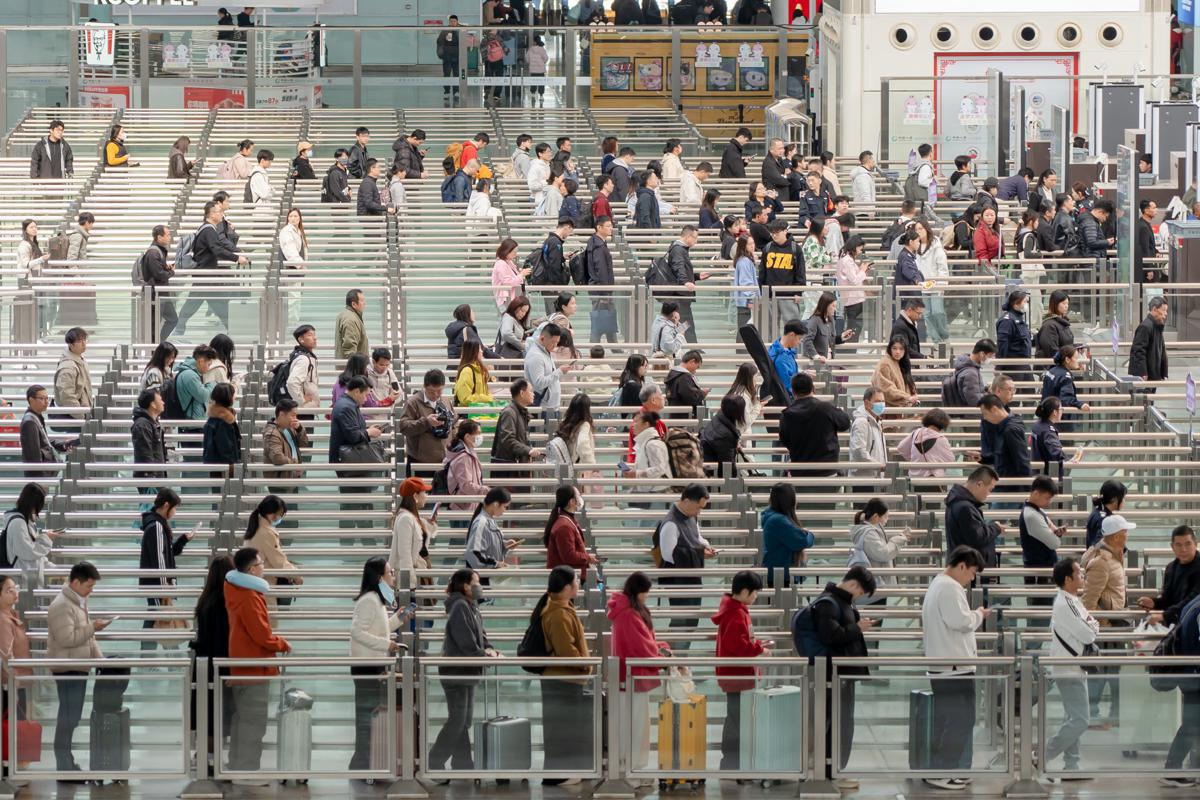
Railway operators in Guangzhou, the capital of Guangdong province, have comprehensively optimized their transportation plans and services to accommodate the travel needs of passengers before and after the closing ceremony of the 15th National Games and during the upcoming Paralympic Games.
To improve travel efficiency, Guangzhou South Railway Station has increased capacity on key routes such as the Guangzhou-Zhuhai Intercity Railway, Guangzhou-Shenzhen-Hong Kong, Beijing-Guangzhou, Meizhou-Shantou and Jiangmen-Zhanjiang, creating an extensive, efficient and convenient transportation network across the Guangdong-Hong Kong-Macao Greater Bay Area.
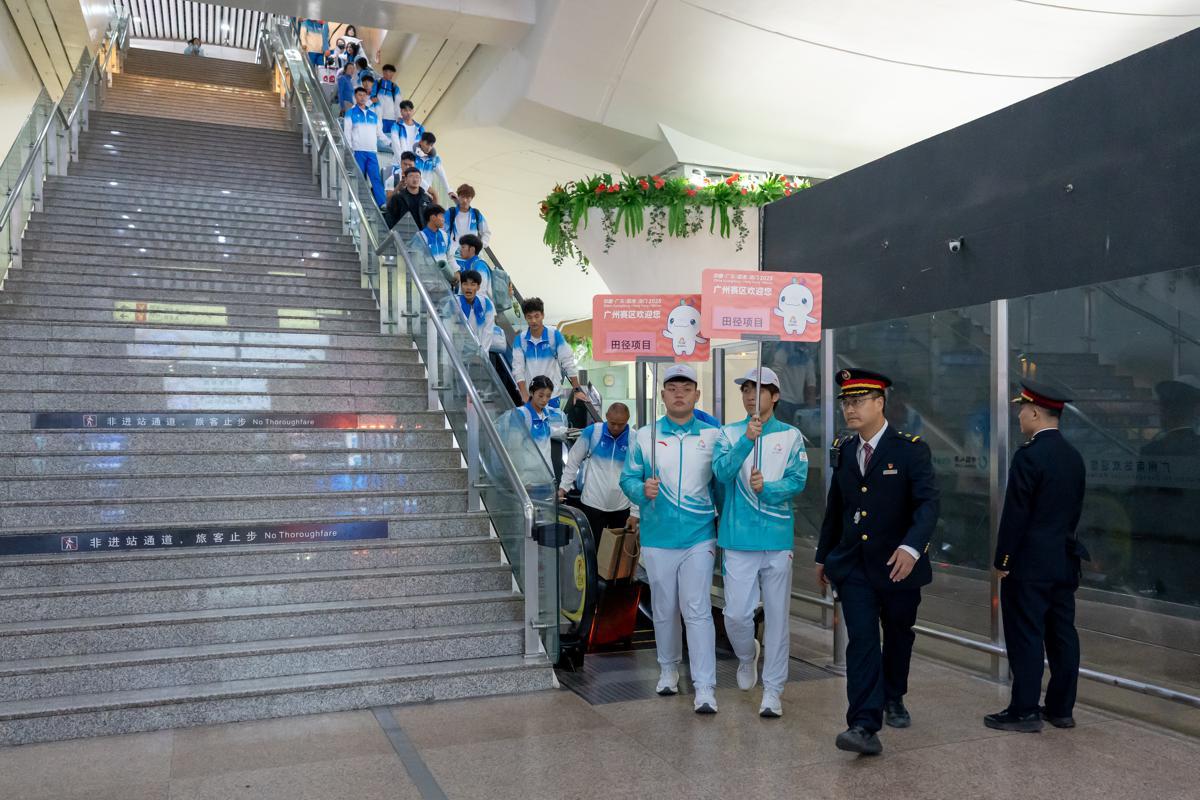
As of Friday, the station has successfully facilitated travel for 3,447 event guests, including athletes, coaches and officials of the games, which concluded in Shenzhen, Guangdong, on Friday evening.
"Given the concentration of event guests and their need to carry equipment, we have set up dedicated lanes at the station's real-name verification and security checkpoints," said Zeng Yongxian, Party secretary of the first passenger transport workshop at Guangzhou South Railway Station.
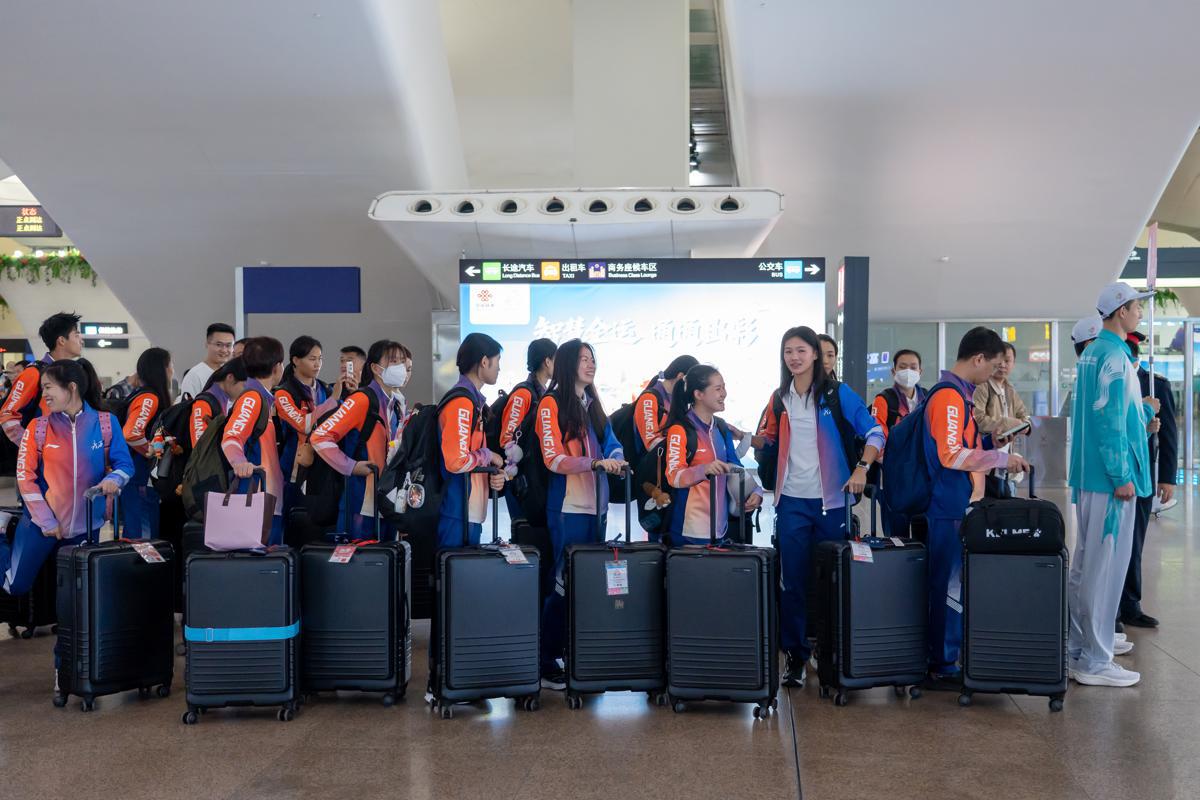
The station has also designated special waiting areas in the waiting rooms and opened 72 real-name verification channels along with corresponding security channels to ensure smooth travel for both event guests and passengers.
During the upcoming Paralympic Games, additional trains have been scheduled to run between Shenzhen and Hong Kong West Kowloon.
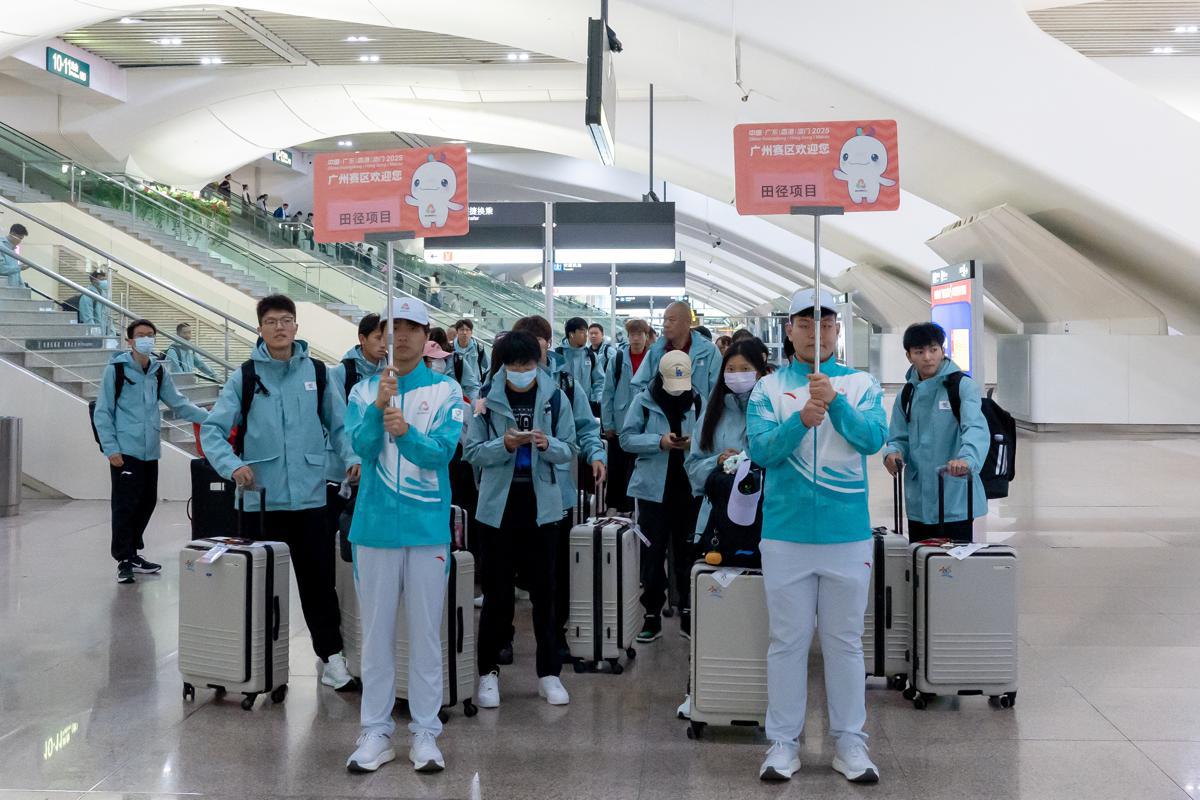
The station has made accessibility a priority, installing 47 barrier-free elevators, 17 accessible restrooms, one accessible ticket window and five accessible service areas.
"We have also added braille signage to the elevators and installed a wireless emergency alarm system in the accessible restrooms," said Zeng.







