



American consumers paid higher prices in December for food and rent









Americans paid more for consumer goods at the end of the year, with data released by the Bureau of Labor Statistics showing prices were 2.7 percent higher in December compared with December 2024, driven by stubborn inflation and the cost of housing.
The newly released data from the Labor Department's Consumer Price Index showed the effects of the continued cost of living crisis on people's wallets. The CPI rose 0.3 percent on a month-to-month basis. There was a 0.4 percent increase in December compared to a month before as the cost of housing and shelter became the main driver of the rise.
President Donald Trump has attempted to tackle the high cost of housing across the board by instructing the Federal Housing Finance Agency — Fannie Mae and Freddie Mac — which oversee mortgages, to purchase $200 billion of bonds issued by the two companies in a bid to bring down mortgage rates.
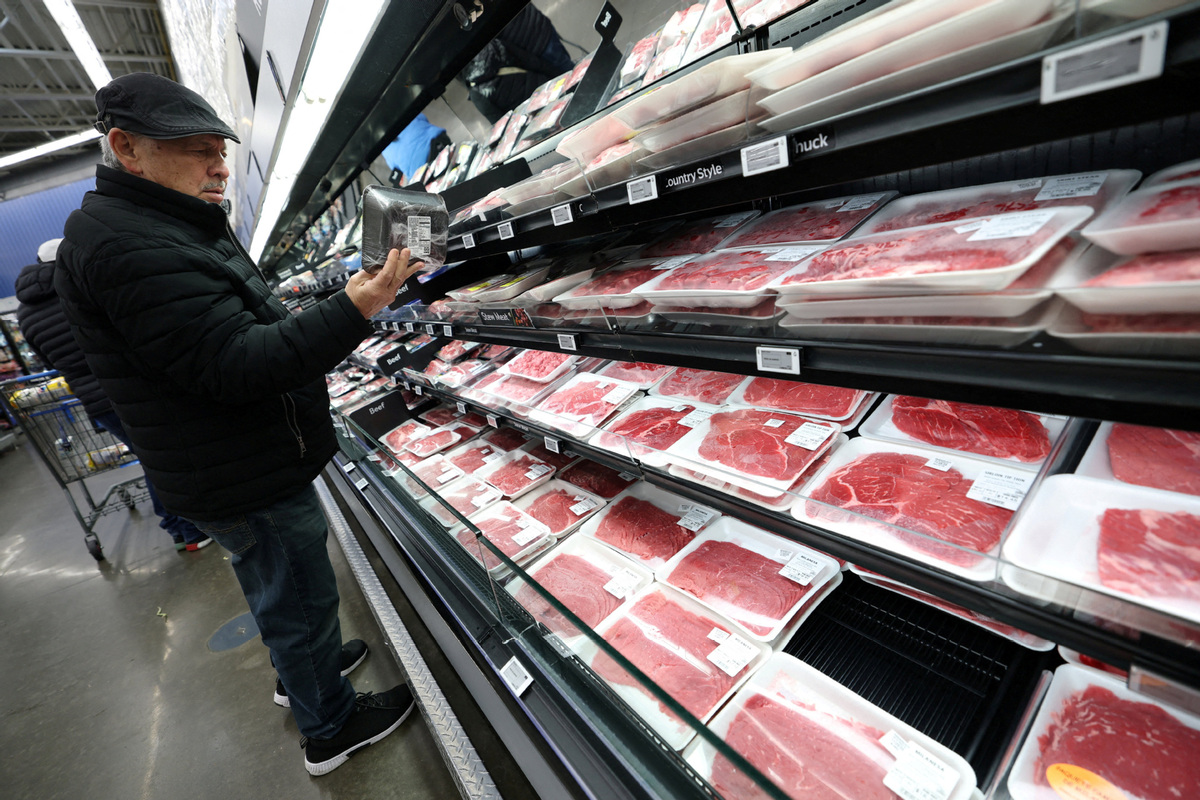
The price of food increased by the most in more than three years. Many shoppers are weary as inflation has impacted their costs over the past five years.
In November, the government shutdown artificially lowered inflation numbers, but December's figures reflected a truer state of the economy including the muted impact of tariffs on prices.
Gary C. Hufbauer, an expert on international trade and non-resident senior fellow at the Peterson Institute of International Economics, told China Daily that until the second quarter of 2025, US firms had absorbed the majority of the tariffs and consumers a smaller amount through higher prices on household items like clothing, footwear and furniture. But he expects "by the spring of 2026, most of the burden will be shifted to consumers through higher prices."
High prices for goods prompted worries from American consumers in the run-up to the holiday season in December.
But data from the National Retail Federation showed that retail sales saw strong growth in December as consumers still spent on loved ones despite the cost, according to the CNBC/NRF Retail Monitor. Sales from Nov 1 through Dec 31 grew 4.1 percent, it said.
"December Retail Monitor data saw a sharp surge in growth as consumers continued prioritizing holiday spending on family and friends," said NRF President and CEO Matthew Shay. "Continued economic momentum helped land 2025 holiday sales near the top of NRF's forecast, reaffirming that consumers remain on solid footing."
The move to lower prices for Americans will likely be a key issue this year for Trump and the Republicans as they try to retain control of Congress.
The president had partly campaigned on lowering costs for Americans on "Day 1" of his administration, but the reality has been different in the first year of his second term in office.
Additionally, economists have cited his on-again, off-again tariff policy as sowing uncertainty for businesses and consumers.
At its Jan 27 to 28 meeting, the Federal Reserve is expected to keep its benchmark overnight interest rate in the 3.50 percent to 3.75 percent range.
That comes despite recent tensions and the opening of a criminal investigation into Federal Reserve Chair Jerome Powell being launched by the US Department of Justice.
Energy prices were up in December. And the cost of fruits, vegetables, dairy products and beef all went up. The cost of a steak went up 17.8 percent year-on-year in December, the largest advance in four years. Coffee prices also rose 1.9 percent, reflecting tariffs on imports from Brazil last year that were later removed by the president in November, experts said.
"The US is the largest consumer of coffee worldwide, with annual imports of beans and ground coffee estimated at around $8 billion worth per year. About 30 percent of US coffee imports into the US come from Brazil," David A. Gantz, Will Clayton Fellow for Trade and International Economics at the Center for the United States and Mexico/Baker Institute, told China Daily.
The cost of food at restaurants and other outlets also rose 0.7 percent, the most in three years, and food prices increased 3.1 percent year-on-year in December.
Trump has attempted to bring down these costs by easing some agricultural tariffs.
The rate of tariffs on foreign countries varied widely last year and were constantly subject to change.
This year, a 10 percent baseline tariff still exists for many countries.
And tariffs on China's imports to the US were set to be around 47 percent as of Oct 30 after the crucial summit between Chinese and US presidents in Busan, South Korea in late October, their first face-to-face meeting since 2019.
belindarobinson@chinadailyusa.com










