


Under-forest industry grows as economic pillar in Hunan
Bamboo businesses shoot up on the back of supportive policies










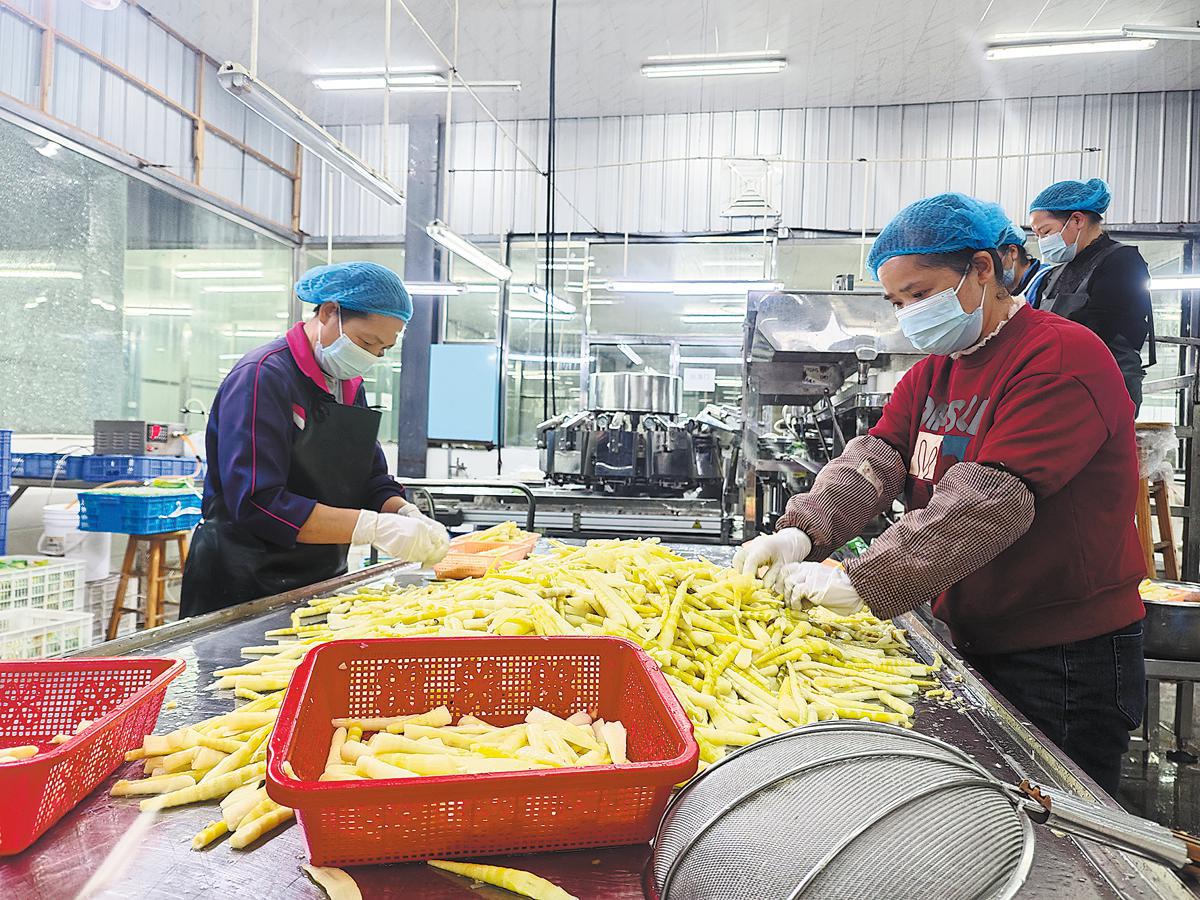
Song Xiaofeng, a villager from Xuanshui village in the county, said working at the company has been such a boon for her.
The woman in her 50s said that though her family owned a hectare of bamboo themselves, they could hardly benefit from it before the company came to invest.
The road was bumpy, and she and her husband used to carry mature bamboo and bamboo shoots on their backs, often taking them an hour to get back home from the bamboo forest.
In addition, it took them more than two hours to transport bamboo shoots to sell at local markets. Because almost every household had its own bamboo plantations, it was not easy to sell much at a good price.
Her family hardly made more than 1,000 yuan from their bamboo forest annually, she said.
Lyudi High-tech's operations have brought transformative changes to her life. While leasing their bamboo forest to the company, she now works on its processing lines and can make 4,000 to 4,500 yuan a month.
"The factory is quite close to my home. That allows for a convenient daily commute, and I have enough time to care for the elderly and a child," she said. "I have also been freed from the hardships I previously endured when working in the mountains."
In addition to implementing preferential policies, the Huitong county government has allocated direct public funding to pave the mountainous roads that once hindered bamboo transportation, according to Jiang Jian, head of the local forestry administration.
He said an investment of 20 million yuan has funded the construction of 700 kilometers of paved roads, with an additional 200 km of rough paths scheduled for paving this year.
These infrastructure improvements are projected to reduce the costs related to bamboo felling and transport by approximately 30 percent, he added.





