Separating fact from fiction
Updated: 2007-08-24 07:06
The environmental problem has rightly become a global concern. Many of the green advocates have done an admirable job raising public awareness and spreading the message through the corridors of power.
But a few of them are inclined to present a picture more fictional than factual.

Last week a representative from a Hong Kong green group challenged a government official on a TV talk show over the government's effectiveness in pollution control by citing the air pollution index (API), which he claimed has shown a deterioration of air quality since 1997.
The official countered that the figures in question had been taken in the remote town of Chek Lap Kok, which is merely one of the 13 stations that comprise a city-wide monitoring network. The fact is, as the official readily pointed out, the API has actually shown an improvement in town centers' roadside air quality compared to 10 years ago.
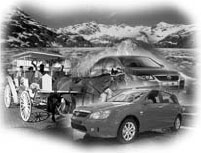
Overstating environmental problems has a long tradition. Centuries ago when horse-drawn carriages were the major vehicle of transportation, it was suggested that rapid surge of carriage traffic caused by the expansion of population and economic activities would see horse dung accumulate at a much faster rate than they could be removed, therefore resulting in roads and even cities being buried under them.
Such a scenario never materialized, of course, thanks to the advance of technology - the invention of the motor vehicle.
In the previous century, the oil crisis led to the pessimistic prediction that the exhaustion of energy resources might spell the end of modern civilization as we know it. But then soaring oil prices prompted many countries to start cutting down on fuel consumption with energy-saving measures and technology.
The latest fear is global warming, hyped by such facts as the melting of glaciers in the Arctic and, particularly, the evident rise of temperatures worldwide. Will what happened in the movie The Day After Tomorrow become a reality?
While the rise of world temperatures and sea levels could pose serious problems and the escalation of such a situation ought to be prevented, some have already pointed out that the prospects of higher temperatures may not be as undesirable as environmentalists have tried to make us believe.
With thick ice sheets melting, huge amounts of minerals and energy resources buried deep under the Arctic or the Russian tundra may now become accessible. Vast expanses of frozen lands that could not be developed in the past could be put to meaningful use. Yes, more people are dying from heat waves in summer, but more lives could also be saved from the freezing cold in winter.
While warnings from environmentalists do serve as a useful reminder that we should take better care of the planet, we have to scrutinize these warnings with care lest we could be thrown into unnecessary panic.
The green group spokesman on the TV show represented those who are ready to draw public attention to figures and factors that favor their point but neglect, sometimes intentionally, those that do not.
While there is still much room for improvement in the government's anti-pollution campaign, it is undeniable that it has redoubled its efforts in this respect. It has, for instance, stepped up collaboration with the neighboring province of Guangdong in setting emission control targets.
It is also trying to cut domestic pollution by encouraging power companies to use cleaner power-generation methods and vehicle owners to use cleaner fuels. Such efforts are paying off as evidenced by the API and the increase of clear days this summer.
Environmental protection is a long battle to be won. But scare tactics will only derail its course.
E-mail: zouhr@chinadaily.com.hk
(China Daily 08/24/2007 page10)
|
|
|
||

|
|
|
|