Get ready for a walk on Hong Kong's wild side
Updated: 2007-08-17 07:03
For tourists, Hong Kong is best known as a shopping and gourmet paradise. This meeting place of East and West has everything in abundance to satisfy different fashion needs and taste buds from all around the world.
But few people know that this "Pearl of the Orient" has a natural beauty to offer too, a picturesque countryside that is just as charming as its urban landscape.

When the British first came to Hong Kong one-and-a-half centuries ago, it was the deep-water harbor they most admired. They were less impressed by the scenery on the island, which they disdainfully called a "barren rock".
Why the place was so barren at that time is not clear. One theory is that the notorious 19th-century pirate Cheung Po Tsai, who featured in a recent Hollywood movie, chopped down most of the trees on the island to build his enormous fleet.
Thousands more trees were cut down for firewood during the 1942-45 Japanese occupation of the territory when everything was in short supply. By the time the Japanese left, only a small fraction of the land remained forested.
Woodlands re-emerged after the war, thanks to the government's systemic forestation program that started in the 1950s.
To better protect the ecology of the countryside, the government enacted a law in 1976 for the establishment of country parks. There are now 23 of them covering 410 sq km, about 40 percent of the total area of Hong Kong. There are spectacular beaches on the Sai Kung Peninsula and healthy coral reefs in marine parks that are paradise for divers.
Hong Kong is also known for the lushness and great diversity of its flora and fauna, featuring many tropical as well as temperate species. This well-preserved ecology is certainly a valuable asset of the city, which is far from just a concrete jungle.
What is unique about Hong Kong's countryside is its proximity to the town. It is not easy to find another place in the world where the wilderness is so close to urban areas.
A Malaysian friend of mine who has chosen to live in Hong Kong told me he likes the place because he can go hiking and return to the city within the same day, whereas his hometown is too far away from the countryside to allow him to do so.
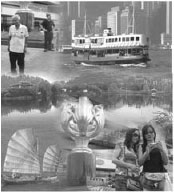
His fondness for the city's scenic beauty is shared by more than a few Western and Japanese tourists who come here every year for excursions to the country parks and natural reserves in the New Territories.
Most mainlanders visit for the vast array of consumer products, palatable cuisines and the Disney theme park this cosmopolitan city has to offer. But maybe they should also try putting on their hiking boots and heading for the wilds.
After a day's hiking, they will still have time for dinner or even some last minute shopping in Causeway Bay.
The government has clearly come to the conclusion that ecotourism is one of the new engines to sustain the local tourism industry. But the realization of it depends on a keener sense of environmental protection on the parts of both government authorities and travelers.
But fist of all, Hong Kong has to make it known to all that it is far more than just a place to shop and dine.
E-mail: zouhr@chinadaily.com.hk
(China Daily 08/17/2007 page10)
|
|
|
||

|
|
|
|