Liaoning to be known
(Nen.com.cn)Updated: 2007-06-08 12:57
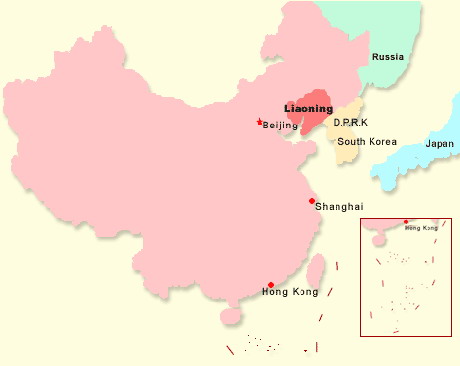
Through its history, the province has been strongly influenced by minority groups. As early as the 10th century, the Qidan people invaded this region and established the Liao Dynasty. Two centuries later, Mongolians poured in and later founded the Yuan Dynasty.
During the Ming Dynasty, Han immigration from the south was required to reinforce the central administration. But the re-emergent Manchus overcame this and later founded China's last feudal empire.
At the end of the 19th century, Russian came and built the South Manchurian Railway to facilitate the transport of raw materials of heavy industry output. With defeat in the Russo-Japanese War, the Russians reluctantly retreated and the Japanese dominated this province and most of Northeast China until being run out by a coalition of Chinese forces.
The Communists controlled Liaoning after 1948, using the heavy-industry base to play a critical role in the stabilization of the newly-founded regime. Now Liaoning is open to visitors and businesses to come experience Northeast China's hospitality and culture at it's best.
Location: Liaoning Province is located in northeastern China
bordered by Jilin Province, Inner Mongolia Autonomous Region and Hebei Province.
The province overlooks the Bohai Sea and the Yellow Sea as well as bordering the
nation of North Korea on the Yalu River.
Liaoning serves a key link
between China's northeast economic region and the Bohai Sea economic zone. The
province is a vital communication line from the northeast region to the north
and the Shanhaiguan Pass of the Great Wall to the south. Liaoning also provides
a gateway from Manchuria to the Eurasian Continental Bridge to the west.
Total area: Liaoning Province covers a total land area of
145,900 square kilometers which accounts for 1.5 percent of China's total land
area. The province with its peninsula extending into the Bohai Sea boasts an
extensive coastline of 2,178 kilometers (12 percent of China's total).
There are a number of significant islands and archipelagos including but
not limited to the Changshan Archipelago and Shicheng Archipelago; Greater and
Lesser Deer Islands, Chrysanthemum Island, Changxing Island, Pig Island, Snake
Island and Fengming Island.
|
||
|
||
|
|