Baidu sued for alleged false advertising
By Kang Yi (chinadaily.com.cn)Updated: 2007-05-15 17:32
A Shanghai-based logistics company with the registered name "Shanghai Volkswagen Ban Chang Logistics Ltd.", also known as Shanghai Ban Chang, has filed a suit accusing baidu of posting false advertisements and misleading customers, reported the People's Daily Tuesday.
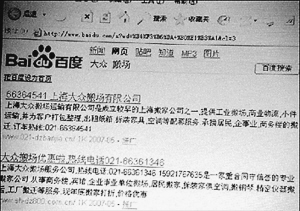 A screen snapshot shows unverified information related to Shanghai Ban Chang posted on Baidu searching energy in this undated photo. [File]  |
Baidu's two services sell key words, which will put the business in a higher position in the search results, but neither of them checks business registration and certificates, nor actively verifies the information posted by clients.
The plaintiff alleges that most of its potential customers will click on other "Shanghai Ban Chang" sites that have no business certificates or are not even logistics companies. And according to the Shanghai Volkswagen Ban Chang, this misleading advertising has had a financial impact on its bottom line.
According to the plaintiff, the company's hot line for customers' complaints is bombarded by dozens of calls each day.
Last week, Shanghai Volkswagen Ban Chang filed for a public apology and 500,000 yuan in damages at Shanghai No.2 Intermediate People's Court to compensate for damage done to its reputation and loss of market share due to Baidu allegedly allowing the trademark infringer's misleading ads online.
Baidu's public relations department told chinadaily.com.cn that Baidu always attaches great importance to IPR protection, and anyone who feels their IPR is being compromised can inform Baidu by writing, and Baidu will contact trademark infringers to find a solution.
Currently the court has agreed to hear the case and legal proceedings
have started.
Under the Advertisement Law code, the advertiser shall bear civil liability if it uses in its advertisement the registered trademark without holder's consent.
|
||
|
||
|
|