CHINA> Latest News


|
CHINA> Latest News
|
|
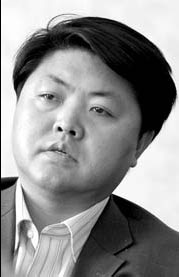
A man who gives a voice to the deaf
By Liu Wei (China Daily)
Updated: 2007-03-15 06:37 Yu Bing cannot hear or speak, but that does not stop him from offering comments or suggestions on the political and social issues of the day. Mute since birth and deaf since an accident deprived him of his hearing at the age of four, the 43-year-old CPPCC member brought four proposals to this year's meeting of China's top advisory body, all of them concerning disabled people, particularly deaf-mutes. In one of the proposals, Yu called for all TV programs to be aired with subtitles so people who cannot hear can enjoy them. Yu cited China Central Television's annual New Year's Eve gala as an example. Since its debut in 1985, it has become something of a tradition for people will watch the gala with their families before the lunar New Year. But few people know as well as Yu does how frustrating it can be for the hearing impaired to have their experience limited to only the show's visual elements. "It's kind of miserable," Yu said through a sign-language interpreter, "when you can only see performers acting or speaking and the audience laughing, but still not be sure about what is happening." Yu said that beyond the world of entertainment, TV could also be a platform for educating deaf people and keeping them connected to mainstream society, provided there are subtitles explaining what happens on the screen. "Without subtitles, we deaf people cannot understand many popular science programs or news stories about current national and international affairs. Having access to this information would help us integrate more into society," he said. "I hope we can benefit as much from such programs as people with hearing do." Yu, who is also an associate professor at Jilin College of Arts, has been studying traditional Chinese painting since he was eight. In 1987 he received the highest score of all the applicants that year on the entrance examination to Changchun University's Special Education College. "I hope to hold a charity painting exhibition, and will donate all the ticket revenue to disabled people," Yu said through his interpreter, Xian Shuli, a teacher at Changchun Special Education School and Yu's assistant at every CPPCC meeting since 2003. Xian never leaves Yu's side during the annual gathering, helping him understand other members' speeches and express his own ideas. But as Yu said, not every deaf-mute person has the luxury of relying on an interpreter, nor can China's deaf population rely on a standardized dactylology, or sign-language vocabulary, complicating the situation. "China's dactylology is like Mandarin (Putonghua)," Yu said. "It differs in different regions and there is no uniform standard yet." In another proposal to the meeting, Yu calls for a system for standardizing Chinese sign language. Yu's face remained stolid throughout the interview, though he brightened when the subject of Ministry of Labour and Social Security's decision in January to officially recognize "dactylology interpreter" as a profession. He added that he was closely following the effort to establish qualifications for the professionals. "China has about 21 million deaf people, plus those whose ability to hear is declining due to old age," he said. "It's a huge group. If we want to create a harmonious society, they should not be neglected." (China Daily 03/15/2007 page6) |