Restored wetlands welcome new flocks of migratory birds
Extensive biological overhaul attracts greater biodiversity of wildlife species









Editor's note: As protection of the planet's flora, fauna and resources becomes increasingly important, China Daily is publishing a series of stories to illustrate the country's commitment to safeguarding the natural world.
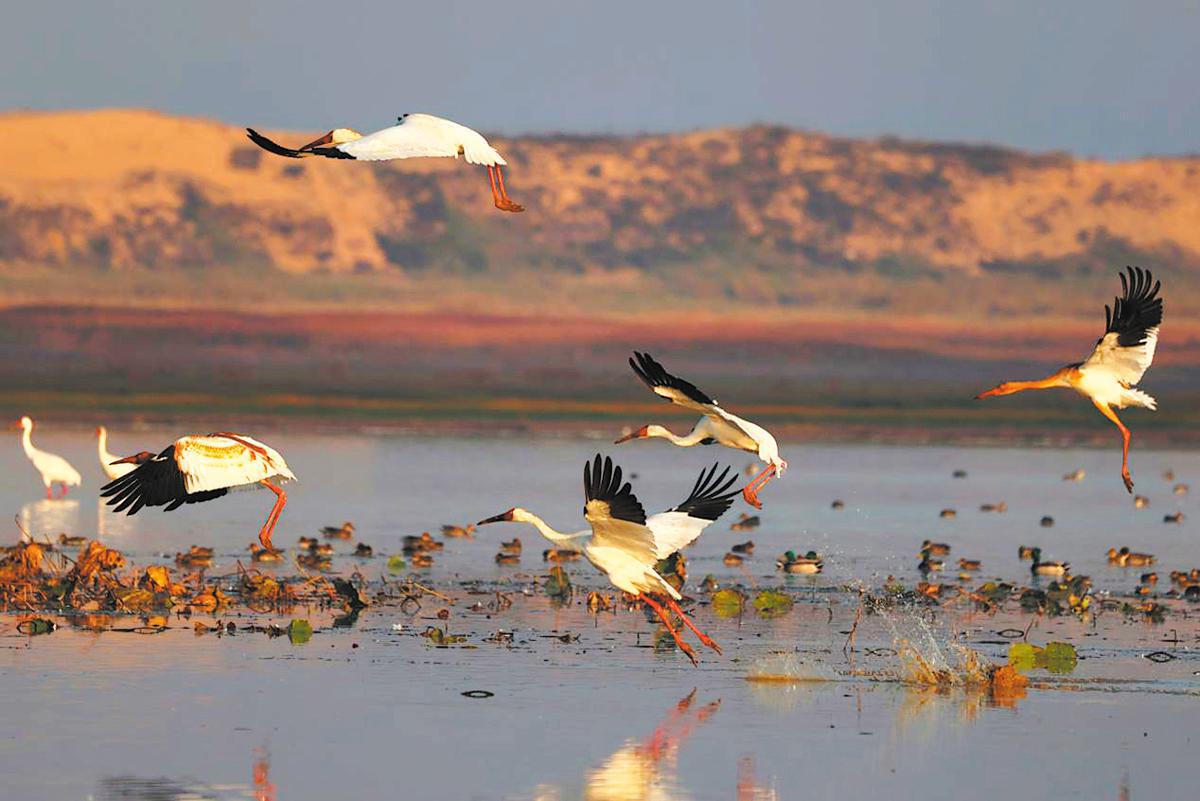
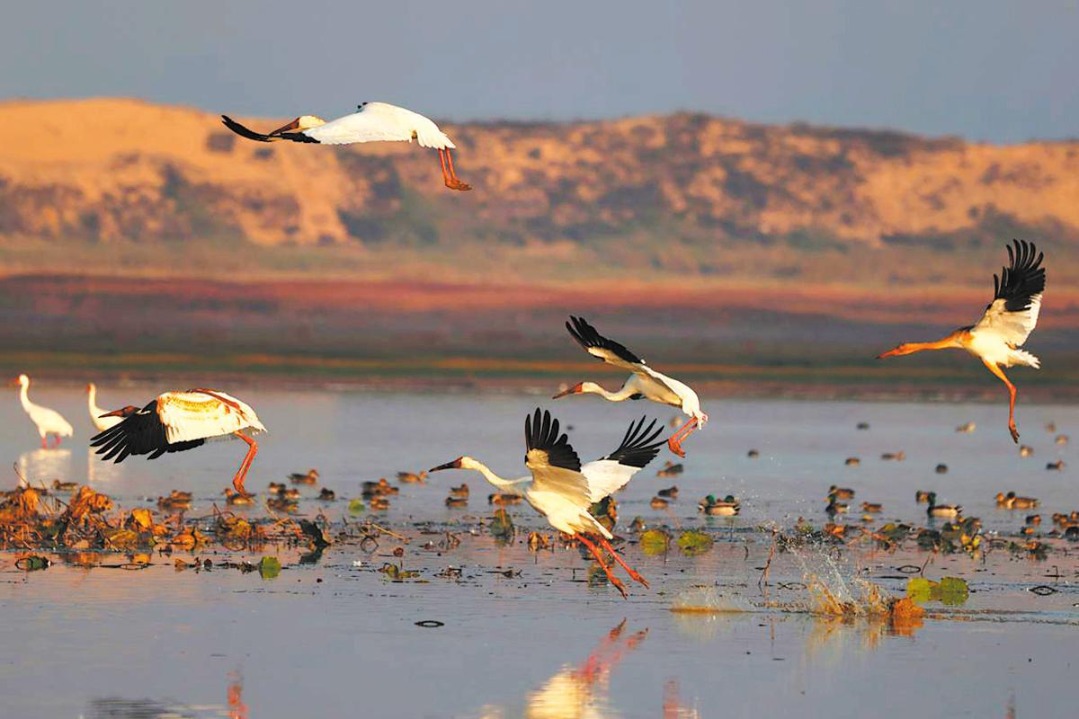
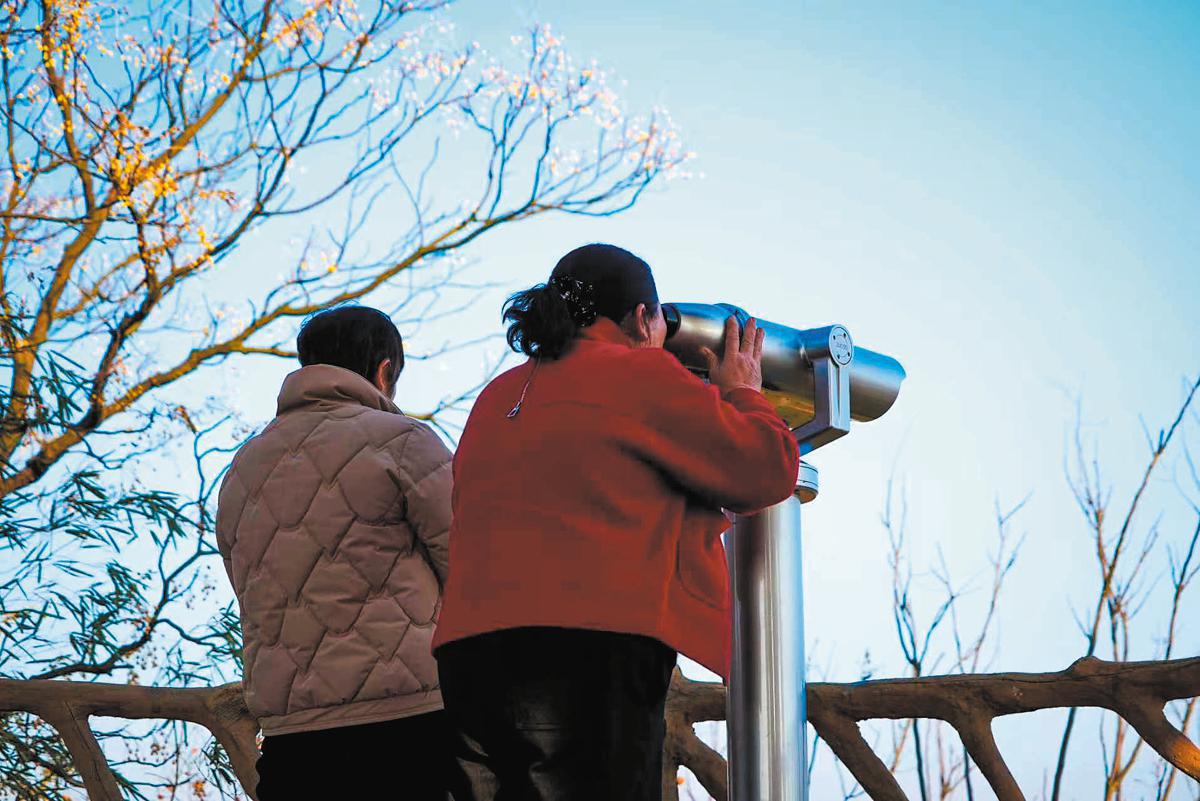
On a viewing platform at Poyang Lake, a group of students gathers around their teacher, pointing toward the shallows as waves of birds lift and settle. The scene — too swift for phone cameras to capture — is the biological evidence of a massive, systematic overhaul of China's wetland management.
"It's hard to tell where to look first," said one student. The group, traveling from Wuhan, Hubei province, had gathered to learn about the ecological development of Jiangxi province. Their teacher, Zhang Jingyi, gestured toward white cranes. "They take turns — a bit like traffic," he said.
This "traffic" follows the East Asian-Australasian Flyway, a 5,000-kilometer migration corridor where Poyang Lake, China's largest freshwater lake, serves as the critical wintering terminus.
According to official monitoring data, the lake hosts nearly 400 bird species and around 700,000 birds during the wintering season, including more than 90 percent of the world's Siberian white cranes and over 30,000 bean geese.
For birds traveling through China, the journey often begins in northeastern provinces such as Heilongjiang, follows a chain of wetlands across northern and eastern China, and continues south along the Yangtze River basin. Poyang Lake is where the success or failure of migration becomes visible.
At the Jiangxi Poyang Lake National Nature Reserve, long-term monitoring shows that increases in bird species and population sizes have coincided with sustained ecological improvement.
Since December 2023, the reserve has operated a smart management platform. High-definition cameras and sensors installed across the lake operate around the clock, using artificial intelligence to identify and record bird species, numbers and distribution patterns.
Drone patrols have also been introduced on preset flight routes, with operators remotely monitoring large sections of the reserve, complementing on-the-ground patrols and improving the precision of ecological oversight.
"The increase in both the number and diversity of migratory birds at Poyang Lake is the result of sustained improvements to the ecological environment," said patrol worker Wang Xiaolong, who has worked at the Poyang Lake reserve for 40 years.
"It's not just about cold numbers and machines. Patrol workers like us set out very early every morning, observing birds across the wetlands and ensuring they have a safe habitat to survive the winter."
Zhang Jiahui, a staff member at the Wucheng station of the reserve, said the smart platform integrates environmental modeling and forecasting, analyzing weather data, water-level changes and bird numbers to predict trends in aquatic biomass and food availability for wintering birds.
"Even the most remote wetlands and grass islets can now be easily covered," she said.
Since Jan 1, 2020, a comprehensive fishing ban has been enforced along the Jiangxi section of the Yangtze River and across Poyang Lake.
In January 2024, Jiangxi implemented a regulation on the prevention and control of phosphorus pollution in the Poyang Lake basin, the country's first provincial regulation specifically targeting phosphorus pollution in a lake basin.
According to the Shangrao Ecology and Environment Bureau, these measures have contributed to biodiversity recovery. Finless porpoise numbers in the Shangrao section of Poyang Lake have reached over 200, observation frequency has increased by 37 percent, and wintering white crane numbers have exceeded 4,000 in recent seasons.
International cooperation has also played a role.
Habitat improvement has been further reinforced by the Food and Agriculture Organization and Global Environment Facility Piloting Provincial-level Wetland Protected Areas System in Jiangxi, which is being operated in cooperation with the local authorities. The project has trained more than 3,000 government officials and technicians through over 60 capacity-building programs, equipping participants with key skills in wetland management, biodiversity monitoring and sustainable development.
Participatory community co-management was introduced in the project, demonstrating that conservation and livelihoods can go hand in hand, according to Carlos Aldeco, FAO representative in China.
"The project has contributed Chinese experience to the governance of major river–lake systems, biodiversity conservation and the sustainable use of wetlands," Aldeco said, adding that it serves as an excellent model for other countries.
For Jiangxi, the project has been embedded within a broader institutional framework. Li Mulan, chief engineer of the Jiangxi Forestry Department, said the province's wetlands cover 1.27 million hectares, accounting for 7.6 percent of the province's total land area.
"In recent years, Jiangxi has strengthened its wetland protection framework by revising the provincial wetland protection regulations and issuing a series of policies on wetland parks and the designation of important wetlands," Li said.
"With internationally and nationally important wetlands as priorities, projects have advanced ecological function restoration and biodiversity conservation in the Poyang Lake area, enhancing long-term ecosystem stability," he added.
Yet the Poyang story represents only the final stretch of a much longer journey.
Further north in Heilongjiang, large-scale wetland restoration across the Sanjiang Plain has reshaped the northern starting point of the flyway.
Since the implementation of the Heilongjiang Wetland Protection Regulation a decade ago, more than 3,000 hectares of wetlands have been restored, said Wang Jing, regional project director for Heilongjiang with the World Wide Fund for Nature.
The province has recorded 390 bird species, including 297 migratory and summer-resident species, with both diversity and population size continuing to rise.
At the Honghe National Nature Reserve, 443 artificial nesting platforms have supported the breeding of more than 2,850 oriental stork chicks — nearly one-sixth of the global population, Wang said.
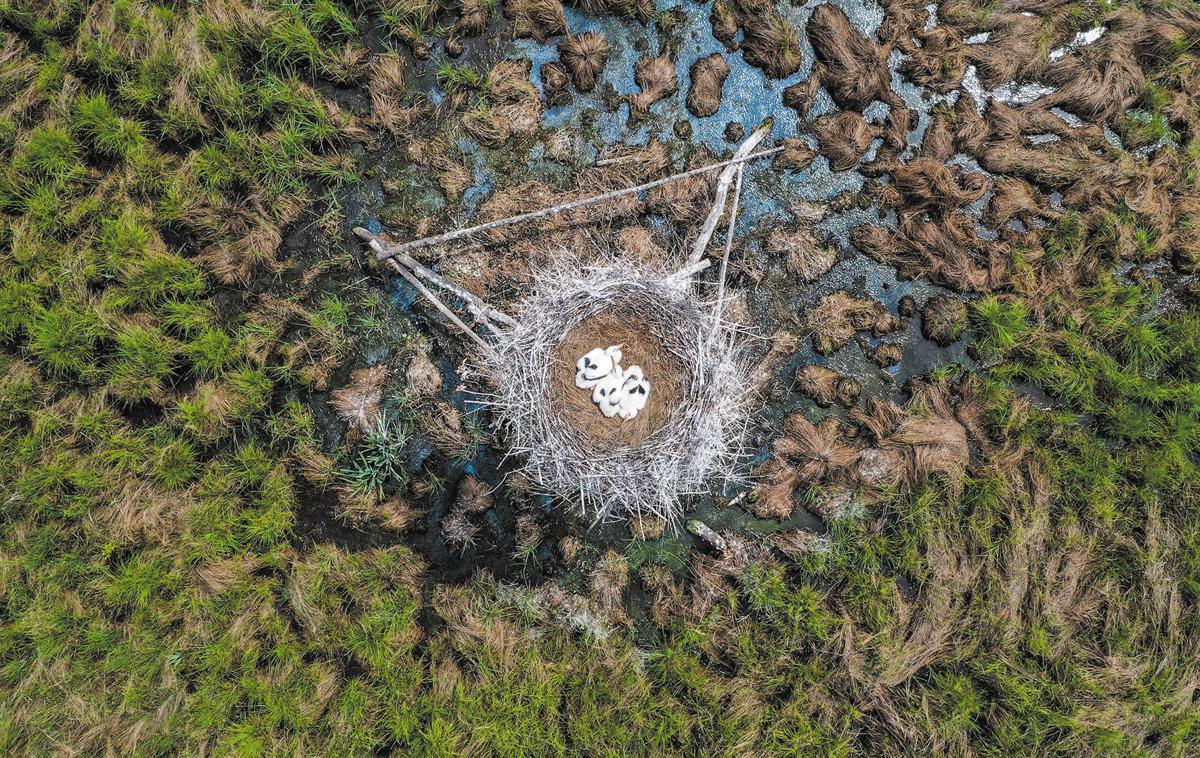
Beyond individual species, Wang stressed that the ecological logic of migration begins in the north. "During migration, birds consume several times more energy than they can store before departure," she said. "To complete long-distance journeys, they must rely on a series of stopover sites to feed and rebuild energy for the next stage of flight. For this reason, protecting northern stopover sites is crucial."
Farther south, Tianjin's Qilihai Wetland serves as a critical stopover site. During migration seasons, water levels are adjusted to make feeding easier for species such as oriental storks, while patrols are increased to reduce risks to birds.
"To better safeguard migratory birds, we scientifically lower wetland water levels to make it easier for species such as oriental storks to stop and forage," said Tian Xiujing, director of the Qilihai Wetland nature reserve management committee."During migration seasons, we increase patrol frequency to identify injured birds and eliminate potential risks that could affect their survival."
Qilihai has recorded a breakthrough in bird breeding.
"During routine patrols, we discovered around 100 spoonbill nests in the western wetland, with an estimated 200 birds," said Han Kewu, a staff member at the reserve. "This is the first time we have confirmed spoonbills nesting here."
After leaving northern wetlands and stopover sites such as Qilihai in Tianjin, many migratory birds continue south along the Yangtze River basin before reaching Poyang Lake.
In early January, Lei Xiaoyong, a wildlife protection officer at Poyang Lake, confirmed the appearance of a great white pelican, a nationally protected species rarely recorded in southeastern China.
"Rare birds vote with their wings,"Lei said. "When they choose to land here, it tells us something about the condition of the lake."
Dai Nianhua, vice-president of the Ecological Society of Jiangxi, said the species is typically found in Africa, eastern Europe, and parts of South and Central Asia, making its appearance at Poyang Lake a rare and pleasant surprise.
"Healthy wetland ecosystems, abundant food resources and a safe environment are the key factors that attract these rare visitors," Dai said.
During this wintering season, more Siberian cranes and other migratory birds have returned to the lake's wetlands, he added — a sign, he said, that years of protection along the flyway are beginning to converge at the destination.
Contact the writers at zhaoruinan@chinadaily.com.cn