European car carbon policy faces major reset









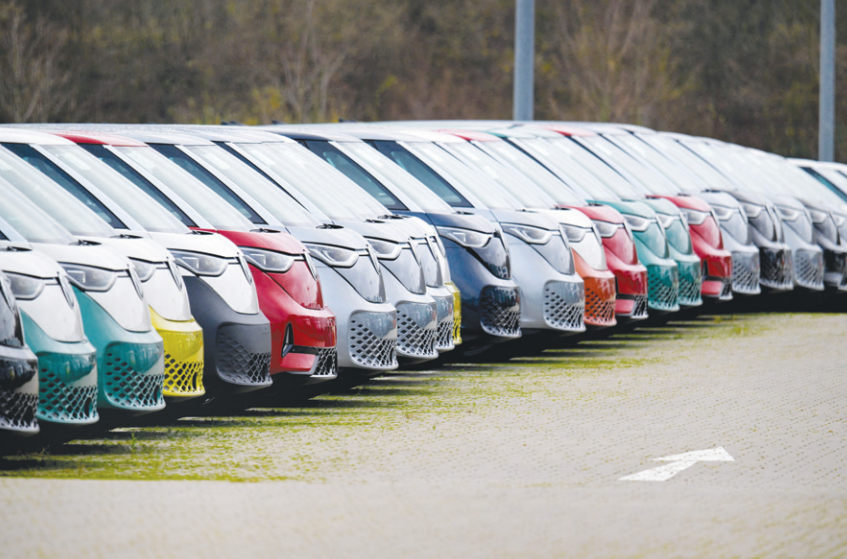
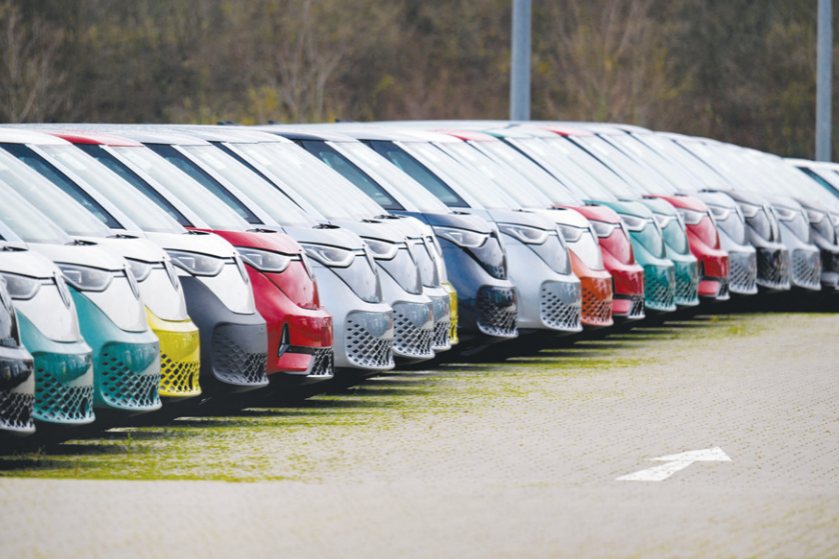
European carbon emissions policy is on course for a major reset after reports that the European Union's proposed ban on the sale of new combustion-engine cars from 2035 could be altered.
In March 2023, after much negotiation, a law was approved stating that, from 2035, all new cars and vans sold in the EU must be free of carbon dioxide, or CO2, emissions, but that now looks less set in stone.
The EU's executive body, the European Commission, was expected to announce a policy change on Tuesday, with far-reaching consequences.
Two of Europe's biggest car producers are Italy and Germany, and they currently face stiff competition when it comes to the clean energy transition and electric vehicles, or EVs.
Manfred Weber, president of the conservative-centrist European People's Party bloc in the European Parliament, told the German newspaper Bild the ban was now "off the table".
"All engines currently manufactured in Germany can therefore continue to be produced and sold," he added, calling the proposed ban "a serious industrial policy mistake".
Such a move would also please German Chancellor Friedrich Merz, who has long supported changing the proposed date. "The reality is that there will still be millions of combustion engine-based cars around the world in 2035, 2040 and 2050," he said.
However, the idea also faces significant opposition. Spain's Prime Minister Pedro Sanchez, one of Europe's most prominent clean energy advocates, said going into reverse would hamper attempts to establish a European EV sector that could hold its own in the global market, and also cost jobs.
"We therefore reject (the idea) that combustion vehicles or other technologies without proven viability could continue to be marketed beyond 2035," he wrote in a letter to Commission President Ursula von der Leyen.
Michael Lohscheller, CEO of EV company Polestar, which was founded in Sweden but is now partly Chinese-owned, also reacted with dismay. He said: "The (EV) technology is ready, charging infrastructure is ready, and consumers are ready. So what are we waiting for?"
William Todts, executive director of clean transport advocacy group T&E, warned that the Commission's softening of its stance "might seem like a wise strategy at first glance … the trouble is once corporate lobbies smell weakness, they keep coming back for more".
Key pillar
"Gutting the EU's car CO2 rules would not just remove a key pillar of the European Green Deal," he said: "it would consign Europe's carmakers to the car museum as well."
The news comes in the same week that research was published in the journal Nature, showing that global warming, fueled by CO2 emissions, is contributing to the loss of around 1,000 glaciers each year, with significant environmental implications.
Even if temperature rises are held back to no more than 1.5 C, the globally agreed target to avoid the worst impact of global warming, that figure is on course to double by 2041, and by the year 2100, just half of the glaciers on the planet would be left.
Government action on climate change could determine whether the world loses 2,000 or 4,000 glaciers annually by the middle of the century, according to the research.