Tianjin student relays China's rural vitalization efforts at food forum









A student from Tianjin University introduced China's rural vitalization practices and poverty reduction experiences to the world at the World Food Forum Dialogue held in October in Italy.
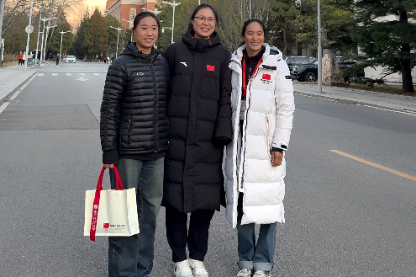
Liu Yuanrui was one of the three youth representatives sent by China to attend the event at the headquarters of the Food and Agriculture Organization of the United Nations in Rome during the World Food Forum.
"True development is never a simple grafting of technology or a mechanical injection of capital, but the awakening of endogenous motivation, the reshaping of cultural confidence, and the comprehensive development of people," Liu said in his speech. "China's rural vitalization practice offers another possibility for global poverty reduction."
Ten heads of state, over 100 government ministers, and more than 25,000 representatives from around the world participated in the World Food Forum.
"When the United Nations set 'zero hunger' as the second sustainable development goal, many questioned its possibility, but China answered with facts," Liu said.
"With 9 percent of the world's arable land, we feed nearly 20 percent of the global population, and have lifted nearly 100 million rural poor out of poverty, contributing over 70 percent to the global poverty reduction efforts."
A representative from Myanmar asked: "How did China manage to feed 1.4 billion people? This is incredible. How did you achieve it? What typical technological innovations has China adopted?"
Liu detailed China's breakthroughs in hybrid rice technology, saying, "China's hybrid rice technology has not only significantly increased rice yield per mu (15 mu is equal to 1 hectare) in China compared to conventional rice, but super hybrid rice has also continuously broken yield records."
As a grain yield-increasing technology prioritized by the FAO of the United Nations for promotion, hybrid rice has been extended to nearly 70 countries worldwide through multilateral and bilateral cooperation.
"From Asia to Africa and the Americas, this technology has helped numerous farmers in developing countries achieve increased grain production and income, effectively alleviating local food shortages, becoming an important link in agricultural cooperation between China and other countries around the world, and making tangible contributions to global food security and poverty reduction," Liu said.
During his studies at Tianjin University, he joined several agricultural support activities, volunteering for more than 800 hours.
"As youth, our mission is not condescending charity, but to use digital technology as a bridge to discover, activate and amplify the enormous potential that inherently exists in the countryside," he said.
Last year, Liu cofounded an international practice team with three other students, focusing on the research of China's overseas construction projects in countries involved in the Belt and Road Initiative.
Team members visited more than 10 Chinese enterprises in five countries, three universities involved in the BRI, and one international organization to conduct research.
After the research, five reports written by the team were adopted by the Tianjin government.
In July, during the Youth Innovators for Agricultural Heritage campaign supported by the FAO in China, Liu's team advanced to the national top 10 among more than 250 teams.
Afterward, as the main presenter, he won the second place nationally, which earned him the opportunity to speak in Italy.
"I believe university life should be a process of continuously breaking through oneself, always trying new possibilities and creating new stories," he said. "I have been deeply involved in rural areas across China, and have visited more than 10 countries and regions. In the process of going abroad, I have experienced the charm of different cultures, and also realized that people from various countries do not know enough about China, so I hope to tell the real China to the world."
Speaking of his trip to Rome, Liu said: "China's poverty reduction experience can provide an important reference for developing countries. I deeply understand the value of this experience. What we need to do is to let more people in the world know about China's poverty reduction wisdom. In the future, not only in this aspect, Chinese youth should show global responsibility in various undertakings with a broader vision. I hope to become a bridge connecting China and the world."
Zang Yifan contributed to this story.
yandongjie@chinadaily.com.cn





- Tianjin student relays China's rural vitalization efforts at food forum
- Xinjiang's power transmission hits 1-trillion-kWh milestone
- Horsemen safeguard remote borders
- Scientists alter mast cells to fight cancerous tumors
- La Nina conditions may hit rain, lead to drought
- Cities that prioritize their residents score high on national happiness list