Tokyo's misjudgment risks destabilizing region









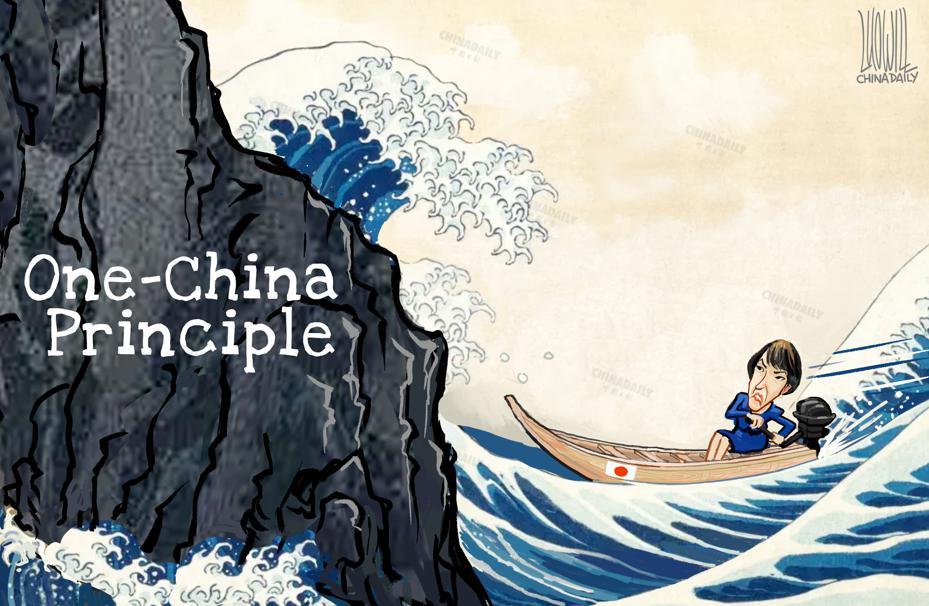
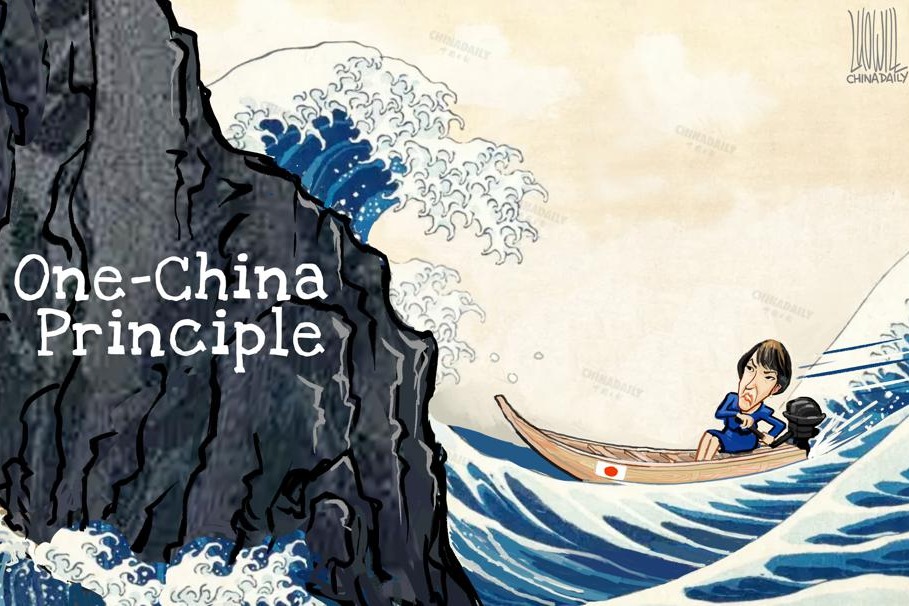
Japan's stance on Taiwan has drifted in recent years from "strategic ambiguity" toward what can only be called "strategic misjudgment". Tokyo's growing misperceptions and policy adventurism could become key destabilizing factors in the East Asian region.
To start with, Japan's ruling Liberal Democratic Party increasingly equates Taiwan with Japan's national security, elevating what should be a diplomatic concern to a critical link in Japan's security. This "security hijacking" rhetoric not only breaks decades of restraint but also lays the groundwork for removing the constraints on militarization.
Certain domestic forces in Japan are attempting to leverage tensions in China-Japan relations to revive militarist tendencies. Their calls for loosening the country's three non-nuclear principles, revising the country's constitution and openly discussing nuclear submarines and even nuclear weapons signal that the region's "Pandora's box" is gradually being opened.
The underlying reasons for this push toward militarization are complex and deep-rooted. Ever since Japan proposed the "Greater East Asia Co-Prosperity Sphere" in the 1940s, it has seen itself as the wealthiest and most powerful nation in East Asia. Today, some die-hard adherents of Japan's militarist ideology cannot accept the fact that countries once considered subordinate have surpassed Japan in strength and influence. These historical sentiments, value perceptions and cultural psychology combine to make the situation particularly hazardous.
The political discourse in Japan on the Taiwan question is increasingly moving toward ideological framing. By describing cross-Strait relations as a confrontation between "democracy and authoritarianism", some Japanese politicians are trying to garner support through value-based narratives. The emotional and politicized posturing erodes the rationality in Japan's policy on China.
Japan has also misjudged China's strategy and timeline of reunification. China's position on Taiwan remains unchanged: "peaceful reunification" is the priority, while economic, social and cultural initiatives continue to promote cross-Strait integration. Yet certain Japanese media and political voices exaggerate regional military tensions, labeling China's routine actions as threatening, thereby justifying military expansion and deepening the United States-Japan military alliance. This distortion not only increases tension but also risks pushing Japan into a dangerous position.
One fundamental problem is that Japan's China policy lacks a stable strategic orientation. Short domestic political cycles, volatile public opinion and a diplomatic structure heavily reliant on the US make it difficult for the country to maintain strategic autonomy. Its misjudgment on Taiwan reflects both an anxiety over the international environment and a structural over-dependence on the US. When it comes to China-US competition, Japan often rushes to take sides, neglecting the complexity of regional ties and its limited influence on security issues.
From a regional security perspective, Japan's policy trajectory warrants serious attention. The Taiwan question is a core interest of China and brooks no interference by external forces.
Should Japan adopt a more aggressive stance, it would not only undermine the stability of China-Japan relations but could also become the weakest link in the East Asian security chain. Far from protecting Japan, such strategic adventurism would increase regional uncertainty and leave Japan in a more precarious position between the US and China.
China-Japan relations have deep historical roots, but the two countries are also interconnected economically and socially. Deviating from a rational path will cost Japan diplomatically, economically and strategically. The priority for Tokyo should not be to get applauded for public statements on the Taiwan question, but to return to a path of pragmatic cooperation and become a stabilizer of regional security instead of a catalyst for tensions.
It is noteworthy that the Republic of Korea's stance on historical issues in East Asia has also undergone subtle shifts. In the late 1990s and early 2000s, China and the ROK had a consistent stance on Japan's historical responsibility. Today, however, the ROK struggles to express a clear position on these issues. This is partly because of its Cold War experience. After World War II, the ROK was quickly drawn into the US-led bloc. Memories of the war and Cold War narratives are deeply intertwined in its society, shaping its perception of Japanese militarism differently from neighboring countries.
The Western bloc — led by the US, with Japan and the G7 in tow — has shaped the global order since the Industrial Revolution. Their core strategy is to maintain maritime dominance and resist the formation of a strong Eurasian partnership, especially between China and Russia. Consequently, they are likely to continue provocations on the Taiwan question. Japan should exercise restraint and return to rational policymaking because maintaining stability is the true path to security in East Asia.
The author is the director of the Center for Chinese Studies of Sejong Institute, the Republic of Korea.
The views don't necessarily reflect those of China Daily.
If you have a specific expertise, or would like to share your thought about our stories, then send us your writings at opinion@chinadaily.com.cn, and comment@chinadaily.com.cn.