Takaichi pushing Japan toward militarism









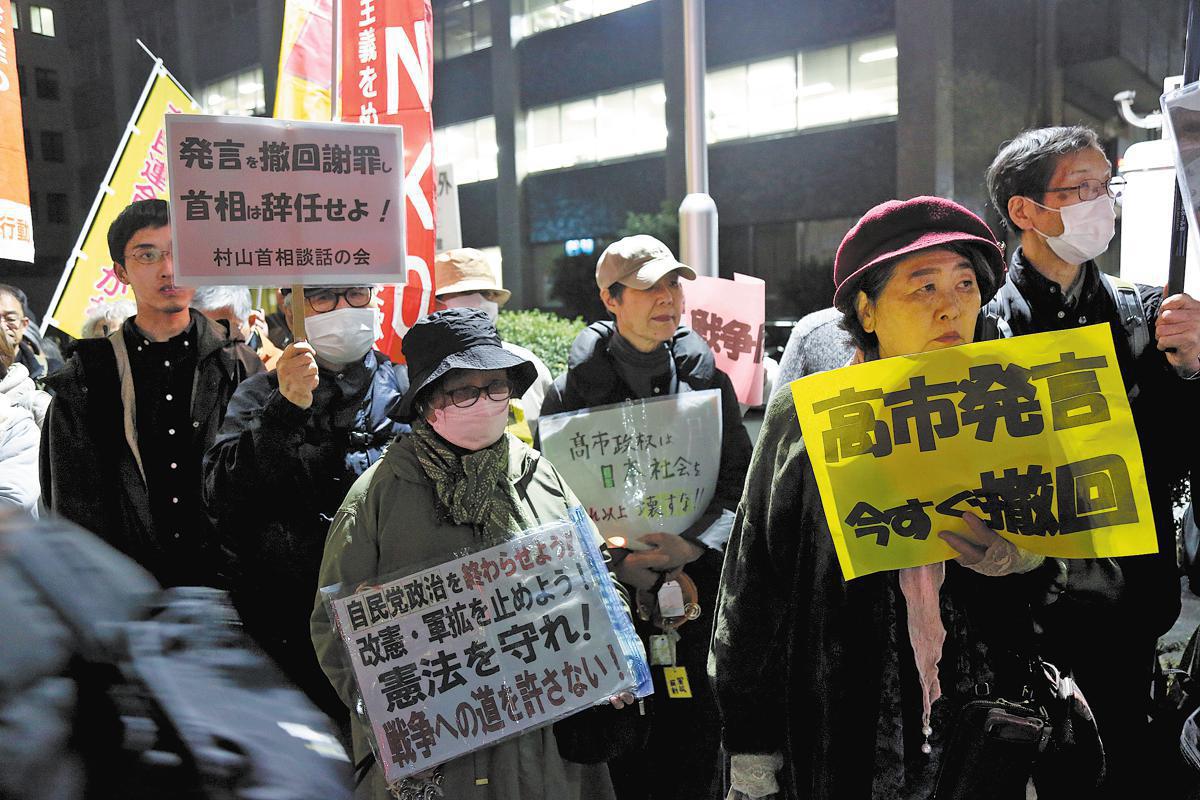
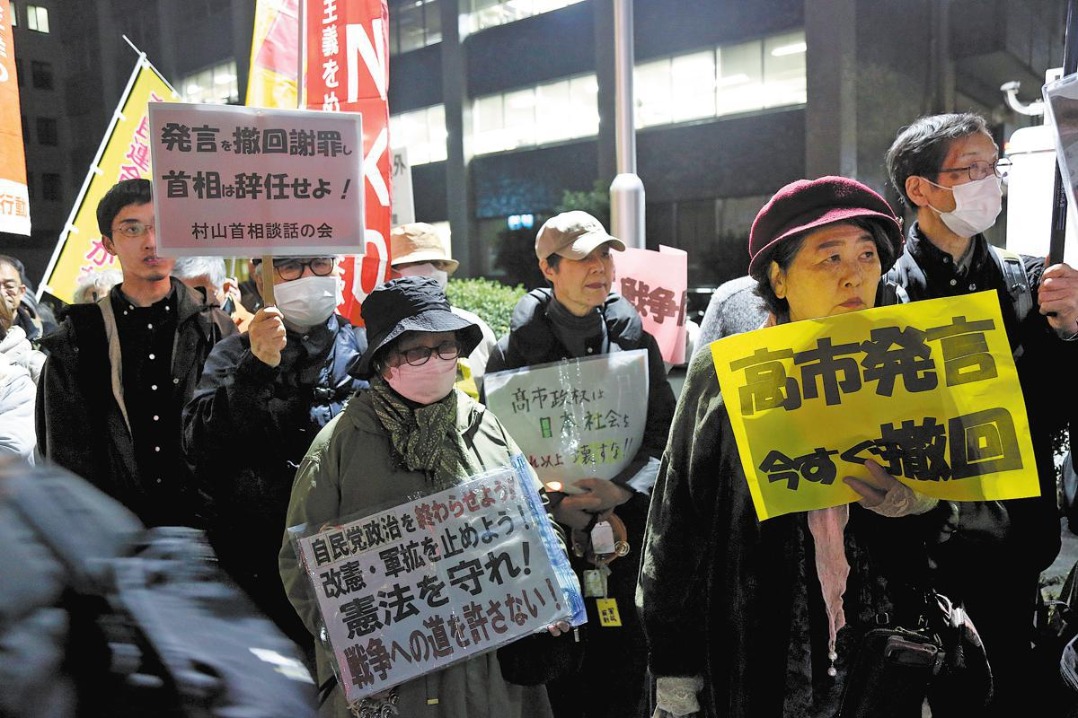
Japanese Prime Minister Sanae Takaichi recently made erroneous remarks about Taiwan in the Diet, claiming that a "contingency in Taiwan" could amount to a "survival-threatening situation" for Japan, forcing it to exercise the right of collective self-defense. It was a blunt signal that Japan might use force to interfere in the Taiwan question.
China lodged stern representations through diplomatic channels, pointing to the harmful nature of her statements. But Takaichi refused to correct herself. Instead, in subsequent Diet debates she stubbornly insisted that her remarks were consistent with the Japanese government's position and flatly rejected any retraction.
On Wednesday, Takaichi referenced the 1972 joint statement between China and Japan, but only mentioned Japan's position on the Taiwan question remained unchanged. Japan deliberately refrained from clarifying its existing commitments and legal obligations.
The Japanese prime minister has not only seriously undermined the political foundation of China-Japan relations and triggered strong indignation among people in both countries, but has also drawn sharp criticism from the international community. Her words are a jarring note in the regional security landscape.
Takaichi's false notions on Taiwan lay bare her ignorance of history, her attempt to evade responsibility for aggression and a dangerous resurgence of militarist thinking in Japan. Taiwan has been an inalienable part of China since ancient times. This fact has firm historical and legal foundations and is widely recognized by the international community. In 1895, Japan forced the Qing Dynasty (1644-1911) government to sign the Treaty of Shimonoseki and seized Taiwan, wrenching the island into half a century of colonial rule.
During that period, the Japanese aggressors imposed brutal policies, crushed local resistance, killed and imprisoned a large number of civilians and stripped the people of their basic freedoms. At the same time, they plundered Taiwan's mineral resources, forests and agricultural products, turning the island into a "supply base" for its war machine. Yet, despite the oppression, Taiwan compatriots never stopped resisting and solidly stood in unity with the anti-Japanese forces on the mainland.
Ultimately, the bitter and heroic struggle of the entire Chinese nation, including compatriots in Taiwan, led to victory in the Chinese People's War of Resistance Against Japanese Aggression (1931-45).On Oct 25, 1945, in accordance with international legal documents such as the Cairo Declaration and the Potsdam Proclamation, Taiwan was formally restored to China.
This was not only a major achievement for China in the war against Japan, but also an integral part of the postwar international order — one that Japan, as a defeated country, is duty-bound to honor.
Yet Takaichi refuses to face this ironclad history or Japan's crimes of aggression. As a representative of right-wing forces in Japan, she continues to peddle the so-called "China threat". By recasting the aggressor as a "victim" and perpetuating the "victim narrative" favored by Japan's right wing, she is turning reality on its head. Such revisionism of history not only deeply hurts the feelings of all Chinese people, including compatriots in Taiwan, but also obstructs regional reconciliation and trust between Japan and other Asian countries. It is an affront to basic human conscience and justice.
Even more alarming is that Japan has begun accelerating its military build-up in recent years. The Japanese government has hollowed out the spirit of the pacifist Constitution of the country, using revisions to security legislation to break through the exclusively defense-oriented principle and expand the scope of the Self-Defense Forces' activities to "overseas operations".
At the same time, there are calls for abandoning the Three Non-Nuclear Principles. Tokyo is tightening its military alliance with Washington, frequently conducting joint exercises and stoking military confrontation in the region. Historically, Japan has used the so-called "threats to national survival" as a pretext for aggression. Today, when Takaichi invokes the same rhetoric, the ambitions behind it should ring alarm bells for the international community.
Her remarks also risk sending the wrong signal to separatist forces on the Taiwan island, leading them to miscalculate that Japan will offer concrete military backing and encouraging them to make more reckless moves.
The Democratic Progressive Party authorities' "gratitude" for Takaichi's words exposes their true intention. They are "relying on foreign forces to seek independence" and acting as accomplices to external meddling. By contrast, sensible people on the island have voiced serious concern and opposition to the external interference, clearly showing that separatist schemes for "Taiwan independence" run counter to the will of the people and are doomed to fail.
The Taiwan question is purely China's internal affair and must be resolved by the Chinese people. No matter how desperately the DPP authorities try to "seek independence by leaning on external forces", and no matter how external forces stir up trouble and create tensions, they cannot stop the historical trend that China will and must be reunified.
The author is an associate researcher at the Institute of Modern History, Chinese Academy of Social Sciences.
The views don't necessarily represent those of China Daily.
If you have a specific expertise, or would like to share your thought about our stories, then send us your writings at opinion@chinadaily.com.cn, and comment@chinadaily.com.cn.