Japan should draw right lessons from past









In 1938, as China reeled from the Chinese People's War of Resistance Against Japanese Aggression (1931-45), Chairman Mao Zedong penned On Protracted War, arguably the 20th century's finest strategic analysis of national resistance, one that pushed back against those who thought China should surrender and instead charted a course for victory. That he did so combining traditional Chinese wisdom with Marxism is well known.
Less well known today is that this course of action played a vital role in defeating fascism. Tying up Japanese forces in China prevented them from opening a front against the former Soviet Union, ensuring the latter could instead focus on defeating Germany.
Similarly, as Japan kept pouring men and resources into China, it was unable to stop the United States' advance across the Pacific.
Another key lesson comes from the war crimes trial of Japan's wartime prime minister Tojo Hideki. His defense centered on a simple argument: Western imperial powers had subjugated a large part of Asia and were encircling Japan with the same intention.
This is what justified Japanese militarism, he argued.
Of course, two wrongs don't make a right, and Tojo's defense failed. He was convicted as a Class-A war criminal and executed. His remains, along with those of other war criminals guilty of committing genocide against China and other nations, are in the Yasukuni Shrine, often visited by Japanese leaders in misguided appeals to Japanese nationalism.
Such acts indicate that the correct lessons of history have not been learned.
But another lesson to be learned is that Japan emulated the Western model and failed, just as the Germans, British, French, Dutch and Americans had.
The key question is, why is Japan returning to a militarist stance today, and doing so in ways that appear to serve the "first island chain" strategy of the US, which most experts believe is primarily aimed at containing China?
Already, Japan is planning to install surface-to-air missiles on Yonaguni island, located just 110 kilometers from Taiwan, and providing political and military support to separatists in China's Taiwan island, thereby threatening Chinese security and sovereignty. Hasn't Japan learned that such an approach inevitably fails?
Finally, why is it so difficult for Japan to acknowledge that the Taiwan island belongs to China?
Japan knows it seized the island following an unjust war with China in 1895.
Japan also knows that the island was returned to China as a condition after it signed the Instrument of Surrender in 1945.
Therefore, how could there be any confusion on whether the island belongs to China.
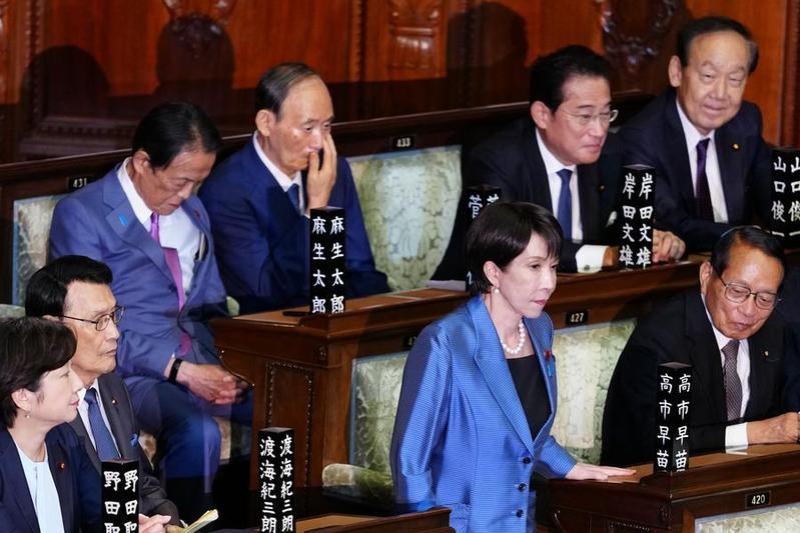
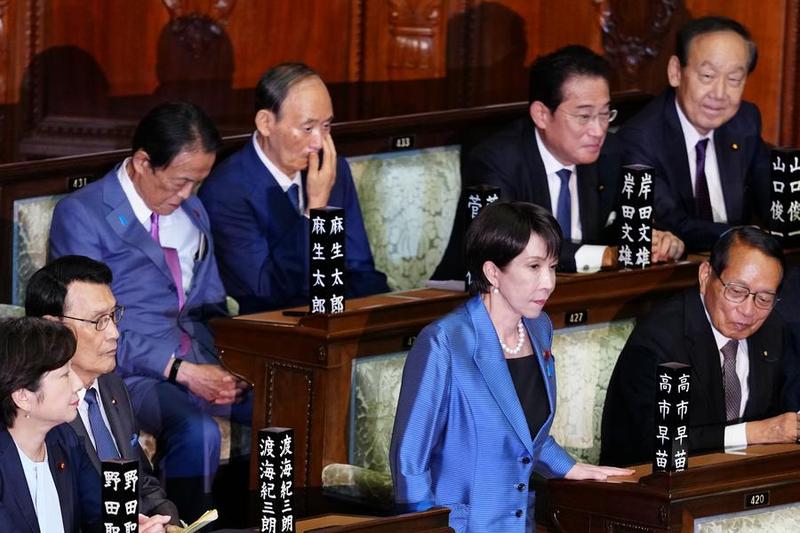
All that Japan needs to do is retract the controversial remarks the Japanese prime minister made in the Japanese Parliament on Nov 7, when she said that a "Taiwan contingency" could pose a "survival-threatening situation" for Japan, implying potential military intervention.
Sanae Takaichi should also uphold that the Taiwan island is an inalienable part of China.
Such a move will genuinely help in de-escalating the tense situation and go a long way in dispelling neighboring countries' concerns about the resurgence of Japan's militarism.
Japan has reached this difficult moment in history without an adequate understanding of its past.
On the one hand, some suspect these provocations are part of a "nested game" advanced by the US hawks.
Having retreated from its trade war against China, some worry that the US hawks are encouraging Japan as a proxy to open a new front against the country.
On the other hand, militarism and nationalism in Japan have never been adequately addressed and suppressed.
This is because most Japanese citizens have not been sufficiently taught about the atrocities committed by their forefathers, or how those mistakes linger in unresolved, legacy issues.
Perhaps some militarist Japanese, including the new prime minister, were unhappy that Japan, China and the Republic of Korea resumed a dormant strategic dialogue earlier this year. They were also likely unnerved by increasing talk of a possible trilateral trade agreement to foster greater regional growth and development and resist US trade aggression.
Of course, the unfair trade war concessions the US forced on Japan and the ROK were made possible in part by the economic and security traps the US has sustained against both countries for decades.
But there was a militarist reaction in Japan to these developments, created by a political party struggling to stay relevant despite a moribund economy and kowtowing to an exploitative "ally".
Vladimir Lenin once wrote that reactionaries are people who support the old, obsolete order and fight against the new, progressive one and they are living in the past. This aptly fits the description of Japanese militarists and those who oppose Taiwan's reunification with the mainland. They don't understand the past they aim to repeat. If they did, they would surely understand the inevitability of their defeat.
The author is a professor of politics and international relations and director of the Center for Ecological Civilization at East China Normal University in Shanghai. He is also a senior research fellow with the Institute for the Development of Socialism with Chinese Characteristics at Southeast University in Nanjing.
The views don't necessarily reflect those of China Daily.
If you have a specific expertise, or would like to share your thought about our stories, then send us your writings at opinion@chinadaily.com.cn, and comment@chinadaily.com.cn.