'Resilience' tops list of Chinese buzzwords of 2025









A humorous couplet contrasting a state of being "calm, composed, and masterful" with one of "rushing about, tumbling and scrambling" has made it onto China's top ten buzzwords of 2025.
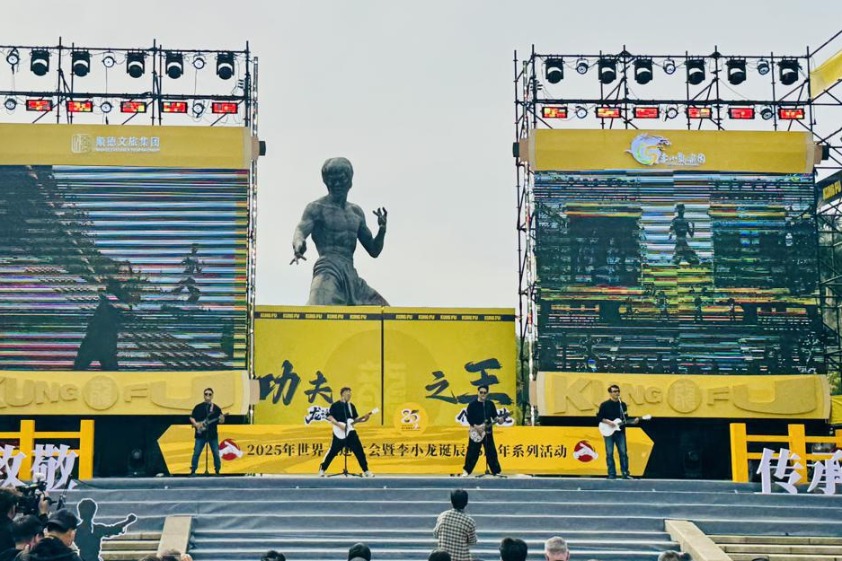
The phrase originated from the fiery remarks of Wang Shih-chien, a lawmaker in Taiwan, during a council inquiry criticizing government inefficiency. The clip went viral after Chinese mainland netizens remixed his intense delivery into a catchy electronic rock track called Useless.
Used widely as a meme template on platforms including Douyin, the song captured the chaotic pace of modern life. Its humor resonated across the Taiwan Strait, turning a political sound bite into a pop culture moment embraced by audiences on both sides.
The annual list, released on Tuesday by language magazine Yaowen-Jiaozi, serves as a cultural barometer reflecting social trends and public sentiment in online discussions.
"Resilience" topped the list.
In recent years, the rise of unilateralism and protectionism, along with intensified technological blockades, has brought great uncertainty to global supply chains. In response to these external challenges, China has remained committed to high-standard opening-up and steady economic transformation, sustaining a trajectory of stable and progressive growth.
As a result, "resilience" has become a buzzword, with expressions such as "development resilience", "economic resilience", "supply chain resilience", "foreign trade resilience" and "manufacturing resilience" frequently appearing in government documents and media reports.
Huang Anjing, editor-in-chief of Yaowen-Jiaozi, said the selections, based on rigorous sociological and linguistic standards, show how major events and social hot spots have drawn widespread attention.
Few terms illustrate that better than "suchao", short for the Jiangsu Football City League — an amateur event that has become a nationwide phenomenon. Unlike commercialized professional leagues, "suchao" thrives on local pride, with teams of white-collar workers, students and shop owners representing their cities. With average live audiences surpassing those of some top-tier professional matches, it has become a viral symbol of raw, genuine sports culture.
The magazine noted that the intelligent era has accelerated the expansion of the Chinese lexicon, adding a large batch of artificial intelligence-related vocabulary. Newly popular terms include "embodied intelligence" and "huoren gan", or "sense of being a real person", which has entered mainstream usage.
"Huoren gan" literally means "real-person vibe" and reflects a growing desire for authenticity. In an age saturated with AI-generated content and overly curated online personas, the term celebrates unpolished, sincere human emotion.
New vocabulary also reflects the rise of new quality productive forces and diverse employment models. "Guzi" — a phonetic adaptation of "goods" — points to the booming market for anime and gaming peripherals, highlighting the cultural and commercial strength of youth interests. "Digital nomads "describes the expanding group of location-independent professionals.
These buzzwords act as a barometer of shared emotions, the magazine said. The adaptable meme format "prefabricated XX" critiques prepackaged experiences, while "basic A, non-basic B "humorously contrasts what should be simple or fundamental with something unexpectedly extravagant. The latter originated from a fashion tip by influencer Zhang Qi and spread online as users applied it to everyday life — such as "salary is basic, spending is not".
zoushuo@chinadaily.com.cn