


Weaving traditions of China and Serbia strengthen people-to-people ties









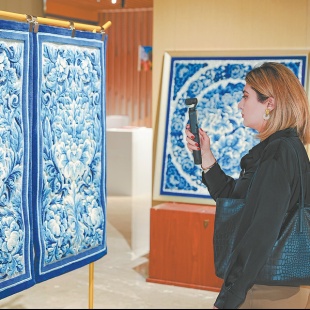
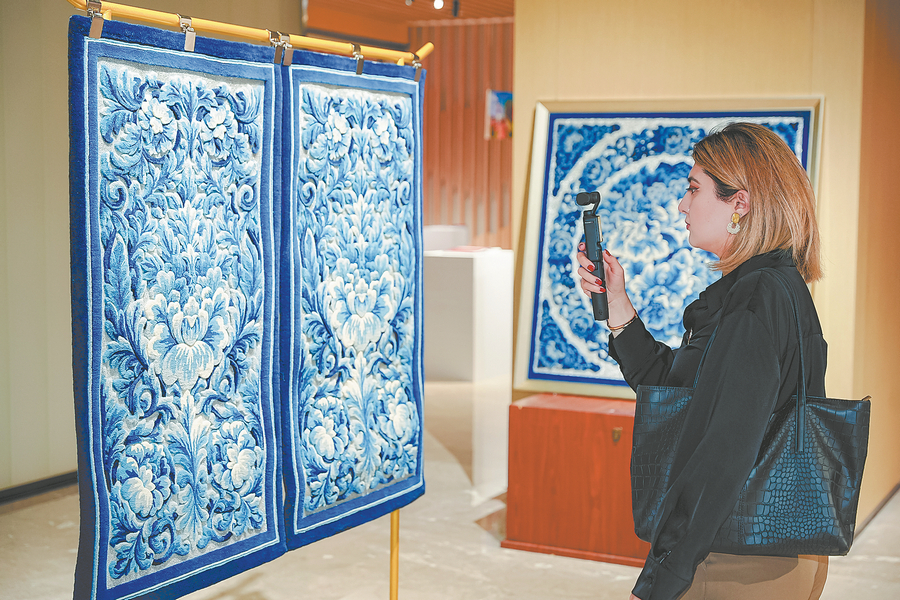
A dozen carpets, each bearing distinctive cultural patterns and the ancestral skills of China and Serbia, adorn the Beijing Overseas Cultural Exchange Center in late November.
From the geometric rhythms of Serbian Pirot carpets to the majestic dragon patterns of Beijing palace rugs woven with gold thread, the exhibition presents a silent dialogue between two living traditions.
The Weaving Rhymes of China and Serbia: Two Carpets in Harmony and Resonance exhibition celebrates the 70th anniversary of diplomatic ties between the two countries.
Jointly presented by the Beijing center, the Cultural Center of the Republic of Serbia in Beijing, and the Beijing Eight Imperial Handcrafts Museum, the exhibition showcases the distinct yet parallel journeys of Serbia's Pirot carpet and China's Beijing palace carpet.
"You won't find two identical Serbian Pirot carpets," explains Soldat Tatjana, director of the Serbian cultural center, adding they are a deeply personal and feminine art form.
"In Serbia, weaving carpets is women's work," Tatjana says, guiding visitors through the displays.
"A girl starts learning from her grandmother and mother at about 5 or 6, slowly making her dowry, which must include carpets." She emphasizes that each Pirot carpet is unique because it reflects a woman's personal perspective on an enriched life, from her choice of colors to her interpretation of patterns like snowflakes or dragons.
These carpets, often bordered like a "family courtyard", have versatile purposes, including being laid on floors, sofas and beds, or hung on walls.
"The central field represents the hopes and dreams of the carpet weaver for her family's happiness," Tatjana says.
In a compelling contrast, Xue Jiangwenyan, an inheritor of the Beijing palace carpet tradition, unveiled the grandeur and ritual significance of her craft.
Leading the audience past pieces that replicate imperial collections from the Palace Museum, Xue points visitors to a set of imperial rugs featuring dragon and peony patterns.
"What you see is all formed by individual woolen threads tied into knots around the warp and weft before being cut," she says.
She highlights exquisite techniques like gold and silver couching, where threads wrapped in pure gold foil are woven by hand, a privilege once reserved for the royal court.
She notes that a large carpet, like the one featuring two dragons playing with a pearl, inspired by Tibetan aesthetics, can take an artisan over six months to weave, not including the preliminary design phase.
"Palace carpet is a slow, handcrafted art," she remarks.
In the face of industrialization, both traditions confront similar challenges in attracting new practitioners. To rejuvenate these traditions, Xue shared proactive approaches being implemented in China.
"Intangible cultural heritage has entered campuses and communities — this is a very positive development," she says, emphasizing the role of creative cultural products in making heritage accessible.
"Integrating our elements into daily-use items allows people to start with smaller purchases, which can spark their interest in the craft."
The two sides also explored the potential for creative fusion between the two traditions.
Tatjana says there are shared symbolic meanings in motifs like birds that represent free spirit; or flowers, such as roses and peonies, that carry positive connotations in both cultures.
"Through these patterns and techniques, we learn about and understand each other," Tatjana says. "We could organize activities that bring together inheritors from both countries to learn from each other and create a joint work that blends our technical traditions."
Xue shares this vision, adding, "We hope to collaborate with Serbian inheritors to develop styles that integrate Eastern and Western elements, drawing from each other's traditional techniques and cultural motifs. This would help our cultures advance together, onto the global stage."
When asked what Chinese artisans could draw from their Serbian counterparts, Xue points to the geometric patterns.
"This is an area we haven't explored much," she says.
"The simpler, more imaginative patterns of Pirot carpets might be more suitable for modern Chinese homes, and that's something we can learn from," she adds.
The organizers note that despite their different historical backgrounds, both nations share a deep respect for traditional techniques and a common pursuit of beauty and a better life.
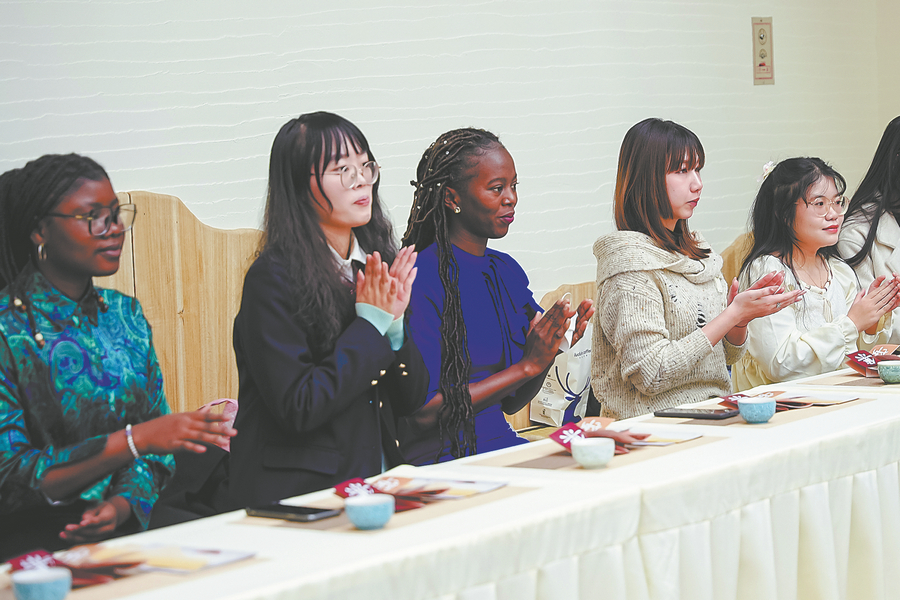
The gathering attracted international guests from countries including Azerbaijan, Vietnam, Thailand and the Republic of the Congo.
Participants agreed that the weaving arts offer a unique way to strengthen people-to-people ties, noting that the event reflects the enduring "ironclad friendship" between China and Serbia.
yangfeiyue@chinadaily.com.cn