More red lines drawn to protect environment









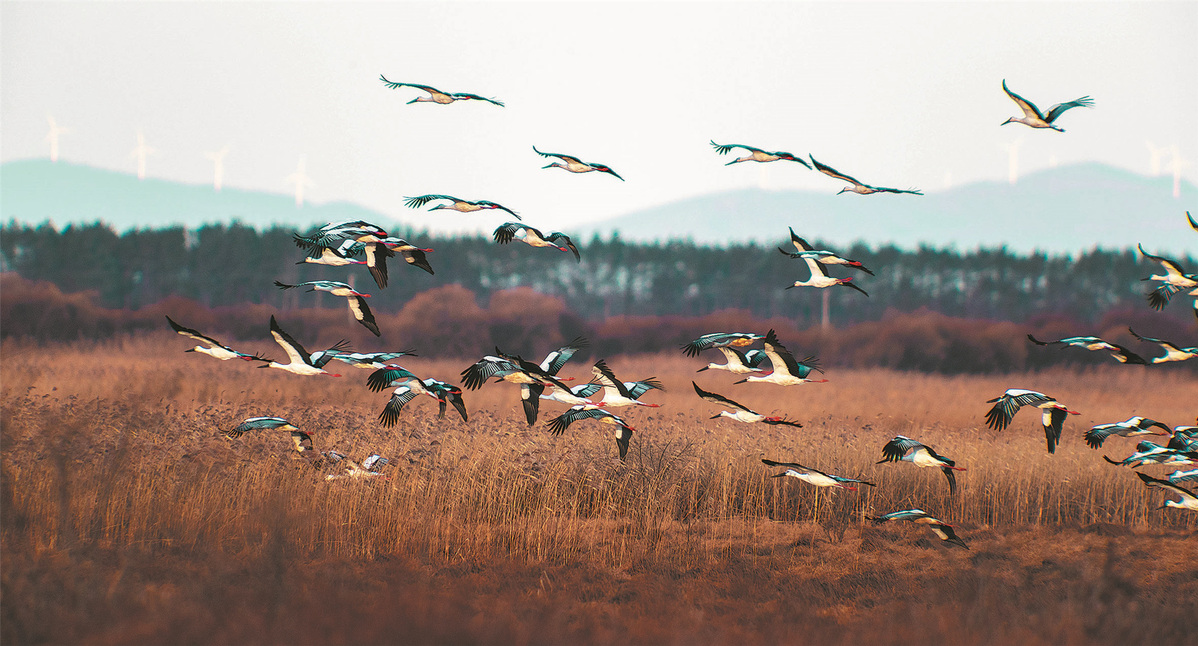
The Chinese central government has drawn red lines around 3.15 million square kilometers of land for conservation purposes, according to the Ministry of Natural Resources.
The "red lines" refer to spatial boundaries that must be strictly observed in terms of protecting the environment and natural resources, and now enclose around 30 percent of the country's surface area.
Delineated aquatic areas amounting to 150,000 sq km are located mostly in the Qinghai-Tibet Plateau, along the Yellow and Yangtze rivers, the northeastern forest belt and the northern sand control belt.
Nature reserves cover about 1.8 million sq km and areas including those with extremely important environmental functions such as water conservation, biodiversity maintenance, soil and water conservation, wind protection and sand fixation, and coastal protection outside nature reserves, cover 850,000 sq km.



- Consumer complaints rise over AI customer service failures
- Zhejiang authorities probe death of child in hospital
- China moves to reduce childcare costs
- High-altitude discovery sheds light on early settlers of Qinghai-Tibet Plateau
- Beijing seminar studies legal systems of Francophone countries
- Approved private vehicles now permitted direct access to Hong Kong