|
|||
 |
|||
|
|||
|
|||
|
|||
|
|
||||||||||||||||||
Green Olympics, natural venuesBy Li Qian (Chinadaily.com.cn)Updated: 2006-09-01 15:30As the 2008 Olympics nears, the environment, a constant worry for Olympic organizers, is drawing more attention from the public.
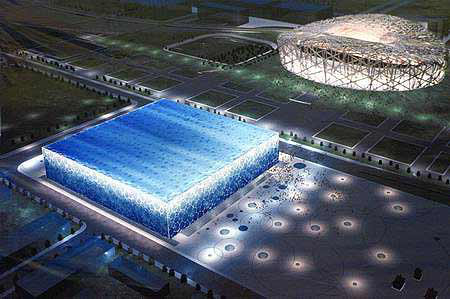
Beijing has launched a Green Olympics program since it began preparing for the games in order to improve the city's notorious air quality. Under the program, the state-owned steel producer Shougang is being moved from the west of the city to Hebei Province, energy-saving and environmently friendly materials are becoming more popular in construction, and the recycling and reuse of waste is being encouraged in all industries in Beijing. In order to build two man-made rivers in the Shunyi Olympic Rowing and Canoeing Park, 2 million cubic metres of soil was displaced. How to deal with the soil became a big problem for the workers. If the soil is transported to other places, It would take a total of 200,000 trucks carrying one load each to transport all the displaced earth. It was then decided that the soil would be used to construct the planned 8-meter-high hill for the park. The soil was successfully changed into a usable material after workers experimented with several combinations of earth, cement and other materials. The reuse of steel residue in the National Stadium, the collection and utilization of rainfall in twelve new gymnasiums and stadiums, and a sewage air-conditioning system in the Olympic village will all help reduce pollution and energy consumption. For the Beijing Shooting Range currently under construction, architect Qi Bin designed a double-deck breathing wall, which uses an air space between two glass walls to control the room temperature and promote air circulation. The wall will reduce annual electricity consumption by 30 percent. Olympics Research Centre expert Jin Yuanpu said the Green Olympics concept requires focusing on how to fully utilize and preserve natural resources when building large projects. In 2007 when the projects are finished, Beijing will have a pollution-free National Stadium, a transparent Water Cube and a National Indoor Stadium with glass walls, all of which will be environmentally friendly.
|
|