
The China Story
at your Fingertips
OPEN
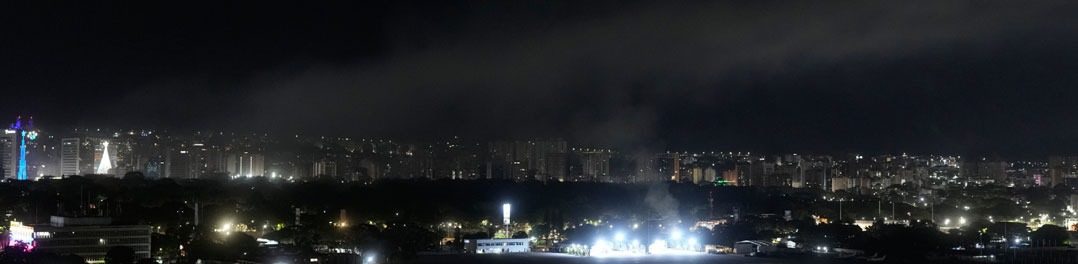
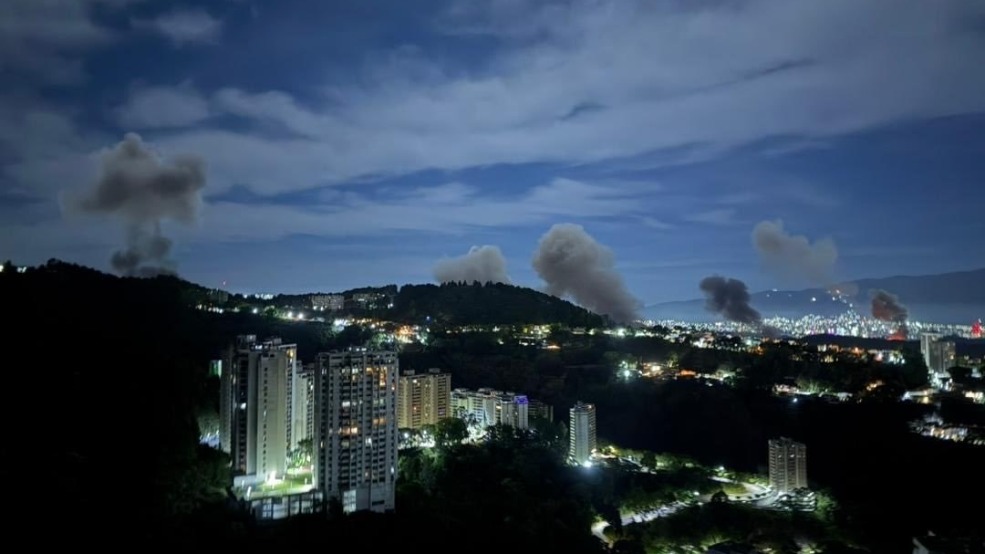
US attack against Venezuela left 100 dead, Venezuela's interior ministry said.
US European Command said it has seized an empty oil tanker linked with Venezuela and registered as a Russian vessel in the North Atlantic in an operation.
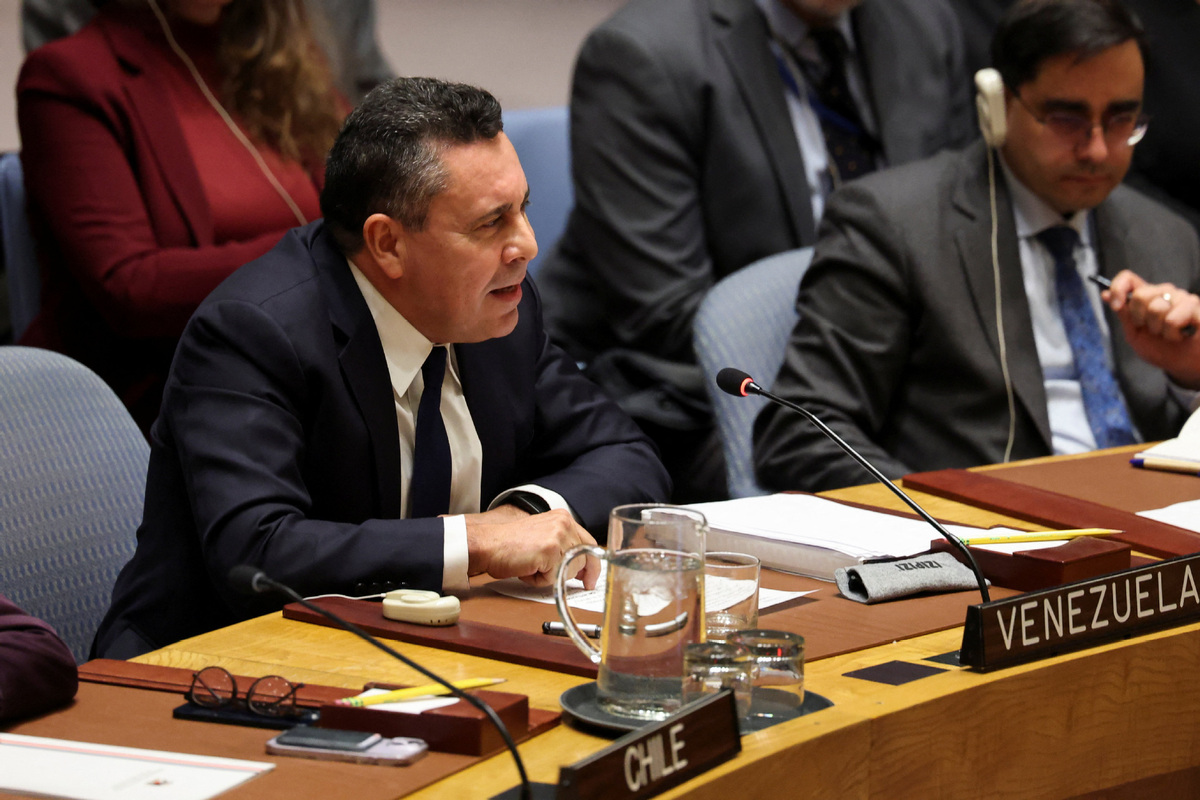
UN Security Council holds an emergency meeting on Venezuela



OSLO -- Greenlandic Prime Minister Jens-Frederik Nielsen said on Sunday night that the "immediate and repeated rhetoric" from the United States concerning Greenland is "completely and utterly unacceptable."
"Now it's enough," Nielsen said in a statement posted on Facebook, adding, "No more pressure. No more hints. No more fantasies about annexation."
He said that when the president of the United States talks about "we need Greenland" and connects Greenland with Venezuela and military intervention, it's wrong.
"Threats, pressure and talk of annexation do not belong anywhere between friends," Nielsen said.
U.S. President Donald Trump said in a telephone interview on Sunday with The Atlantic that the United States "absolutely" needs Greenland. He also discussed the U.S. intervention in Venezuela.
In response, Danish Prime Minister Mette Frederiksen said in a statement that the United States has no right to annex Greenland, urging Washington to stop making threats against a close ally and the Greenlandic people.
Last month, Trump announced the appointment of Louisiana Governor Jeff Landry as the U.S. special envoy to Greenland, renewing diplomatic tensions.
Since taking office in January 2025, Trump has repeatedly expressed interest in gaining control of Greenland, saying that he would not rule out the use of "military or economic coercion" to achieve that goal.
Greenland, a former Danish colony, became an integral part of the Kingdom of Denmark in 1953. It was granted home rule in 1979, expanding its autonomy, though Denmark retains authority over foreign affairs and defense.

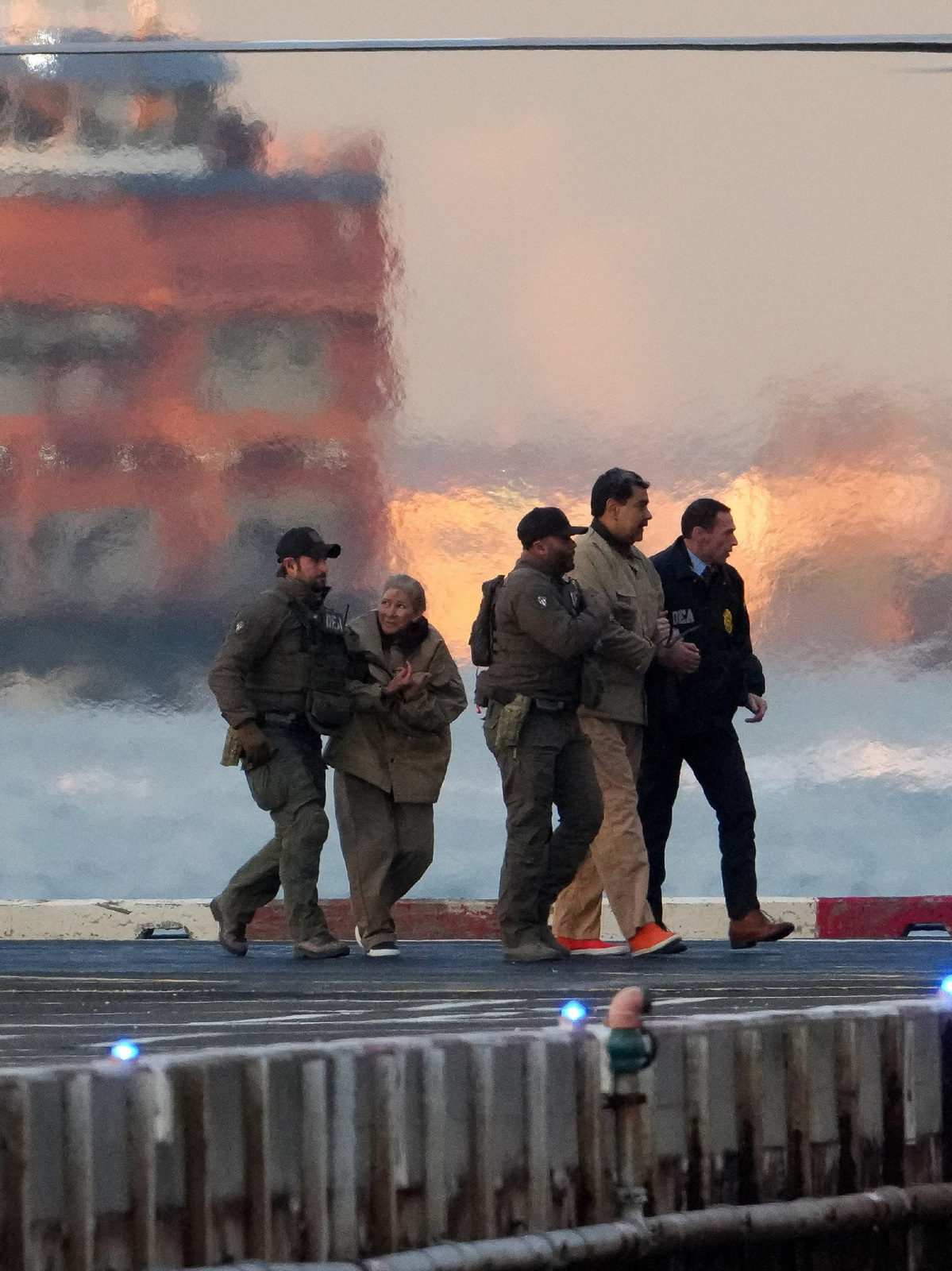
NEW YORK -- Venezuelan President Nicolas Maduro made his first appearance Monday morning at a New York courthouse after he was seized by US forces in his country.
Photos from US media show Maduro landed in Manhattan by a helicopter from a Brooklyn detention center and was placed in an armored car, accompanied by heavily armed law enforcement officers.
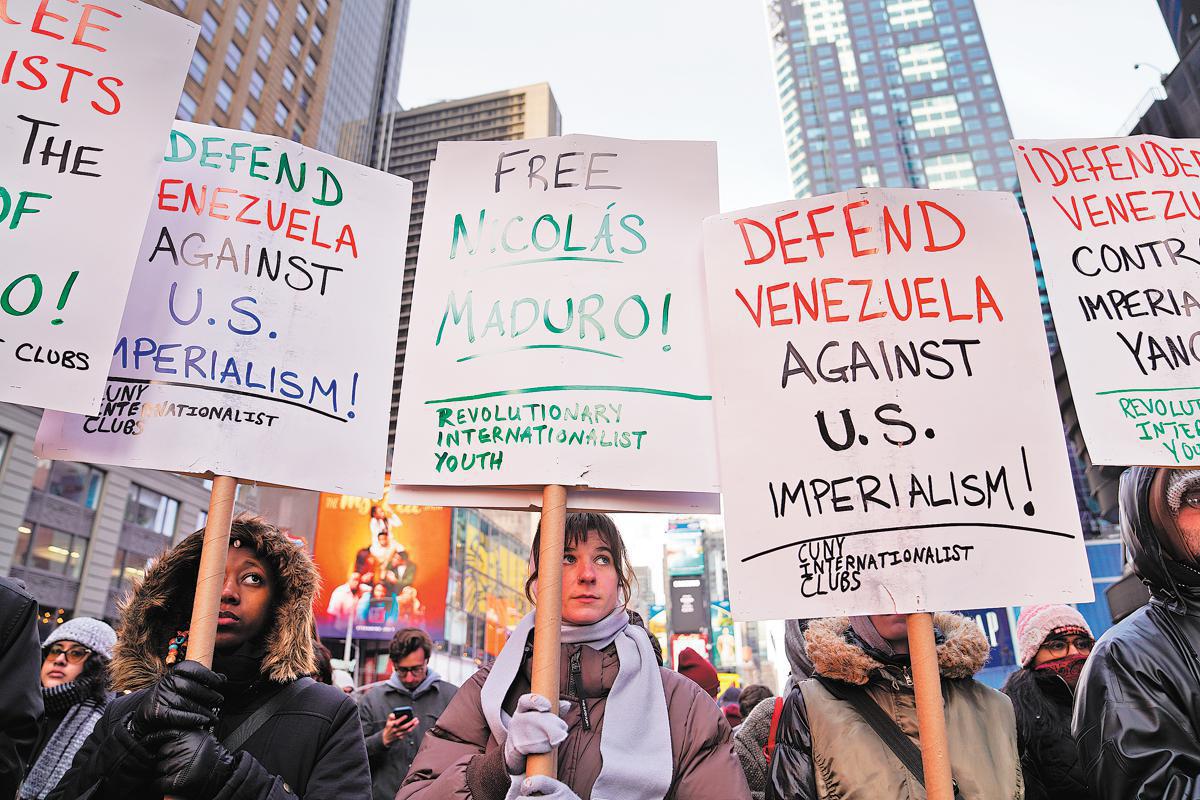
Protesters gathering outside the court were shouting slogans and holding banners writing "Free Maduro" and "USA hands off Venezuela."
US troops carried out a raid on Saturday to kidnap Maduro and his wife, Cilia Flores, and flew them out of Venezuela, then put them in custody in New York.

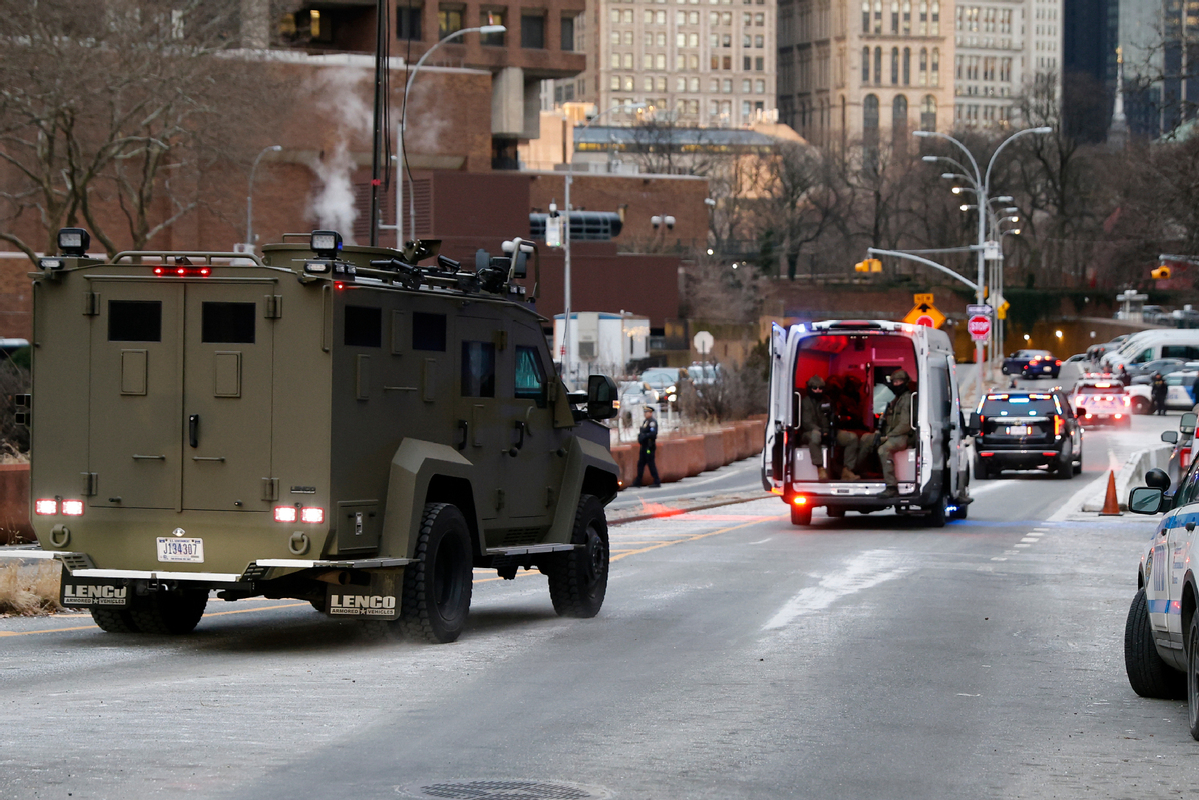
Venezuela's Maduro arrives at federal courthouse in New York

In an exclusive interview, Paulo Navas of Venezuela's Siguaraya TV gave an on-the-ground account of the United States' blatant use of force against Venezuela and the kidnapping of President Nicolas Maduro, which he dubbed as outright "colonialism."
"This is an attack on sovereignty and independence," Navas told China Daily's Zhao Manfeng. "It blatantly violates international law."
"It is military intervention. It is colonialism in the 21st century. Chile and Panama have lived through this," he said.
Navas concluded with a warning to the international community: "What happened in Venezuela could happen in any other country, as Donald Trump has named other countries in Latin America."

GENEVA -- The Swiss Federal Council announced in a statement on Monday that it has frozen all assets held in Switzerland by Venezuelan President Nicolas Maduro.
The statement said that, in accordance with the relevant federal act, the Federal Council has decided to freeze all assets held in Switzerland by Maduro and other persons associated with him.
The statement noted that the freeze takes effect immediately and will remain valid for four years until further notice.
US troops carried out a raid on Saturday to kidnap Maduro and his wife, Cilia Flores, and flew them out of Venezuela, then put them in custody in New York.
The US forcible seizure of Maduro and his wife has stunned the world and sparked widespread outrage.

China stated it would continue to maintain cooperation with Venezuela, after the United States shocked the world by carrying out a strike in the Latin American country and seizing Venezuelan President Nicolas Maduro and his wife.
"Cooperation between China and Venezuela is between two sovereign states and under the protection of international law and the laws of the two countries," Foreign Ministry spokesman Lin Jian said on Monday.
"No matter how the political situation in Venezuela may evolve, China will remain committed to deepening practical cooperation with Venezuela in various fields," Lin said. "China's lawful interests in Venezuela will be protected in accordance with the law."
Lin reiterated China's grave concern over the US forcibly seizing Maduro and his wife and taking them out of Venezuela.
China supports the United Nations Security Council in convening an emergency session over the US' military strike on Venezuela, and backs the Security Council in playing its due role, Lin said.
China stands ready to work with the international community to uphold the UN Charter and international justice, he added.

BEIJING -- China supports the United Nations Security Council to hold an emergency meeting on the US military action against Venezuela, and backs the Security Council in fulfilling its due role in accordance with its own responsibilities, Chinese foreign ministry spokesperson Lin Jian told a news briefing here on Monday.
Lin noted that China is ready to work with the international community to firmly uphold the UN Charter, defend the bottom line of international morality, and safeguard international fairness and justice.
The UN Security Council will hold an emergency meeting on Monday on the US operation against Venezuela, the council presidency told Xinhua on Saturday.

BEIJING -- China respects Venezuela's sovereignty and independence, and believes that the Venezuelan government will properly manage its internal affairs in accordance with its constitution and laws, a Chinese foreign ministry spokesperson said here Monday.
BEIJING -- No matter how the international situation changes, China will always be a good friend and a reliable partner of Latin American and Caribbean countries, Chinese foreign ministry spokesperson Lin Jian said on Monday.
"China's policy toward the region will maintain continuity and stability," Lin said at a regular news briefing.
WASHINGTON -- US President Donald Trump on Sunday night urged Venezuelan acting president Delcy Rodriguez to grant the United States "total access," especially to Venezuela's oil resources.
"We need total access. We need access to the oil and to other things in their country that allow us to rebuild their country," Trump told reporters aboard Air Force One.
Trump said that he had not spoken directly with Rodriguez, but would do so "at the right time." Rodriguez, vice president under Nicolas Maduro, assumed the role of acting president after Maduro was flown out of Venezuela following US military attacks.
Meanwhile, Trump claimed that the United States was "in charge" of Venezuela and "dealing with the people that just got sworn in."
"Don't ask me who's in charge, because I'll give you an answer, and it'll be very controversial," Trump said. "It means we're in charge. We're in charge."
Trump reiterated comments made earlier Sunday in a phone interview with The Atlantic, warning that Rodriguez would face a fate worse than that of Maduro if she failed to "do the right thing."
"She will face a situation probably worse than Maduro, because, you know, Maduro gave up immediately," Trump said.
Maduro is expected to appear in court in New York on Monday.
Hours after Maduro's capture on Saturday morning, Trump said that Secretary of State Marco Rubio had a phone call with Rodriguez and that the White House was working with her.
"She (Rodriguez) is essentially willing to do what we believe is necessary to make Venezuela great again," Trump told reporters, noting that she had been "picked by Maduro."
As Trump made these remarks, Rodriguez demanded the immediate release of Maduro and his wife, Cilia Flores, during a session of the National Defense Council broadcast on state television channel VTV, calling Maduro "the only president of Venezuela."
Rodriguez said Venezuela's territorial integrity had been "savagely attacked" during US strikes on Caracas and other parts of the country carried out to capture Maduro.

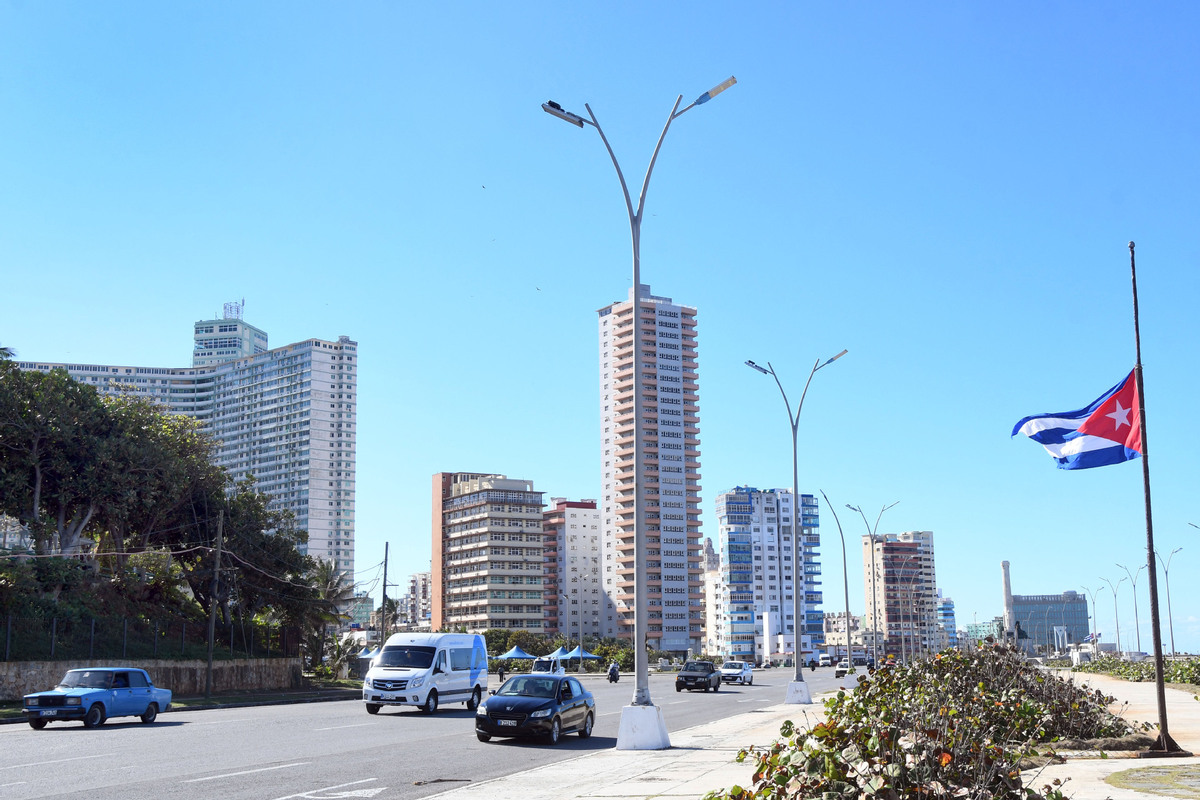
HAVANA - Cuban President Miguel Diaz-Canel on Sunday announced two days of national mourning for 32 Cubans killed during the US military attack on Venezuela.
The 32 victims, deployed at the request of Venezuelan authorities, were carrying out missions on behalf of Cuba's Revolutionary Armed Forces and Ministry of the Interior, said Diaz-Canel.
They were killed while resisting the attack, with some falling in direct combat and others as a result of bombings, said Diaz-Canel, noting that their heroism reflects the unity of the Cuban people and Cuba's commitment to international solidarity.
As a result, he issued a presidential decree declaring two days of national mourning from Monday to Tuesday. During the period, national flags will be flown at half-staff at public buildings and military institutions, and all public performances and festive activities will be suspended.

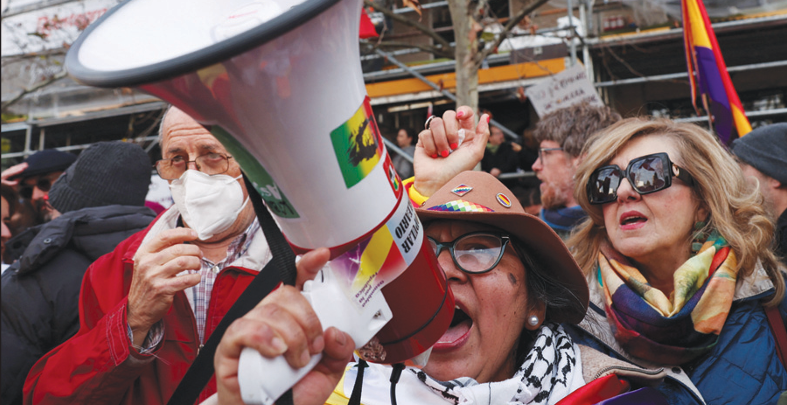
Following the United States' military action on Saturday in which Venezuela's President Nicolas Maduro and his wife were seized and transferred to US territory, European leaders have reacted with references to international law and the United Nations Charter.
Hours after the operation, European Commission Vice-President and High Representative of the European Union for Foreign Affairs and Security Policy Kaja Kallas posted comments on X after speaking with US Secretary of State Marco Rubio and the EU's ambassador in Caracas.
"Under all circumstances, the principles of international law and the UN Charter must be respected. We call for restraint," Kallas wrote.
Later, European Commission President Ursula von der Leyen said: "We stand by the people of Venezuela and support a peaceful and democratic transition. Any solution must respect international law and the UN Charter."
Neither official specified which provisions of the UN Charter they were referring to. However, Article 2 contains a directly relevant principle, stating: "All Members shall refrain in their international relations from the threat or use of force against the territorial integrity or political independence of any state, or in any other manner inconsistent with the Purposes of the United Nations."
Yan Xiaoxiao, an associate researcher at the Institute of International Relations at the Shanghai Academy of Social Sciences, added:"I don't know which international law scholar could consider it consistent with the Purposes of the United Nations to kidnap the legal president of a sovereign nation."
European national leaders initially adopted a cautious tone in their responses but stressed the need to uphold international laws and the UN Charter.
United Kingdom Prime Minister Keir Starmer wrote: "The situation in Venezuela is fast moving. We will establish all the facts and speak to allies."
Later, after the US held a briefing about the situation, he said: "I reiterated my support for international law this morning."
Germany's Chancellor Friedrich Merz said: "The legal assessment of the US operation is complex, and we will take the necessary time to evaluate it. International law remains the guiding standard."
Italy's Prime Minister Giorgia Meloni said her government believes external military action "is not the path" while added that Italy considers "defensive intervention legitimate when responding to hybrid threats to national security, such as those posed by state actors that fuel and facilitate narcotrafficking".
France's Foreign Minister Jean-Noel Barrot voiced strong opposition to the US military operation, reportedly writing on X: "The military operation that led to (Maduro's) seizure contravenes the principle of non-use of force, which underpins international law." However, as of press time, the post had been deleted.
According to Jian Junbo, director of the Center for China-Europe Relations at Fudan University, the statements from European leaders reflect an inherent contradiction.
"There is no doubt that the US action violates the UN Charter and international law," Jian said. "But condemning Washington could further strain transatlantic relations. At the same time, US disregard for international law also poses a threat to Europe itself. Upholding the international order, international law, and the UN Charter ultimately serves the security and interests of all countries."
zhangzhouxiang@chinadaily.com.cn

On Jan 3, 2026, the United States crossed a line that the postwar international order was explicitly designed to prevent. In a coordinated military operation involving air strikes and special forces, US troops entered Venezuelan territory, forcibly seized the country's sitting president Nicolás Maduro and his wife Cilia Flores and transferred them to the United States to face domestic criminal charges. Washington subsequently announced its intention to oversee a "transition" in Venezuela and facilitate the entry of US oil companies into the country's energy sector.
This was not a diplomatic dispute. It did not constitute cooperation in the area of law enforcement. It was not an internationally sanctioned action. It was a unilateral act of force against a sovereign state — one that directly violates the United Nations Charter and undermines the most basic norms governing relations between nations.
Frontal assault on the UN-centered international order
The prohibition on the use of force is not a marginal rule of international law, it is its cornerstone. Article 2 of the UN Charter leaves no ambiguity: states must refrain from threatening or using force against the territorial integrity or political independence of other states. Only two exceptions exist — self-defense against an armed attack, or authorization by the UN Security Council. The US' action against Venezuela satisfies neither.
Venezuela did not attack the United States. No Security Council resolution authorized military intervention. The operation therefore constitutes a clear violation of international law, regardless of how it is framed rhetorically. Redefining aggression as "law enforcement" does not change the illegal nature of the act.
China has consistently upheld the authority of the UN Charter and opposed the erosion of its core principles. Once these principles are discarded by powerful states, the international system ceases to be rules-based and becomes governed by brute force.
Domestic indictments do not justify invasions
Washington has sought to justify its actions by citing indictments filed in the US that accuse President Maduro of narcotics trafficking and "drug terrorism". Yet international law does not recognize the extraterritorial enforcement of domestic criminal law through military means.
If national courts are allowed to legitimize cross-border military raids, then every state becomes vulnerable to unilateral coercion. Any government disfavored by a stronger power could be criminalized, seized and removed from power under the guise of "justice". This is not the logic of law — it is imperial prerogative.
The international community has long-established mechanisms for dealing with transnational crime: judicial cooperation, extradition treaties and multilateral frameworks under the United Nations. Bypassing these mechanisms is not a sign of resolve, it is an admission that legality has been deliberately set aside. Rules that apply selectively are not rules at all.
Return of imposed governance
Even more revealing than the operation itself are Washington's subsequent statements. The claim that the United States will temporarily "manage" Venezuela until a "secure transition" is completed openly revives a doctrine that much of the world believed had been buried by history.
This language strips Venezuelan sovereignty of any real meaning. It treats a UN member state as an object to be administered rather than as a subject of international law. It echoes an era when foreign powers decided which governments were acceptable and which resources were to be "stabilized" for external benefit.
The US' move is in clear violation of international law, basic norms in international relations, and the purposes and principles of the UN Charter. A country's political future must be determined by its own people, not by foreign troops or external economic interests. Any attempt to reshape Venezuela's political or economic system through coercion will only deepen instability and suffering.
Latin America's hard-earned norms under threat
The strong reactions heard from across Latin America are neither emotional nor ideological, they are rooted in historical experience. The region has spent decades working to establish non-intervention as a shared norm, precisely because external military interference has repeatedly brought division rather than development.
The US operation against Venezuela threatens to reverse this progress. It signals that military power, not regional consensus or international law, remains the decisive factor. Such a signal will inevitably heighten insecurity, fuel polarization and weaken trust across the hemisphere.
Instability does not stop at borders. Political shocks, economic disruptions and humanitarian consequences will affect neighboring countries and the wider region. At a time when global economic growth is fragile and geopolitical tensions are already high, injecting force into Latin America serves no constructive purpose.
Precedent that endangers all states
The UN secretary-general's warning that the US operation sets a "dangerous precedent" should not be understated. If the detention of a sitting head of state by a foreign military force is normalized, no country can consider itself safe.
Today, it is Venezuela. Tomorrow, it could be any state whose policies conflict with the interests of a stronger power. The erosion of restraint always begins with an exceptional case — and ends with permanent instability.
China advocates a multipolar world where all countries, regardless of size or strength, enjoy equal sovereignty. Upholding international law is not a rhetorical preference, it is a practical necessity for global stability.
Law, not force, is the path forward
What the situation demands now is restraint, de-escalation and a return to multilateralism. Unilateral actions must cease. Venezuela's sovereignty must be respected. Any political process must be inclusive, peaceful and led by Venezuelans themselves.
History offers a clear verdict. Military interventions justified as necessary or exceptional rarely deliver stability, democracy or prosperity. They weaken international norms, deepen divisions and leave long-term consequences that far outlast the stated objectives.
The international order cannot survive if force is allowed to replace law. Governance imposed at gunpoint is no governance at all. And abandoning restraint today risks a world where, tomorrow, no rule, no border and no state will be secure.
Xu Ying is a Beijing-based commentator.
The views don't necessarily reflect those of China Daily.
If you have a specific expertise, or would like to share your thought about our stories, then send us your writings at opinion@chinadaily.com.cn, and comment@chinadaily.com.cn.

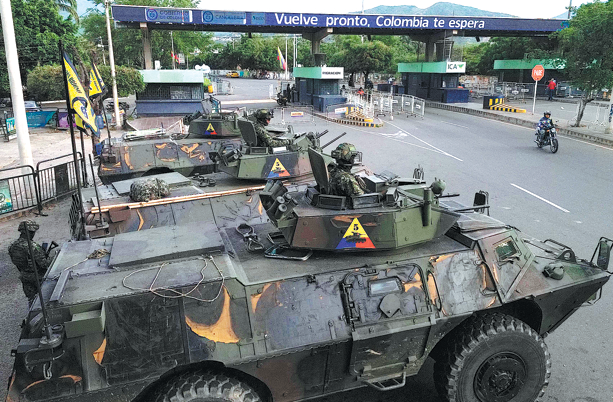
A United States military attack on Venezuela marks a turning point in hemispheric relations, South American experts say, warning that it could have far-reaching consequences for the region and beyond.
Washington carried out airstrikes inside Venezuela early on Saturday and captured President Nicolas Maduro and his wife. Maduro was in a detention center in New York on Sunday and was expected to face trial under the US judicial system.
The attack followed months of heightened tensions between Venezuela and the US, which has accused Maduro of involvement in drug trafficking.
Jorge Heine, Chile's former ambassador to China and a nonresident fellow at the Quincy Institute in Washington, rejected the US' stated justification that the operation was linked to narcotics trafficking, saying Venezuela is neither a major drug producer nor a key transit country.
"There are two main reasons for this attack," Heine said. "To get US hands on Venezuelan oil, and to appeal to the Cuban and Venezuelan exile vote in Florida — Secretary of State Marco Rubio's home state."
The removal of Maduro does not resolve Venezuela's internal political crisis and could deepen uncertainty, he said.
He questioned Washington's post-intervention plans. "(US President Donald) Trump said in his press conference that the US will now run Venezuela, but how would that work?"
The operation has also unsettled governments across South America, Heine said, warning that the precedent could have broader regional implications.
The intervention "will cause great damage to the US standing in the region" and reinforces calls for greater strategic independence among Latin American countries, he said.
Beyond the region, Heine said the intervention carries serious implications for global governance.
"The attack on Venezuela is a flagrant violation of international law and of the United Nations Charter," he said. "It constitutes a significant blow to the international legal order and multilateralism."
Xavier Diaz-Lacayo, a Nicaraguan political analyst, strongly condemned the US military strike on Venezuela, calling for the international community to act.
"It is time to say enough," he told Cuban news agency Prensa Latina.
The international community should "firmly condemn the aggression and demand restitution" for "an assault on the international legal order".
Diaz-Lacayo urged Washington to respect international norms on self-determination and international law. He called for the restoration of Maduro "to the full exercise of his functions".
"The world must demand that the US handle international affairs according to the principles of peace and dialogue, as decided by the peoples of Latin America and the world."
Venezuela is determined "to live in peace and to exercise sovereignly the use of its strategic resources, such as oil and hydrocarbons, to sustain its economic development", he said. However, this right is being denied through accusations and attacks "that have no relation to international legality", he added.
The US position is "based on the doctrine of Manifest Destiny and the Monroe Doctrine, aimed at securing strategic, economic, political and military interests in the region", he said. He warned that "the condemnation from peoples and governments of the world contrasts with the persistence of a unilateral stance by the United States".
Agencies contributed to this story.
gaoyang@chinadailyusa.com

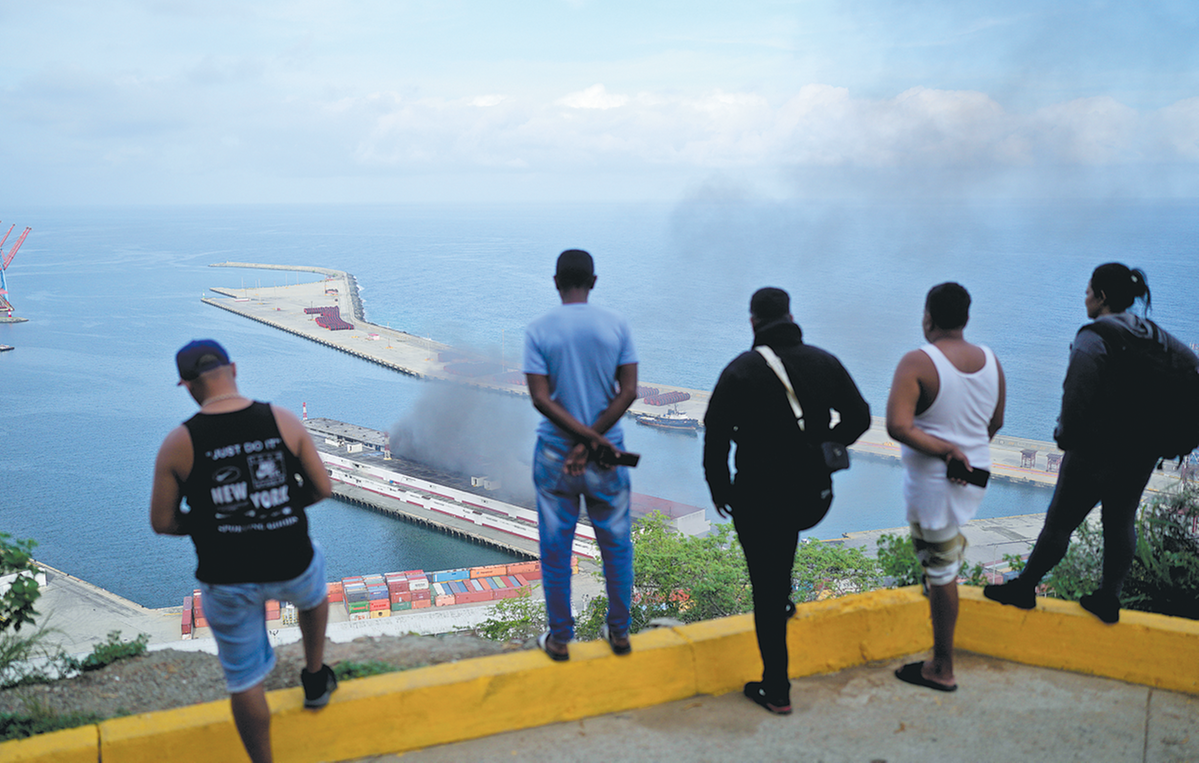
LA GUAIRA, Venezuela — Twelve hours after the United States bombed Venezuela during an operation to capture President Nicolas Maduro, the smoke continued to seep from hangars in the port of La Guaira north of Caracas.
La Guaira was one of several areas in or near Caracas struck by jets during a stealth mission to snatch Maduro and whisk him out of the country.
Deformed shipping containers, their contents spilling onto the docks, bore testimony to the force of the strikes that US officials said were designed to clear the way for helicopters to swoop in on Maduro's hiding place.
There were no reports of casualties in the area.
Firefighters used an excavator to remove broken glass and gnarled metal strewn across the site as police with pump-action rifles patrolled on motorbikes to prevent looting.
Curious onlookers filmed the scene on their smartphones, many still incredulous at the speed and magnitude of the day's events. In a little over an hour, US forces removed Maduro who had clung to power through years of United States sanctions.
The blasts blew out the windows of public buildings on La Guaira's seafront and ripped the roofs off several houses.
"Psssh, first we saw the flash and then the explosion," said Alpidio Lovera, 47, who ran to a hill with his pregnant wife and other residents to escape the strikes.
His sister Linda Unamuno, 39, burst into sobs as she recalled a nightmarish night.
"The blast smashed the entire roof of my house," she said.
Unamuno's first thoughts were that La Guaira was experiencing another natural disaster, 26 years after a landslide of biblical proportions swept away 10,000 people, many of them washed out to sea.
"I went out, that's when I saw what was happening. I saw the fire from the airstrikes. It was traumatizing," she sobbed, adding she "wished it on no one".
In Caracas, while a few hundred Maduro supporters gathered to clamor for his freedom, the streets were otherwise eerily quiet.
"I felt the explosions lift me out of bed," Maria Eugenia Escobar, 58, told Agence France-Presse. "In that instant I thought: 'My God, the day has come,' and I cried."
The strikes started around 2 am, with dozens of detonations that some people at first mistook for fireworks.
Katia Briceno, a 54-year-old university professor, came out to protest against US "barbarism".
"How is it that a foreign government comes into the country and removes the president? It's absurd!" she told AFP.
Agencies via Xinhua

Trump warns of second strike on Venezuela if current gov't doesn't behave

WASHINGTON - US President Donald Trump on Sunday stressed that the United States needs Greenland "for defense," claiming that Venezuela may not be the last country subject to US intervention, according to The Atlantic.
"We do need Greenland, absolutely," Trump said in a phone interview with the magazine. The island, located in the Arctic, is part of Denmark.
It was up to others to decide what the large-scale US strike against Venezuela means to Greenland, Trump said.
"They are going to have to view it themselves. I really don't know," Trump said. "You know, I wasn't referring to Greenland at that time. But we do need Greenland, absolutely. We need it for defense."
Danish Prime Minister Mette Frederiksen said on Sunday that the United States has no right to annex Greenland, urging Washington to stop making threats against a close ally and the Greenlandic people.
"I have to say it very directly to the United States," Frederiksen said in a statement. She rejected the idea that it would be necessary for the United States to take over Greenland, stressing that "the United States has no right to annex" any of the three parts of the Danish Realm -- Denmark, Greenland and the Faroe Islands.
Throughout last year, Trump has frequently repeated the same call for the United States to take over Greenland, which triggered strong objections from Greenland, Denmark and the European Union.
The Trump administration has cited a combination of national security concerns, Arctic strategy, and the potential of critical minerals and natural resources as drivers of US interest in controlling Greenland.
Trump said on Saturday the United States will "run" Venezuela after the US military raided the country and took Venezuelan President Nicolas Maduro and his wife by force.
The international community is deeply shocked by the Trump administration's raid on Venezuela and Maduro. Many countries have issued statements strongly condemning the blatant use of force against a sovereign state and action against its president.

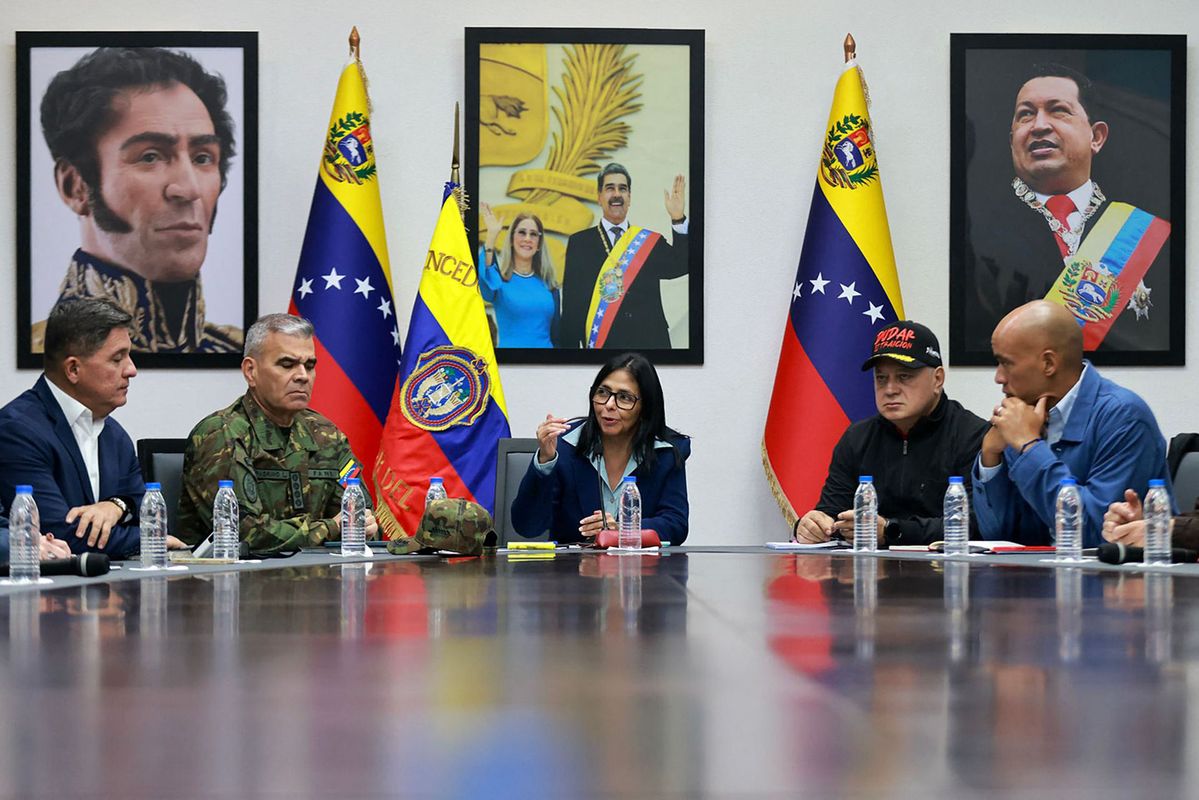
CARACAS - Venezuela's acting President Delcy Rodriguez on Sunday held the first cabinet meeting after the capture of President Nicolas Maduro by the United States, state TV reported.
A day earlier, the country's top court ordered Rodriguez, Maduro's vice president, to take over as acting president.
The preamble of the meeting, broadcast by the state-owned Venezolana de Television, indicated that it was intended to "address strategic lines framed in the 'state of external commotion'" decreed by the Venezuelan government.
Also on Sunday, Rodriguez formed a committee to work for the release of Maduro.

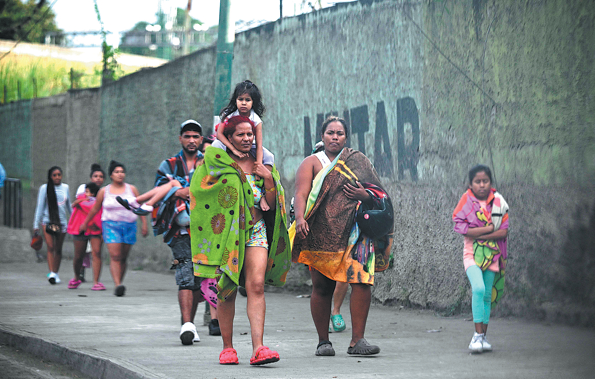
African leaders and political groups have expressed alarm over the United States' military action in Venezuela, calling for restraint, dialogue and respect for international law, while warning of wider global repercussions.
The African Union said on Saturday it is following the developments with grave concern, citing the military attacks targeting Venezuelan state institutions and the abduction of President Nicolas Maduro.
In a statement, the AU reaffirmed its commitment to the principles of international law, including respect for sovereignty and territorial integrity.
Venezuela's internal challenges can only be addressed sustainably through inclusive political dialogue among Venezuelans themselves, it said. "The African Union underscores the importance of dialogue, peaceful settlement of disputes, and respect for constitutional and institutional frameworks, in a spirit of good neighborliness, cooperation and peaceful coexistence among nations."
It expressed solidarity with the Venezuelan people, reiterating its commitment to the promotion of peace, stability and mutual respect among nations and regions.
On the weekend, South Africa called on the United Nations Security Council to convene urgently over US involvement in a large-scale military operation in Venezuela.
"Unlawful, unilateral force of this nature undermines the stability of the international order and the principle of equality among nations," South Africa's Department of International Relations and Cooperation said in a statement.
The actions constituted a manifest violation of the UN Charter, which mandates that all member states refrain from the threat or use of force against the territorial integrity or political independence of any state, and do not authorize external military intervention in matters essentially within a sovereign state's domestic jurisdiction, it said.
In Kenya, the Communist Party of Kenya also condemned the US action, describing it as illegal and imperialist.
The party's chairman, Mwandawiro Mghanga, warned against a dangerous precedent and raised concerns over alleged threats by the US and its Western allies to interfere in the internal affairs of Iran.
"Today it is Venezuela, Iran and Cuba, but tomorrow it could be the whole world," he said, calling on the international community to condemn the actions and urging progressives to show solidarity with Venezuela.







