
The China Story
at your Fingertips
OPEN
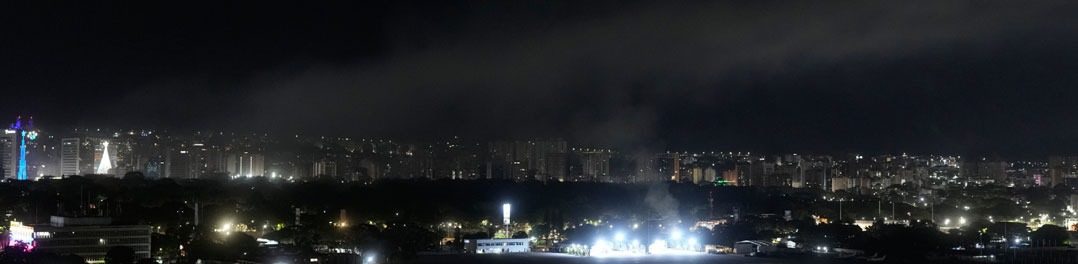
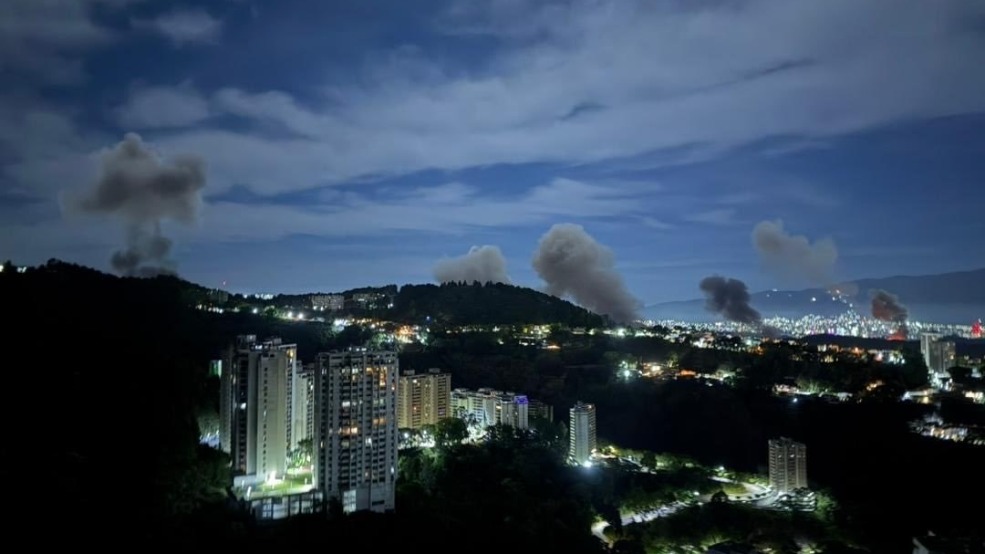
US attack against Venezuela left 100 dead, Venezuela's interior ministry said.
US European Command said it has seized an empty oil tanker linked with Venezuela and registered as a Russian vessel in the North Atlantic in an operation.

Editor's note: Jeffrey D. Sachs, a professor at Columbia University, delivered a statement to the United Nations Security Council on Jan 5, 2026, regarding the situation in Venezuela. The US strikes on Venezuela and illegal "capture" of Venezuelan President Nicolás Maduro and his wife are endangering UN charter and world order. The original statement has been slightly edited for publication in China Daily. Excerpt from the statement follows:
The issue today is not the character of the government of Venezuela. The issue is whether any member state — by force, coercion, or economic strangulation — has the right to determine Venezuela's political future or to exercise control over its affairs.
This question goes directly to Article 2 (4) of the United Nations Charter, which prohibits the threat or use of force against the territorial integrity or political independence of any state. The Security Council must decide whether that prohibition is to be upheld or abandoned. Abandoning it would carry consequences of the gravest kind.
Since 1947, the United States foreign policy has repeatedly employed force, covert action and political manipulation to bring about regime changes in other countries. In her book Covert Regime Change (2018), political scientist Lindsey O'Rourke documents 70 regime-change operations attempted by the US between 1947 and 1989 alone.
These practices did not end with the Cold War. Since 1989, major US regime-change operations undertaken without authorization by the Security Council have included Iraq in 2003,Libya in 2011, Syria from 2011, Honduras in 2009, Ukraine in 2014 and Venezuela from 2002 onward.
The methods employed include open warfare, covert intelligence operations, instigation of unrest, support for armed groups, manipulation of mass and social media, bribery of military and civilian officials, targeted assassinations, false-flag operations and economic warfare aimed at collapsing civilian life. These measures are illegal under the UN Charter, and they typically result in violence, lethal conflict, political instability and deep suffering of the civilian population.
The US efforts for regime change in Venezuela span two decades. In April 2002, the US approved an attempted coup against the Venezuelan government. In the 2010s, the US funded civil society groups engaged in anti-government protests. When the government cracked down, the US imposed sanctions. In 2015, US president Barack Obama declared Venezuela to be "an unusual and extraordinary threat to the national security and foreign policy of the US".
In 2017, on the margins of the UN General Assembly, US President Donald Trump openly discussed the option of invading Venezuela to overthrow the government. From 2017 to 2020, the US imposed sweeping sanctions on Venezuela's state oil company. Between 2016 and 2020, oil production fell by 75 percent, and real GDP per capita (PPP) declined by 62 percent.
The UN General Assembly has repeatedly voted overwhelmingly against such unilateral coercive measures. Under international law, only the Security Council has the authority to impose such sanctions.
On Jan 23, 2019, the US unilaterally recognized Juan Guaidó as "interim president" of Venezuela. Five days later, on Jan 28, 2019, it froze approximately $7 billion of Venezuelan sovereign assets held abroad and gave Guaidó authority over certain assets.
In the past year, the US has carried out bombing operations in seven countries, none of which were authorized by the Security Council or undertaken in lawful self-defense under the Charter. The targeted countries include Iran, Iraq, Nigeria, Somalia, Syria, Yemen and now Venezuela. In the past month, Trump has issued direct threats against at least six UN member states, including Colombia, Denmark, Iran, Mexico, Nigeria and, of course, Venezuela.
Members of the Security Council are not called upon to judge Nicolás Maduro or assess whether the recent US attack and ongoing naval quarantine of Venezuela result in freedom or in subjugation. They are called upon to defend international law, and specifically the UN Charter.
The realist school of international relations accurately describes the condition of international anarchy as "the tragedy of great power politics". Its conclusion is that international anarchy leads to tragedy. In the aftermath of World War I, the League of Nations was created to end the tragedy through the application of international law. Yet the world's leading nations failed to defend international law in the 1930s, leading to another global war.
The UN emerged from that catastrophe as humanity's second great effort to place international law above anarchy. In the words of the Charter, the UN was created "to save succeeding generations from the scourge of war, which twice in our lifetime has brought untold sorrow to mankind."
Given that we are in the nuclear age, failure cannot be repeated. Humanity would perish. There would be no third chance.
To fulfill its responsibilities under the Charter, the Security Council should immediately affirm that the US shall immediately cease and desist from all explicit and implicit threats or use of force against Venezuela. It shall terminate its naval quarantine and all related coercive military measures undertaken without authorization by the Security Council. The US shall immediately withdraw its military forces from within and along the perimeter of Venezuela. The UN Secretary-General shall immediately appoint a Special Envoy, mandated to engage relevant Venezuelan and international stakeholders and to report back to the Security Council within 14 days with recommendations consistent with the UN Charter. All member states shall refrain from unilateral threats, coercive measures or armed actions undertaken outside the authority of the Security Council, in strict conformity with the Charter.
Peace and the survival of humanity depend on whether the UN Charter remains a living instrument of international law or is allowed to wither into irrelevance. That is the choice before the world today.
The views don't necessarily represent those of China Daily.
If you have a specific expertise, or would like to share your thought about our stories, then send us your writings at opinion@chinadaily.com.cn, and comment@chinadaily.com.cn.



UNITED NATIONS -- UN Secretary-General Antonio Guterres on Wednesday expressed the availability of his good offices to support a possible inclusive national dialogue in Venezuela, his spokesperson said.
Speaking to reporters at a daily briefing, spokesperson Stephane Dujarric said the UN chief had just concluded a meeting with Venezuelan UN ambassador Samuel Moncada, which lasted about 45 minutes.
"During the meeting, the secretary-general reiterated his publicly-stated position on the US military action in Venezuela," said Dujarric.
In remarks to the UN Security Council on Monday, delivered on his behalf by Under-Secretary-General for Political Affairs Rosemary DiCarlo, Guterres said he was "deeply concerned about the possible intensification of instability in the country, the potential impact on the region, and the precedent it may set for how relations between and among states are conducted."
"I remain deeply concerned that rules of international law have not been respected with regard to the Jan 3 military action," said the UN chief, who also called on all Venezuelan actors to engage in an inclusive, democratic dialogue in which all sectors of society can determine their future.
In the early hours of Jan 3, US military forces carried out a series of strikes on Venezuela, taking by force Venezuelan President Nicolas Maduro and his wife, before putting them in custody in New York, which sparked widespread condemnation.


The White House has said United States President Donald Trump is weighing "a range of options" to acquire Greenland, including possible military action, as tensions rise and Copenhagen, Nuuk, and European leaders warned that decisions about the island rest with Denmark and Greenland alone.
A joint statement on Tuesday by European leaders, warned the president to back off, saying: "Greenland belongs to its people. It is for Denmark and Greenland, and them only, to decide on matters concerning Denmark and Greenland."
The White House stated on Tuesday that Trump views acquiring Greenland as "a national security priority", adding that military force is "always an option". The president sees acquiring Greenland as necessary to "deter our adversaries in the Arctic region", it added.
"The president and his team are discussing a range of options to pursue this important foreign policy goal, and, of course, utilizing the US military is always an option at the commander-in-chief's disposal," the White House said.
Trump's interest in Greenland, first floated in 2019, reemerged this week after the Jan 3 US operation in Caracas that seized Venezuela's President Nicolas Maduro, intensifying tensions in Europe.
On Wednesday, France's Foreign Minister Jean Noel Barrot said the idea of one NATO member attacking another was inconceivable, dismissing talk of a US military move against Greenland as "nonsense".
He said US Secretary of State Marco Rubio had assured him Washington would not carry out a military operation to seize Greenland.
"He ruled out the possibility of what just happened in Venezuela happening in Greenland," Barrot told France Inter radio.
Barrot said France, Germany, and other allies are coordinating plans for how to respond if the US does attempt to take control of Greenland.
"Whatever form the intimidation takes and whatever its origin, we have begun work … to prepare ourselves to retaliate, to respond, and not to respond alone," Barrot said.
Members of US Congress, including Trump's fellow Republicans, have also criticized the US administration's stance on Greenland, noting Denmark is a loyal US ally.
"When Denmark and Greenland make it clear that Greenland is not for sale, the United States must honor its treaty obligations and respect the sovereignty and territorial integrity of the Kingdom of Denmark," Democratic Senator Jeanne Shaheen and Republican Senator Thom Tillis, co-chairs of the Senate NATO Observer Group, said in a statement.
The Reuters news agency, citing a senior US official, reported that Trump aims to bring the strategically vital, mineral-rich Danish territory under US control within three years, before his second term ends.
The official, who requested anonymity, said options range from buying Greenland from Denmark, which was an effort Trump pursued during his first term, to negotiating a Compact of Free Association with the territory, which would stop short of making the island part of the United States.
"Diplomacy is always the president's first option with anything, and deal-making. He loves deals, so if a good deal can be struck to acquire Greenland, that would definitely be his first instinct," the official said.

LONDON -- The British Ministry of Defence (MoD) said on Wednesday that British forces assisted a US-led operation against the tanker Marinera, also known as Bella 1, in the North Atlantic at Washington's request, reported local media.
The British Armed Forces provided "pre-planned operational assistance, including basing support, to US military assets operating in the UK-Iceland-Greenland gap," Sky News reported, citing a statement from the ministry.
Earlier on Wednesday, US European Command said it had seized an oil tanker in the North Atlantic during an operation. The vessel is reportedly linked to Venezuela and registered as a Russian tanker.
Russia has condemned the US action and demanded that the United States ensure the humane treatment of Russian citizens aboard the seized vessel, TASS reported, citing the Russian Foreign Ministry.

MOSCOW -- Moscow on Wednesday condemned the United States for seizing a Russian-flagged tanker in the North Atlantic, following a pursuit that began off the coast of Venezuela.
"In accordance with the 1982 UN Convention on the Law of the Sea, freedom of navigation applies in waters on the high seas, and no state has the right to use force against vessels duly registered under the jurisdiction of other states," Russia's Ministry of Transport said in a statement.
Trump confirms considering using US military to take control of Greenland on 'national security concerns'

WASHINGTON -- US European Command said it has seized an empty oil tanker linked with Venezuela and registered as a Russian vessel in the North Atlantic in an operation on Wednesday.
"The @TheJusticeDept & @DHSgov, in coordination with the @DeptofWar today announced the seizure of the M/V Bella 1 for violations of US sanctions. The vessel was seized in the North Atlantic pursuant to a warrant issued by a US federal court after being tracked by USCGC Munro," said the Command in a post on social media X.
The seizure of the oil tanker Marinera, formerly known as Bella-1, which has been under the US sanctions targeting Iran, was made after an active pursuit since late December by US forces, according to CBS News and other US media reports.
It was the third oil tanker intercepted by the United States since last month.
Russian military vessels were in the area as the US operation unfolded Wednesday, according to media reports.
USCGC (the United States Coast Guard Cutter) Munro mentioned in the Command's post is a Legend-class National Security Cutter designed for long-range, high-end missions. It is one of the largest ships in the US Coast Guard fleet.
US P-8 surveillance aircraft, deployed in Suffolk, England, had surveilled the tanker for days ahead of its seizure, according to US media outlets, citing open-source flight data.
The oil tanker was in the Caribbean and apparently headed to Venezuela to load cargo when it was chased by the US Coast Guard about two and a half weeks ago. It then retreated into the Atlantic Ocean.
On Dec 31, it was listed by the Russian Maritime Register of Shipping as a Russian vessel with the new name of Marinera. The ship's crew also painted a Russian flag on the ship's side.
Russia reportedly filed a formal diplomatic request last month demanding that the United States stop attempts to seize the tanker.
US President Donald Trump ordered a "full and total blockade" of all sanctioned tankers entering or leaving Venezuela last month.
On Dec 10, US forces seized the oil tanker Skipper near Venezuelan waters and announced the US plans to keep its oil cargo.
On Dec 20, the US Coast Guard boarded the Centuries off Venezuela, a Panamanian-flagged supertanker that was not on Washington's sanctions list. White House spokesperson Anna Kelly said on X that the crude oil aboard the Centuries originated from Venezuela's state-owned oil company PDVSA, which is under US sanctions.

US conducting operation to seize Venezuela-linked oil tanker in Atlantic: US media
Anti-war campaigners gathered outside 10 Downing Street, the working home of the UK’s prime minister, in London on Monday to protest against US military action against Venezuela. Organizers said around 2,000 people took part.
The protesters warned that the intervention set a dangerous precedent. “If we don’t stop, this can happen in any part of the world, and no one is safe from this criminal act,” said Belgica Guana Cole, an Ecuadorian protester.
Reporter: Zheng Wanyin
Wang Jingli and Gao Kejing contributed to the story.

China has condemned the United States' demand that Venezuela favor the US in relation to the Latin American country's oil supplies as bullying, stressing that the legitimate rights of China and other countries in Venezuela must be protected.
Foreign Ministry spokeswoman Mao Ning made the remarks on Wednesday after US President Donald Trump's administration had reportedly told Venezuela's interim leader, Delcy Rodriguez, that her government must partner exclusively with the US on oil production and favor the US when selling heavy crude.
It has also been reported that Trump has said Venezuela "will be turning over" up to 50 million barrels of oil to the US for it sell on at "market price".
ABC has reported that the US is also demanding that Venezuela reduce its relationships with China, Cuba, Iran and Russia, citing three unnamed sources familiar with the matter. According to the US news outlet, Venezuela was told it must kick out the four countries and sever economic ties.
At Wednesday's news conference, Mao said that, as a sovereign country, Venezuela has full, permanent sovereignty over all its natural resources and economic activities.
Relations between China and Venezuela constitute cooperation between two sovereign states, and this is protected under relevant international law and regulations, Mao added.
US actions violated international law and infringed upon Venezuela's sovereignty as well as undermining the rights of the Venezuelan people, she said.

BEIJING - Venezuela is a sovereign state that possesses full and permanent sovereignty over its natural resources and all economic activities within its territory, Chinese Foreign Ministry spokeswoman Mao Ning said on Wednesday.
The legitimate rights and interests of other countries in Venezuela, including those of China, must be protected, Mao stressed.
The spokeswoman said China strongly condemns the United States' military operation against Venezuela and the US demand of "America First" when it comes to Venezuela's dealing with its own oil resources.
The US move, a typical act of bullying, seriously violates international law, infringes upon Venezuela's sovereignty, and undermines the rights of the Venezuelan people, she said at a regular news briefing.

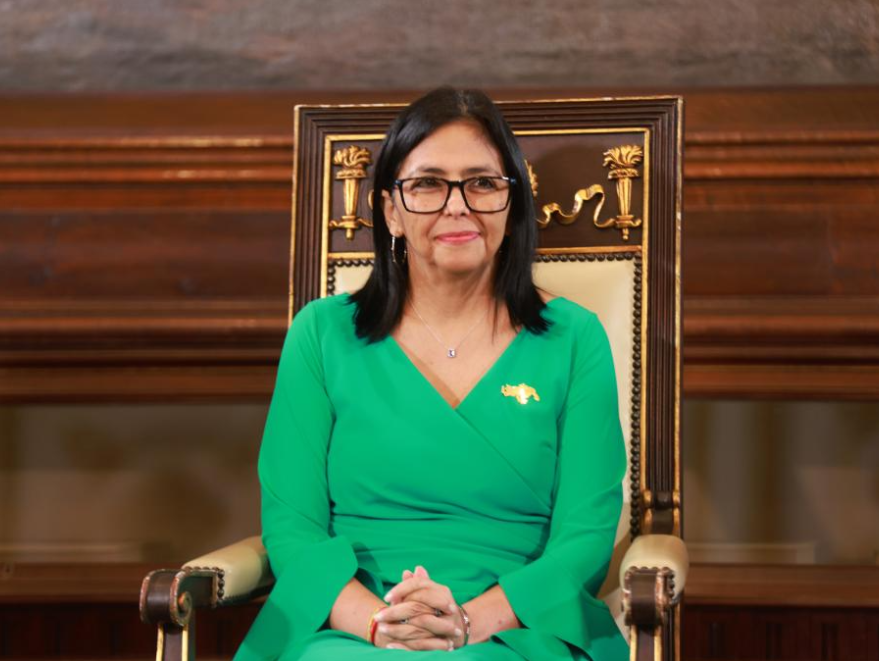
CARACAS - Venezuela's acting president, Delcy Rodriguez, on Tuesday appointed Gustavo Gonzalez Lopez as the new commander of the Presidential Honor Guard and director of the General Directorate of Military Counterintelligence, replacing Javier Marcano Tabata.

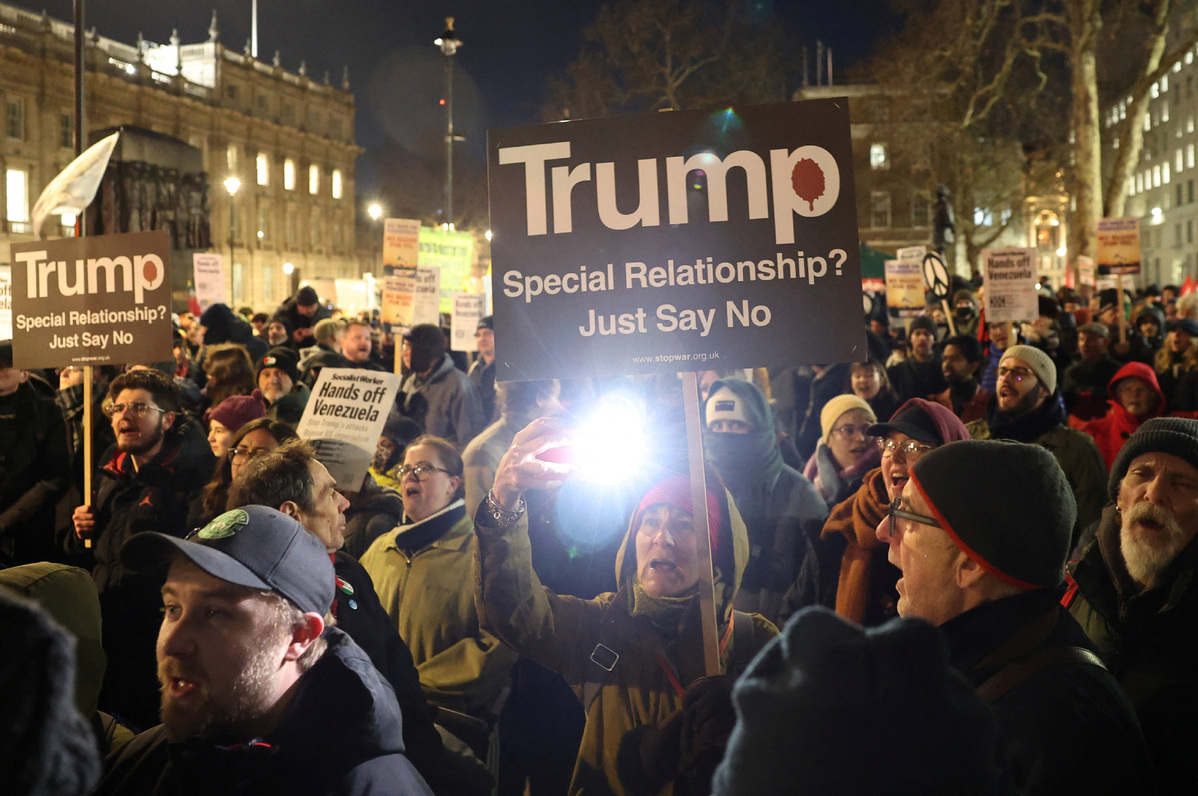
Anti-war campaigners rallied outside 10 Downing Street, the working home of the British prime minister, in London on Monday to protest US military action against Venezuela.
Participating groups and trade unions said around 2,000 people took part in the demonstration. Similar gatherings were also seen across the United Kingdom on Monday evening in Manchester, Glasgow and Edinburgh.
Protesters, carrying Venezuelan, Cuban and Palestinian flags, chanted slogans, including "Hands off Venezuela", "No more kills, no more wars — Venezuela isn't yours", and "No blood for oil".
Placards reading "Special relationship? Just say no" were also seen among the demonstrators as they were upset with the United Kingdom's stance of not condemning the US military action. The term "special relationship" has frequently been used to describe the exceptionally close ties between the United States and the UK.
Elizabeth, a Venezuelan who has lived in the UK for years and whose family is now trapped in Venezuela because of the US strikes, called Washington's actions "imperialism", saying its intention is "purely" to "grab resources".
For so long, the US has treated Latin America as its playground, said Elizabeth, who refused to give her last name.
"The only thing different now is that (US President Donald) Trump is by far more open about it. The treatment that we have been receiving is very much like the word 'backyard'. There is no dignity. You feel humiliated. You feel degraded."
Jim Curran, a protester and chairman of the Irish Civil Rights Association, said the US has a long record of practicing the 19th-century Monroe Doctrine — a US foreign policy named after former president James Monroe that viewed Latin America as Washington's exclusive sphere of influence and justified US hegemony.
From invading territories to forcing regime changes in South America, Curran said the Monroe Doctrine is ultimately an "imperialist doctrine" as the US only seeks to dominate states with limited capacity to defend themselves.
"They would not attack bigger nations like Russia, China, India or maybe even Brazil. They are attacking the smaller nations," he said.
Elizabeth echoed the concern, saying the US had already set a precedent with the Gaza Strip.
"No one stopped (the US) a year ago, a year and a half ago, two years ago, when they started the horrendous things in Gaza, in Palestine. Who is going to stop them now?" she said.
"Why (did the strikes against Venezuela happen) now? Because now they are even more confident that no one is able to stop them."
'Disgusting silence'
The reactions from European politicians amount to "disgusting silence", Elizabeth added. "Well, you want to keep the hope, but it is difficult."
European leaders have reacted with references to international law and the United Nations Charter, while some statements stopped short of direct confrontation, which critics viewed as deference.
Belgica Guana Cole, an Ecuadorian protester, said she was concerned about what the future holds for the international community if such acts are not stopped.
"The world needs to stop this criminal offense against humanity. If we don't stop, this can happen in any part of the world. No one is safe from this criminal act."
Wang Jingli and Gao Kejing contributed to this story.

Editor's note: From the snatching of Venezuela's president to renewed talk of annexing Greenland, Washington's recent actions have sent shock waves far beyond the Americas. China Daily traces the widening global backlash as critics warn of eroding international law, revival of power politics and a world edging toward rule by force rather than restraint.
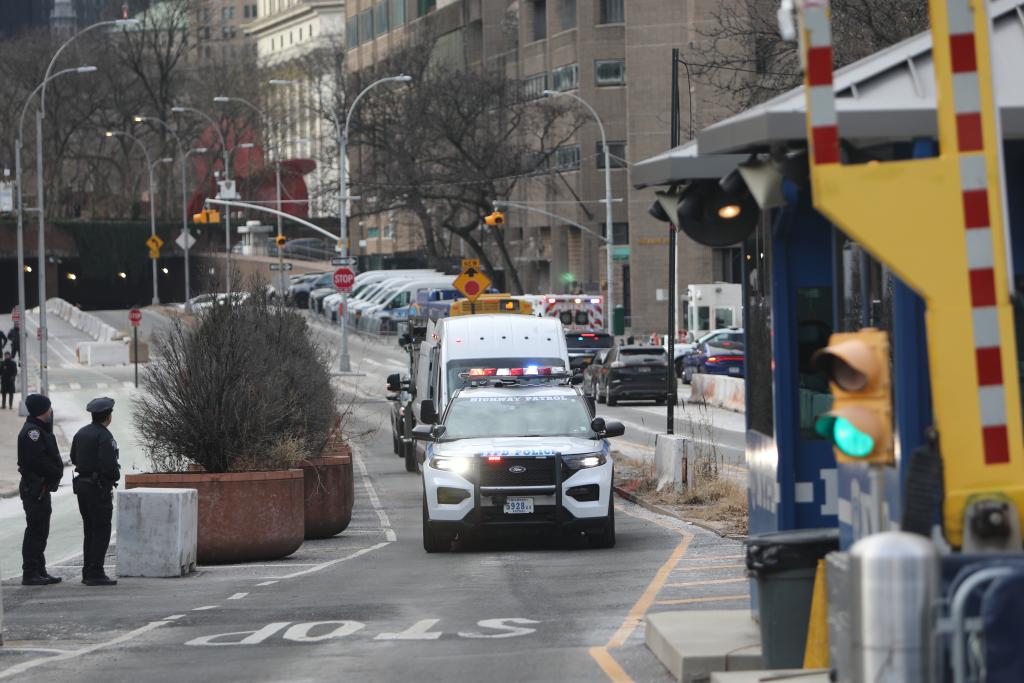
Venezuela's President Nicolas Maduro and his wife, Cilia Flores, appeared on Monday at a hearing in federal court in New York for the first time since they were forcibly taken from their residence by US military in the middle of the night on Saturday.
"I was captured," Maduro said in Spanish as translated by a courtroom interpreter before being cut off by the judge. Asked later for his plea to the charges, he stated: "I am innocent. I am not guilty. I am a decent man, the constitutional president of my country."
The United States carried out what President Donald Trump described as a "large-scale strike", abducting the presidential couple and flying them out of the country. They were subsequently confirmed to have been transported to the Metropolitan Detention Center in Brooklyn.
"I am here kidnapped since Jan 3, Saturday," Maduro said, standing and leaning his tall frame toward a tabletop microphone. "I was captured at my home in Caracas."
Flores likewise pleaded not guilty. The judge ordered both to remain behind bars and set a new hearing date of March 17.
Maduro's lawyer, Barry Pollack, said he expects to contest the legality of his "military abduction".
Large crowds of protesters gathered outside the courthouse, many voicing opposition to the US action against Venezuela. Protest signs read "USA hands off Venezuela", "No US war on Venezuela", and "US hands off Venezuela oil".
Rae Lee, who had been outside the courthouse since 9 am, three hours before Maduro's arraignment, told China Daily that she believes the action constituted an international crime.
Lee said she visited Venezuela last month, describing the country as "really remarkable".
"Here in the US, they are only ever talking about terrible conditions like people are oppressed by their government … (But) they've been building their resilience through the years, and economically they have grown really powerfully, like their housing projects," she said.
"It (the US) desperately wants its oil and its natural resources, so they want to install a puppet regime …These charges, they are just seeing what sticks.
"Fundamentally, (it was) the US going to a sovereign nation and kidnapping their head of state, who has been elected twice democratically, their election much more transparent, accurate and representative than ours."
She denounced the US action as "an international crime", saying, "We have to condemn it."
Driven by 'oil'
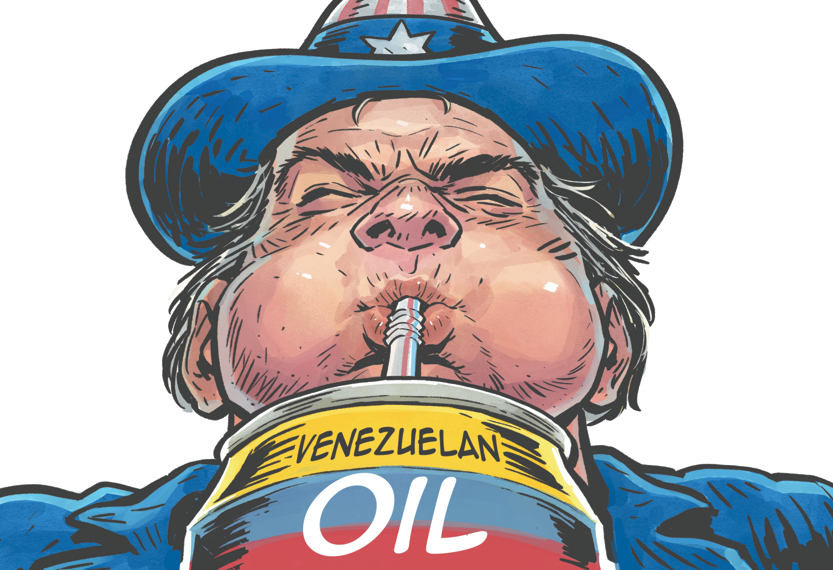
Many protesters said they believe the US intervention in Venezuela is driven not by "justice" but by "oil". Among them was Imani Henry, who said he has been to Venezuela and "experienced firsthand the rally there that supports Maduro".
"It's about oil. (As with) Iran, Afghanistan, it's about oil … Steal a sovereign president and declare to run their country, and declare that we are gonna steal oil reserves. It's about people and people's needs, not about stealing the reserves for your own profit," Henry said.
"We have seen this kind of complete and utter disruption of people's sovereignty. Why am I here today? Because I'm tired of Latin America and the Caribbean being completely usurped of our power, our independence by the US government."
Lallan Schoenstein, a protester, said, "Maduro has been a legitimate president of Venezuela elected by the Venezuelan people."
Trump's "all interest" in Venezuela is "stealing the resources, precious metals and oil", he said. "He is stealing a president of a sovereign nation. It is a criminal activity."
Agencies contributed to this story.

WASHINGTON - US President Donald Trump said Tuesday that Venezuelan authorities "will be turning over" 30 million to 50 million barrels of oil to the United States.
The oil will be sold at market price and the proceeds will be controlled by Trump himself as the US president, Trump said in a post on Truth Social, claiming that the arrangement is intended to ensure the money "is used to benefit the people of Venezuela and the United States".

The United States is facing widespread condemnation, even from its allies, for its military operation against Venezuela and the abduction of its president, Nicolas Maduro.
At a United Nations Security Council emergency meeting held on Monday, countries criticized the US' unilateral action, saying it violated the UN Charter and international laws, undermining multilateralism.
UN Secretary-General Antonio Guterres voiced deep concern over the lack of respect for international law in the US military action against Venezuela on Saturday.
He was also worried about further destabilization in Venezuela, the potential impact on the region and the precedent that the US move may set on how relations between and among states are conducted.
Sophia Tesfamariam Yohannes, permanent representative of Eritrea to the UN, said acts of the US "constitute a clear breach of international law and of each and every principle governing international relations".
Amir Saeid Iravani, Iran's UN ambassador, said the US military move against Venezuela "constitutes state terrorism, a manifest violation of the UN Charter and peremptory norms of international law, and amounts to an internationally wrongful act and a full-fledged act of aggression".
Venezuela's UN Ambassador Samuel Moncada requested action from the Security Council, urging it to fully assume its responsibility and act in accordance with the mandate conferred on it by the UN Charter.
"Venezuela comes before this Council today with a deep conviction that international peace can only be sustained if international law is respected without exception, without double standards, and without selective interpretations," he said.
In Japan, the US operation has met with criticism from political figures and the media, who warned that it undermines international law and the postwar rules-based order.
Yoshihiko Noda, leader of the opposition Constitutional Democratic Party, said the operation raised "serious doubts" about whether it could be justified under international law.
The Nikkei newspaper commented that the action may have disregarded three core pillars of legal order — respect for national sovereignty, the role of the US Congress, and the postwar rules-based system.
Hadi Rahmat Purnama, an assistant professor of international law at Universitas Indonesia in Jakarta, said: "Applying national jurisdiction against other (sovereign) countries… should not be done by any country. It can be considered an act of war."
Washington's stated position of not recognizing the Maduro government "should not be a reason for the US to abduct Maduro and his wife", he said.
Agencies contributed to this story.
Contact the writers at houjunjie@chinadaily.com.cn

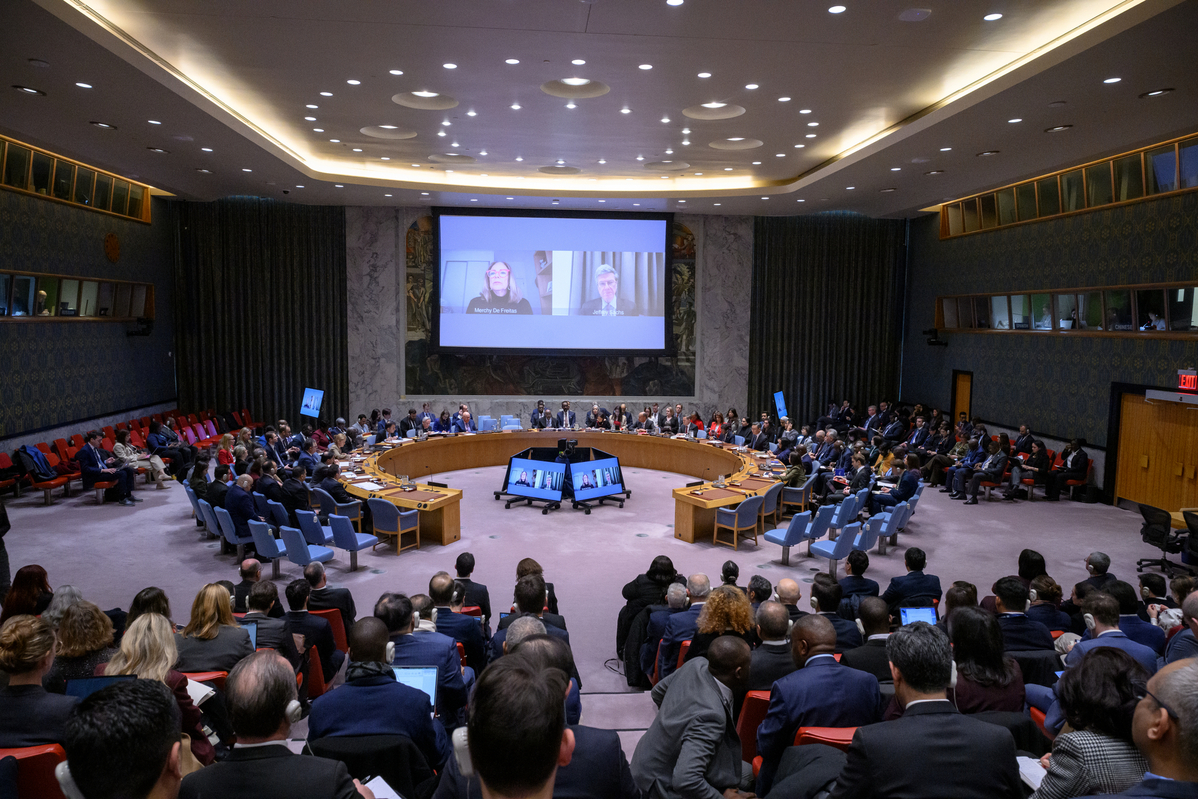
The UN Security Council held an emergency meeting on Monday at UN Headquarters in New York to discuss the situation in Venezuela. Representatives from many countries opposed the US' interference in the internal affairs of other countries.


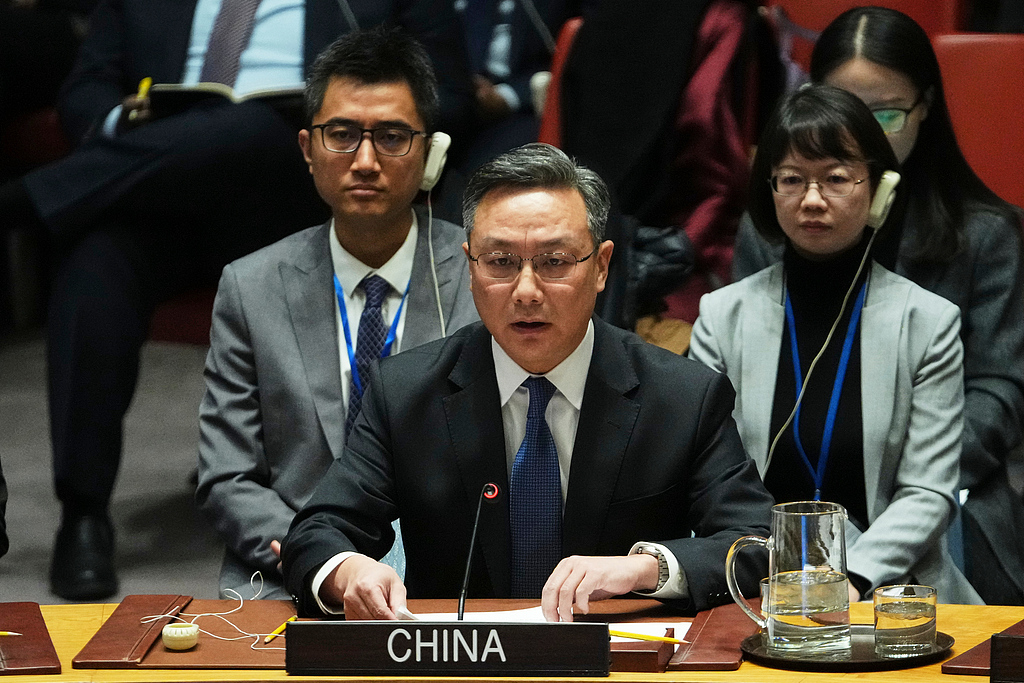
The United Nations Security Council's first meeting of 2026 heard a global chorus of UN member states strongly denounce the United States' strike in Venezuela as a grave violation of the UN Charter, although a US representative defended it as a "surgical law enforcement operation".
At Monday's emergency session, Sun Lei, China's deputy permanent representative to the UN, urged Washington to heed the international community's "overwhelming voice", comply with international law and the UN Charter, halt actions that infringe on other countries' sovereignty and security, stop toppling Venezuela's government, and return to dialogue and negotiations as the path to a political solution.
Venezuelan President Nicolas Maduro, seized and brought to the US on Saturday after a large-scale US strike in the South American nation, pleaded not guilty in federal court in New York on Monday to charges of narco-terrorism. Crowds of protesters gathered outside the courthouse, many voicing opposition to the US action against Venezuela.
Sun expressed China's "deep shock" and strong condemnation of what he described as the "unilateral, illegal and bullying acts" of the US, and he called for Washington to ensure the safety of Maduro and his wife, and to release them immediately.
"The US has placed its own power above multilateralism and military actions above diplomatic efforts,"Sun said, warning that such actions pose a grave threat to peace and security in Latin America and the Caribbean and even internationally.
He said the US military strikes "wantonly trampled" on Venezuela's sovereignty and violated core tenets of the UN Charter, including the principles of sovereign equality, noninterference in internal affairs, peaceful settlement of international disputes, and prohibition of the use of force in international relations.
"The lessons of history are a stark warning," Sun said, adding that military means are not the solution to international problems, and the indiscriminate use of force will only lead to greater crises.
He cited past US actions, such as bypassing the Security Council to launch military operations against Iraq, attacks on Iran's nuclear facilities, and the imposition of economic sanctions, military strikes and armed occupations in Latin America and the Caribbean.
Those actions caused persistent conflict, instability and immense suffering for ordinary people, he said.
The envoy reiterated that China firmly supports the Venezuelan government and people in safeguarding their sovereignty, security and legitimate rights and interests, and supports countries in the region in upholding Latin America and the Caribbean as a zone of peace.
He called on the US to change course, cease bullying and coercive practices, and develop relations and cooperation with countries in the region on the basis of mutual respect, equality and noninterference in internal affairs.
Addressing the UN meeting, US economist Jeffrey Sachs said that the US military action and ongoing pressure violate Article 2, Section 4 of the UN Charter, which prohibits the threat or use of force against the territorial integrity or political independence of any state.
Sachs, president of the UN Sustainable Development Solutions Network and director of the Center for Sustainable Development at Columbia University, called these actions part of a long-standing US pattern of "covert regime change", citing a historical record of 70 such operations between 1947 and 1989 alone.
The US should "immediately cease and desist from all explicit and implicit threats or uses of force against Venezuela", he said.
Sachs said, "Peace, and the survival of humanity, depends on whether the United Nations Charter remains a living instrument of international law, or is allowed to wither into irrelevance."
At the meeting, Russia's UN ambassador, Vassily Nebenzia, also called for the immediate release of Maduro and his wife.
The Russian envoy called the US military action in Venezuela a "crime cynically perpetrated" and a harbinger of a return to an era of "lawlessness", stressing that any conflicts must be resolved through dialogue as enshrined in the UN Charter.
Backers of the US military operation in Venezuela, including Argentina, framed the action as a law-enforcement, anti-narco-terrorism step and argued it could open a path to restoring democracy.
Representatives of many countries pushed back by arguing that democracy cannot be delivered through force and coercion, and that any political outcome must be decided by Venezuelans through peaceful and lawful means.
Leonor Zalabata Torres, Colombia's UN envoy, said that "democracy cannot be promoted or defended through violence or coercion", and Venezuela deserves peace and democracy, prosperity and dignity, with a government whose sovereignty is defined by no one but the Venezuelan people and their institutions.
Mexico's UN envoy, Hector Vasconcelos, warned that "regime change by external actors and the application of extraterritorial measures" is contrary to international law and that, historically, all such actions have done is to exacerbate conflicts and weaken the social and political fabric of nations.
Paula Narvaez Ojeda, Chile's UN representative, noted that foreign interference caused extreme damage to her nation, and she stressed that democracy is best recovered through "the strength of organized citizens and through our institutions".
Spain's representative to the UN, Hector Gomez Hernandez, said that democracy "cannot be imposed by force" and "force never brings more democracy".
Brazil's UN ambassador, Sergio Franca Danese, said that international norms are "mandatory and universal" and do not allow for exceptions based on ideological, geopolitical or economic interests, such as the "exploitation of natural or economic resources".
The envoy dismissed the notion that "the end justifies the means", saying that such reasoning lacks legitimacy and grants the strongest the right to define what is just or unjust while imposing decisions on the weakest.
Representatives from other countries also emphasized that the US military intervention constituted a fundamental breach of the UN Charter and the principles of sovereign equality.
France's representative said that when a permanent member of the Security Council violates the UN Charter, it "chips away at the very foundation of the international order".
South Africa warned that "no nation can claim to be legally or morally superior" to another.
Pakistan said that unilateral military action "contravenes these sacrosanct principles", while the A3 group, consisting of the Democratic Republic of Congo, Somalia and Liberia, said full respect for states' sovereignty and territorial integrity under the UN Charter is an essential foundation for international cooperation and peaceful coexistence.

The capture of Venezuelan President Nicolás Maduro and his wife by US forces operating in Venezuela, and his forced transfer to the US for trial, pose a significant challenge for international law.
The US has described the operation as a judicial "extraction mission" undertaken by law enforcement operatives supported by the military. Yet this was a military operation of considerable scale, involving strikes on military targets in and around Caracas, the capital, and the forcible abduction of a sitting president by US special forces. It is clearly a significant violation of Venezuelan sovereignty and the UN Charter.
This fact is compounded by President Donald Trump's announcement during his news conference of Jan 3 that the US will "run" Venezuela and administer a political transition, or regime change, under the threat of further, more massive uses of force. In addition, there seems to be a determination to use the threat of force to extract funds and resources in compensation for supposed "stolen" or nationalized US assets and oil.
It is difficult to conceive of possible legal justifications for transporting Maduro to the US, or for the attacks. There is no UN Security Council mandate that might authorize force. Clearly, this was not an instance of a US act of self-defense triggered by a prior or ongoing armed attack by Venezuela.
The White House asserts that it is defending the American people from the devastating consequences of the illegal importation of drugs by "narco-terrorists" — consequences that could be compared to an armed attack against the US.
However, in international law, only a kinetic assault with military or similar means qualifies as a trigger for self-defense.
This leaves the argument of "pro-democratic intervention". Notably, the US did not use "pro-democratic" action as a "formal legal justification" when it invaded Grenada in 1983 and displaced its government. Neither did it do so when it invaded Panama in 1989 and captured the then president Manuel A. Noriega, with a view to putting him on trial for drugs offenses.
Washington avoided doing so because it feared creating a precedent that would justify "pro-democratic" interventions by other countries which it might oppose. Instead, it relied on an unconvincing claim to self-defense.
In the case of Venezuela, the US alleges that Maduro "stole" the presidential poll of 2024, that opposition candidate Edmundo Gonzalez Urrutia was the true victor, and that Venezuelan authorities falsified the result of 2025 parliamentary elections.
But in classical international practice, those who exercise effective control over a country's population and territory will be treated as the government. Considerations of legal or political legitimacy matter less. Accordingly, most governments have abandoned the practice of formally recognizing newly established governments, however they come to power. If they are effective, they are the government.
However, in the 1990s, with the end of the Cold War, the doctrine articulated by the Universal Declaration of Human Rights gained in currency.
In 1990, Jean-Bertrand Aristide was elected president of Haiti. But he was soon displaced in a coup mounted by a military junta. In 1994, after many failed diplomatic attempts to restore the democratic outcome of the elections, the UN Security Council formally authorized a US-led force to facilitate the departure of the generals. Faced with the imminent US invasion, they gave in and power was restored to Aristide.
This doctrine cannot be invoked in cases of creeping authoritarianism or in response to claims that elections have not been free and fair. It only applies in cases of counter-constitutional coups or where there is an election result that remains unimplemented by a sitting government.
The doctrine is generally only applied where the UN Security Council, or at least a credible regional organization, has granted a mandate — to avoid individual states seeking regime change in pursuit of their own agendas. Clearly, in this instance, there was no mandate from the UN or the Organization of American States.
Maduro and his wife will however find little comfort in the fact that they were removed from Venezuela by way of an internationally unlawful intervention. US courts consistently apply the so-called Ker-Frisbie doctrine, which holds that they will exercise jurisdiction, irrespective of the means by which the body of the defendant was procured for trial.
The US will also refuse to extend Maduro the immunities that automatically apply to a serving president when travelling abroad. This too, is legally controversial. But as Noriega experienced before him, the US authorities are unlikely to be deterred by this fact.
Overall, this episode further erodes international confidence in the principle, agreed after the horrors of the 20th century's world wars, that states must not enforce their legal claims or political demands through the use of force.
The fact that the US now claims to "run" Venezuela and to put in place its future government under the shadow of the gun, along with the demand to dominate the oil sector and extract compensation, will reawaken uncomfortable memories of previous US dominance in the region.
The UN Secretary-General has noted that the rules of international law have not been met in this instance, calling it a "dangerous precedent". Many other governments and international institutions are speaking out in a similar vein, though some others have expressed support.
It will be interesting to see whether the UK and other European US allies will be able to overcome the recently developed sense of diplomatic deference to President Trump and stand up in defense of the international rule of law. This may well be the moment when Western Europe realizes that the US has decisively abandoned the core values that united them for the past century.
The author is a professor of International Law and International Constitutional Studies in the University of Cambridge. The original version first appeared on the website.
https://www.chathamhouse.org/2026/01/us-capture-president-nicolas-maduro-and-attacksvenezuela-have-no-justification
The views don't necessarily represent those of China Daily.
If you have a specific expertise, or would like to share your thought about our stories, then send us your writings at opinion@chinadaily.com.cn, and comment@chinadaily.com.cn.







