|
Home>News Center>China | |
|
|
|
|
|
|
|
|
|
|
||||||||||||||||||||||||||||||||||||||||||||||||||
|
|
Capital's 4th zone draws top level attention
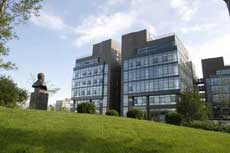
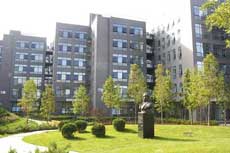
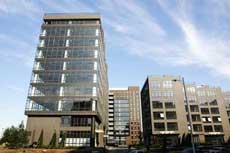
The Advanced Business Park (ABP) in Southwest Beijing's Fengtai District is pulling out the stops to attract multinationals, leading State-owned enterprises (SOEs) and top private companies to locate their headquarters there.
Observers say the ABP is the capital's fourth evolving business area after the Central Business District (CBD), the Financial Street and the Beijing Economic and Technological Development Zone. Internationalized strategy The third phase of construction is currently in progress, and the park has mapped out a strategy to attract more multinationals to set up their headquarters there, said Xu Weiping, the ABP president. At present 30 per cent of businesses in the park are SOEs with excellent assets and 60 per cent are private firms, which have relocated their headquarters from other provinces to Beijing. Luring more transnationals tops the park's development agenda this year. Insiders say that many multinationals that have offices in the CBD do not own them and most buildings in the CBD are only available for rent. But those foreign enterprises with mature operations in China are looking to set up headquarters or purchase their own buildings in the Chinese capital. This gives the ABP a competitive edge, given its low cost and basic concept. The original concept of the park was based on the fact that Beijing is developing an economy model driven by a concentration of headquarters of leading enterprises, said Xu.
It was approved in 2002 by the Beijing Municipal Government, with a total investment of 4.5 billion yuan (US$544.1 million). The Zhongguancun Fengtai Science Park and Xu's group, the British Dauphin Group, injected 40 and 60 per cent of the total funds respectively. To date, the total investment has been increased to 6 billion yuan (US$725.5 million). "The concept was supported by experts from Harvard University in the United States during my visit there, and they agreed to name the economy model as the 'headquarter economy'," Xu added. Last month, he was invited to participate in the annual three-day Asia Commercial Conference sponsored by the Harvard Business School, the Kennedy School of Government and the Harvard Law School at the prestigious university. He was following in the steps of other top Chinese entrepreneurs, Zhang Ruimin and Liu Chuanzhi, chief executive officers of Haier and Lenovo, to deliver speeches at the university. Xu's lecture on the innovation of the Chinese real estate market and regional economic development was warmly received. Furthermore, the ABP model is widely recognized as one of the success stories in the innovation of the real estate market in China. In addition, his talks aroused the interest of investors from the Swiss firm UBS, participants of the conference, and led to lengthy discussions with Xu and a planned visit to the ABP.
REIT project Plans are underway to develop the real estate investment trust (REIT) project in the ABP as part of its strategy to make it more internationalized. The REIT acts like a stock on the major exchanges investing in real estate directly through property, Xu explained. He hopes to build the ABP as a REIT product with high yields. He has conducted in-depth analysis of America's REIT market, and plans to introduce their experience to ABP's operations and attract foreign strategic partners to it. Even bolder targets are in Xu's sights as he plans to build ABP into the biggest REIT project in China. "At present, some residential building projects in Beijing are trying to adopt REIT methods, but some do not have mature conditions. REIT is more suited to development zones, shopping malls, office buildings and hotels rather than residential buildings," opined Xu. He believes the ABP can become the biggest REIT project in China. Corporate culture Another major advantage of ABP is that it adopts compelling corporate culture. Last year, invited by Xu, Robert Mundell, founder of Euro, gave a series of talks in the ABP. Development of the cultural atmosphere of the park also features high on Xu's agenda. Last October the ABP Cup 12th World Top Model Competition China Regional Final was held there. Xu was invited to run a class on an MBA programme at Tsinghua University, one of the foremost in China. And the ABP's modus operandi has become a hot topic in MBA classes at Tsinghua and Peking universities. In the near future, a total of 500 buildings will have been completed in the park, said Xu. And after the completion, within its 65-hectare area, the annual industrial output is expected to hit a total of 100 billion yuan (US$12.1 billion). |
|
|
|
|
|||||||||||||||||||||||||||||||||||||||||||||||
|
|
|
|
||||||||||||||||||||||||||||||||||||||||||||||||||