


Living alongside Asian elephants
Lincang reserve fosters locals' coexistence with the gentle giants










Protection measures
In recent years, significant investments have been made to protect the elephants.
Near the boundary of the reserve, the local government has given a 53-hectare field to the reserve to cultivate favorite food sources for Asian elephants, such as certain species of bamboo and banana. As a result, the elephants can find an alternative source of food in the field during periods of food scarcity. Another field with an area of 67 hectares has been mapped out in another area bordering the reserve and will soon start planting food for elephants, Qin said.
Electric security fences have been installed around the fields to protect them, he said. "We won't allow the elephants access to the fields until the plants are ready for them to eat," he added.
The reserve has also contributed to making the local villagers' tea plantations less appealing to the elephants by encouraging the growth of macadamia nut trees in the plantations. "Elephants don't like eating the nut trees, and they have good memories when it comes to food sources," Qin said.
Living alongside Asian elephants around the reserve requires constant vigilance. The Cangyuan administration continuously enhances monitoring and early warning systems, incorporating the use of drones, infrared cameras and smart terminals, and utilizing an Asian elephant warning app.
In May 2025, the administration hired a drone monitoring team to patrol key areas. Equipped with high-definition cameras and thermal imaging, drones can track elephant movements day and night, even in dense forests. "Unlike similar teams in Xishuangbanna and Pu'er, our team consists of only four members," Qin said.
In Nangunhe, the elephants typically reside in jungles, with only a few exits that can enable them to leave the forests.
"This makes it relatively easy for us to track their movements out of the reserve," Qin said. In addition to drones, the reserve has installed cameras at these key locations and more infrared cameras in the forests. With data from the surveillance team and from the cameras, the administration can send warnings through the app.
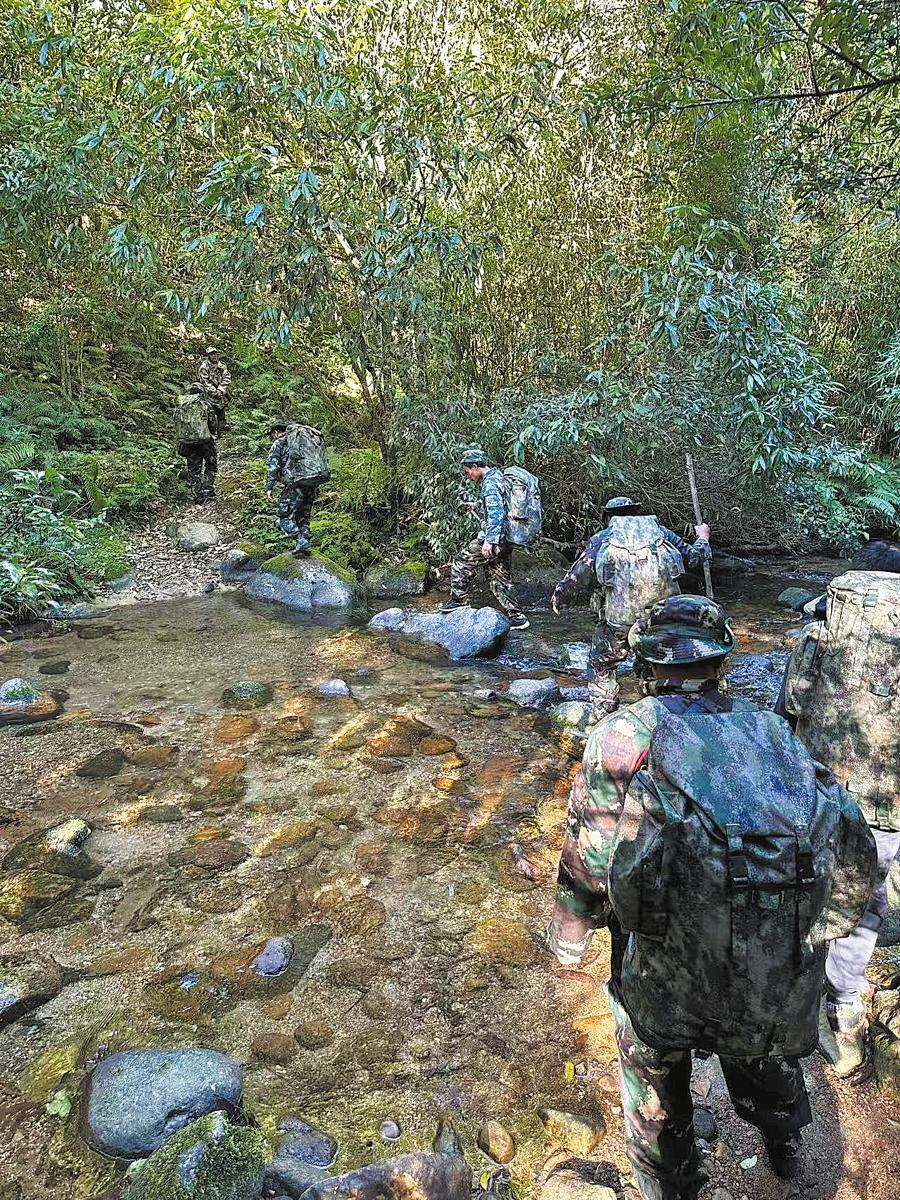
Tian Shihua, head of the administration's Banlao protection station, said that a team of 19 patrolmen, including nine part-time members hired from various villages in the township, is actively working for the station. When the team receives a warning from the app, they can communicate with the villagers about the possibility of wild elephants wandering into specific areas. This coordinated effort helps ensure the safety and awareness of the local communities.
Tian and his team are responsible for regularly patrolling five monitoring routes across an area exceeding 2,667 hectares. With information from the warning system, they can choose safe routes for their patrols. "Over the years, I've only had one close encounter with Asian elephants in the wild," said the 48-year-old. "They didn't chase me, but I was frightened. Fortunately, nothing else happened."





