



Shanghai to further open key scientific research facilities to companies









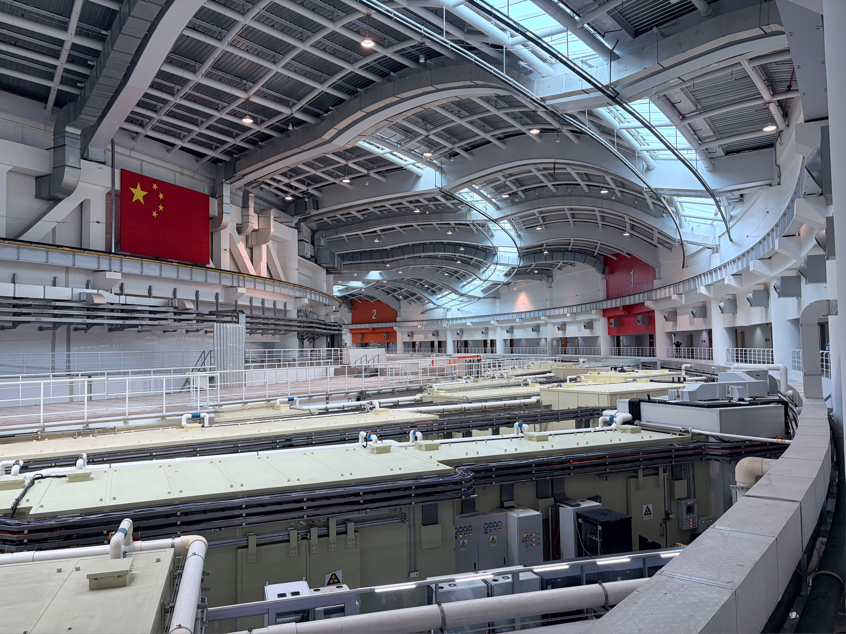
Shanghai is stepping up efforts to open its network of major scientific research facilities to companies as China seeks to strengthen basic research and accelerate the commercialization of advanced technologies.
The city has built, is constructing or is planning 20 major scientific facilities across fields, including physics, chemistry, life sciences and marine science, with a total investment of about 35 billion yuan ($4.9 billion), making it one of China's largest hubs for such infrastructure.
The facilities are designed to support frontier scientific research, address major technological challenges and provide the foundation for high-level research and development activities, Wang Tianjing, deputy director of the science infrastructure and platform development division at the Shanghai Municipal Commission of Science and Technology, said in an interview.
Shanghai has completed 11 major facilities, 10 of which are currently in operation.
To improve the operation and industrial impact of the facilities, Shanghai introduced a package of support policies in late 2023, including establishing a strategic user advisory committee comprising experts from universities, research institutes and technology companies to provide recommendations on facility planning, construction, operation and future upgrades.
In June, the city also introduced an evaluation and incentive mechanism for major scientific facilities. Under the plan, facilities will be assessed on their support for industrial innovation, scientific research, scientific data management and operational capabilities, with incentives for those making significant contributions to research and enterprise technology development.
Shanghai has also expanded access to the facilities through a monthly coordination mechanism tracking construction, operations and services for corporate users.
In the first half of 2026, operating hours at the Shanghai Synchrotron Radiation Facility increased 16 percent from a year earlier, while operating hours used by corporate customers rose 44.2 percent, according to Wang.
Operating hours provided to users in the Yangtze River Delta region increased 22.3 percent year-on-year, including a 28.0 percent rise for users from Jiangsu, Zhejiang and Anhui provinces.
The city also encourages small and medium-sized technology enterprises to use the facilities through innovation vouchers and dedicated Zhangjiang funding programs, helping reduce research and development costs.








