


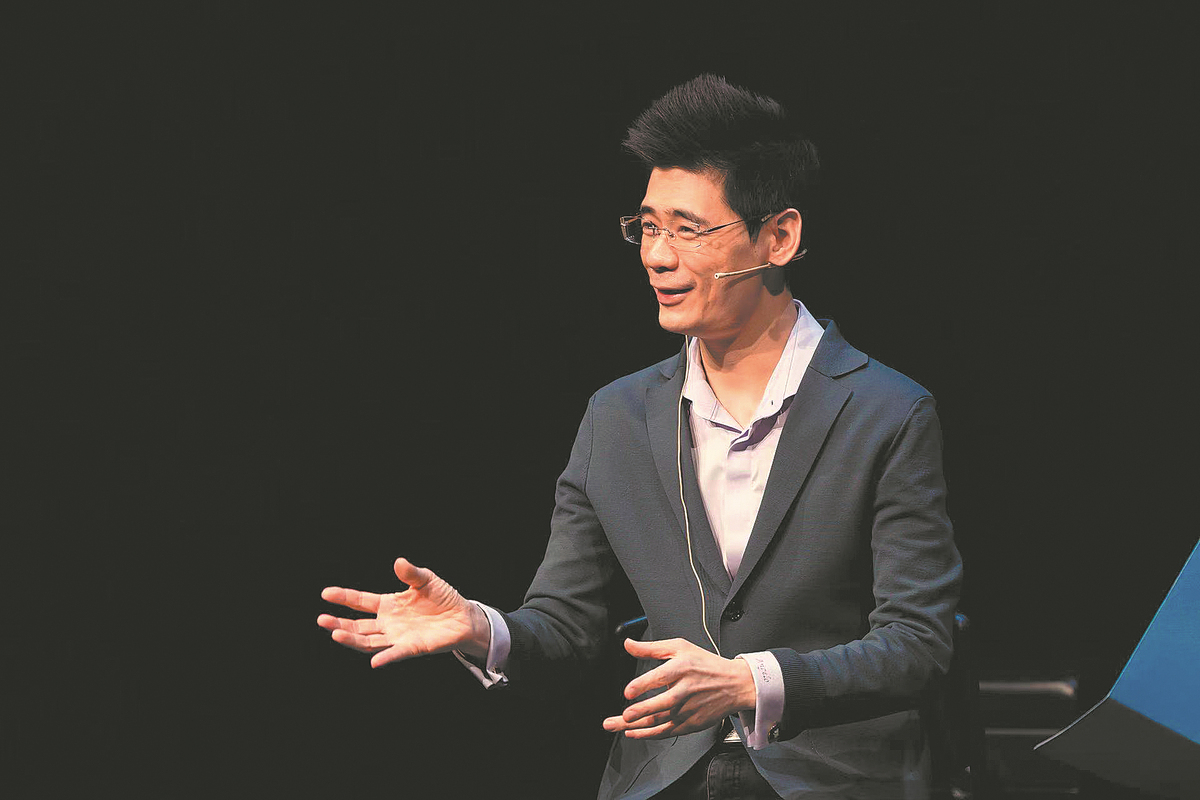
That belief was on display on Jan 11 in Beijing during a master class held as part of Tianjin Juilliard's precollege outreach program. Two 13-year-old students performed movements from Mozart's Violin Concerto No 3 and Polish composer Henryk Wieniawski's Violin Concerto No 2.
To the first student, Yu spoke about Mozart not as a technical exercise but as "opera without words". "You're playing well," he says, "but you need to make the violin sing. Imagine every phrase as a voice onstage."
To the second, he took a different tack. "Wieniawski is a virtuoso composer. Your notes are accurate — but now you have to make the audience sweat." He urges the student to sharpen the tension and take risks with bow speed: "Fast in, fast out — like a tornado."
Within minutes, the change was audible. The notes were largely the same, but the music had changed shape. Just as importantly, the students in the audience were watching how thought turns into sound.
"This is the first time I've had a master class with Yu. He can change the sound I produce in minutes," says 13-year-old Elfi Stahlecker, a Chinese-German student at Dulwich College Beijing. "He taught me how to think, not just how to play."
A string quartet from the Tianjin Juilliard School performed after the master class. Cheng Xueshan, 17, a violin student of Yu's, says he is "famously strict", yet also very humorous in class.
"He demands discipline, organizes peer feedback, and pushes students to confront their limits. At the same time, he pays close attention to our emotional state, talking with us about anxiety, uncertainty, and fear about the future," Cheng says.
Born in the Inner Mongolia autonomous region, Yu moved to Shanghai at age 11 and received his early training at the Shanghai Conservatory of Music. He earned his bachelor's and master's degrees at the New England Conservatory and later joined its faculty.
Yu is frank about reality. The chances of becoming a solo star are slim. Most musicians, he tells his students, will find their place in teaching, orchestras, or chamber music. At Tianjin Juilliard, chamber music sits at the center of the curriculum, and the Shanghai Quartet — now more than 40 years old — stands as a model of artistic longevity.
"When I was a student, chamber music was often seen as a fallback option. Today, there is a slow shift,"Yu notes. "People are beginning to understand that it requires the highest level of musicianship. It's a foundation for everything else." At present, only a handful of professional string quartets are active in China. Yu hopes that in 10 years, there might be a hundred.
Although he continues to perform, Yu finds deeper fulfillment in teaching. "The stage is self-expression," he says. "Teaching is helping others grow."





