



Daily Business Magazine: China delivers the true meaning of growth









In contrast to the UK's repeated promises to build homes and infrastructure, China demonstrates the true meaning of growth through its rapid expansion, writes Ian Ritchie in an opinion piece published on the Daily Business Magazine website on Jan 4.
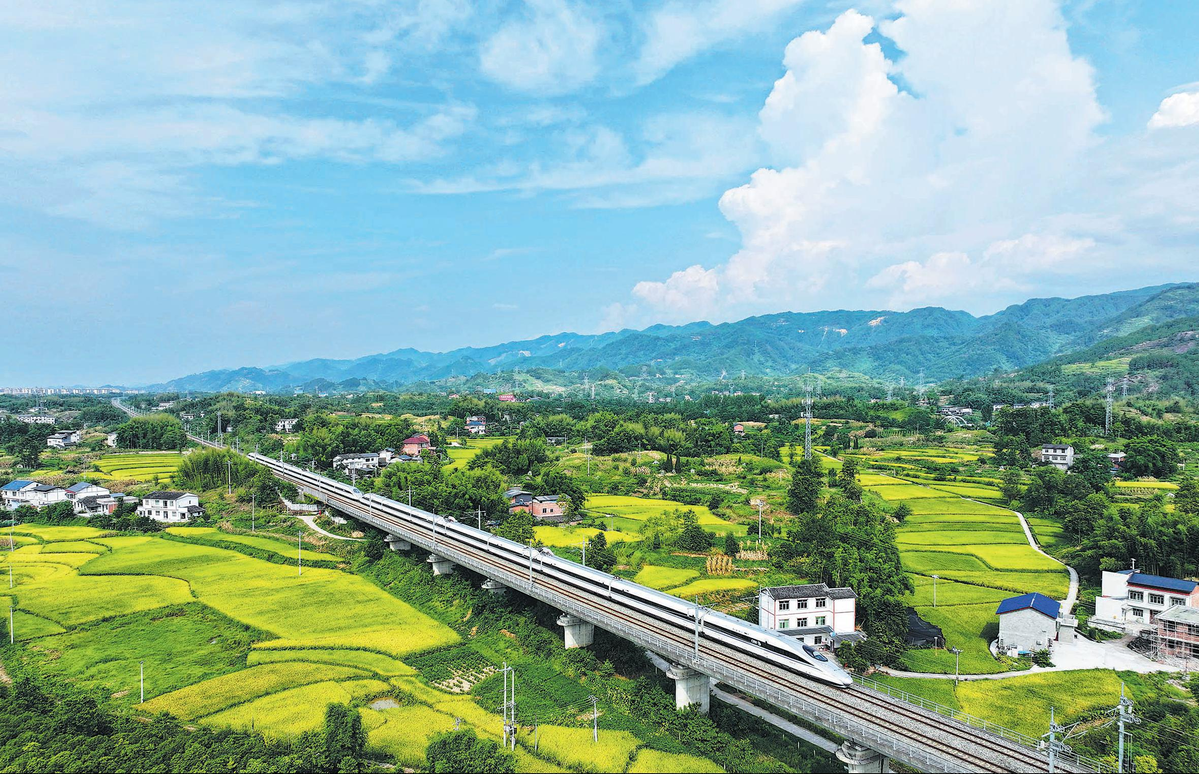
Ahead of British Prime Minister Keir Starmer's visit to China later this month, Ritchie argues that Starmer will see infrastructure standards that Britain can only aspire to. Over the past 20 years, while the UK has failed to complete a single high-speed rail line between London and Birmingham, China has built "a 31,000-mile network of high-speed rail lines connecting over 550 cities across the entire country, servicing 97 percent of those with a population of 500,000 or more".
During the same period, Ritchie notes, the UK has not added a single runway to an existing airport, whereas China has constructed 130 airports, at a pace of six to eight a year. While Britain has built no major new highways, China has carried out the largest road-building program in history, adding "96,000 miles of high-quality expressways — a network which is now about twice as extensive as the US Interstate Highways".
The most striking contrast, Ritchie argues, is housing. As the UK struggles to deliver 250,000 homes annually, China has built around 170 million homes over the past two decades.
Ritchie attributes China's achievements to political leadership led by what he describes as "seriously qualified individuals", whose long-term planning has produced major strategic advantages. These include control over most rare-earth minerals vital to advanced manufacturing, dominance in climate-friendly technologies such as wind turbines and batteries, and growing leadership in artificial intelligence, quantum computing, nuclear fusion, and medical technology.
Ritchie concludes that with 30 percent of global manufacturing and expanding leadership across cutting-edge technologies, China can no longer be ignored. "The 20th century may have been America's," he writes, "but the 21st century is clearly shaping up to belong to the Chinese."





