



Japan urged to mend China ties









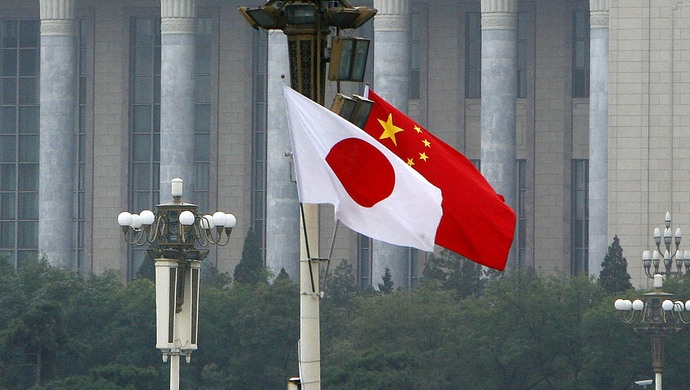
Japanese economists and business owners have urged their government to use diplomatic channels to ease tensions with China and take steps conducive to restoring mutual trust, as China's latest export ban on dual-use items and possible expansion of restrictions to cover rare earths could seriously affect Japan's supply chains and deal a heavy blow to its economy.
China announced on Tuesday an immediate ban on exports of dual-use items to Japan, in response to Japanese Prime Minister Sanae Takaichi's erroneous remarks about China's Taiwan region, in which she suggested possible military intervention in the Taiwan Strait.
Dual-use items are goods, software and technology that have both civilian and military applications. The ban applies to items exported to Japanese military users, for Japan's military use, and for any other end-users and end-use purposes that help enhance Japan's military capabilities.
A source familiar with the matter told China Daily that China is also considering stricter review of export permits for certain rare earth-related items bound for Japan.
The Ministry of Commerce said on Thursday that China's decision is aimed at curbing Tokyo's attempts to remilitarize and pursue nuclear armaments, and the decision is entirely "legitimate, reasonable and lawful".
Hiroshi Shiratori, a professor of political science at Hosei University, said that security and economic issues are inherently intertwined and difficult to separate.
He said the situation should not be viewed merely in terms of the short-term economic impact caused by possible disruption in supply of rare earths, but should instead serve as an opportunity for Japan to reflect on and reassess its past policies.
Shiratori said the Japanese government is likely to try to resolve the difference through diplomatic channels. But without a retraction of Takaichi's remarks on Taiwan, the deadlock would be difficult to break.
"The Japanese side may attempt to address the issue via diplomacy, but unless Takaichi's comments are withdrawn, it will be hard to achieve a breakthrough," he said.
From a medium- to long-term perspective, the situation could slow Japan's economic growth, Shiratori said, adding that how Japan responds going forward will be crucial if it hopes to regain China's trust.
Yangchoon Kwak, a senior professor at Rikkyo University's College of Economics, said that if China's export controls on dual-use items continue beyond 2026 or are further expanded, the risk of a downward revision of Japan's economic growth outlook would rise significantly.
He noted that Japan's key growth industries — including semiconductors, electronic components and electric vehicles — could become more wary of making investment decisions as uncertainty over the supply of raw materials and critical components increases, while risk awareness among both domestic and international investors would also intensify.
Addressing the potential impact of rare earths and related products being brought under substantive control measures, Kwak said Japan's automobile, electronics and renewable energy sectors would be the first to feel the impact.
Rare earths are irreplaceable for these industries, he said, adding that China holds a dominant position in global rare earth production and supply. If controls are tightened, Japanese companies would face mounting pressures, including higher raw material procurement costs, disruptions to production plans, and increased investment in the development of alternative technologies.
According to The Asahi Shimbun newspaper, Japan has promoted diversification of rare earth import sources for years, but as of 2024, Japan's dependence on China still stood at around 72 percent.
Anxiety over disruption in rare earth supplies is now palpable in the Japanese corporate sector.
Himeji Denshi, a Japanese magnet maker with a history of more than 60 years, produces about 70 percent of its products at factories in China. Its samarium and neodymium magnets are widely used in sensors, aerospace, nuclear-related equipment and electric vehicles, serving both civilian and military applications.
In an interview with TV Asahi, company President Shigeaki Amijima warned that if raw material supplies are disrupted, the company can survive for only about two months, adding that the outlook beyond that point is "completely impossible to predict".
The most serious risk, he said, is not rising costs but the prospect of being unable to operate at all without relevant materials.
Akio Nitori, chairman of furniture giant Nitori Holdings, said on Wednesday that rare earths are used in the company's products such as refrigerators, televisions and washing machines, and he voiced alarm over the possibility of supply disruptions.
According to Hidetoshi Tashiro, a Japanese economist and CEO of Terra Nexus Project Management Services, sourcing materials from other countries instead of China would lead to higher procurement costs and rising component prices, as no country has greater production capacity than China.
houjunjie@chinadaily.com.cn










