


The US in 2025: a year of deep divisions
Record-long shutdown, immigration breakdown and partisan paralysis leave country battered and exhausted










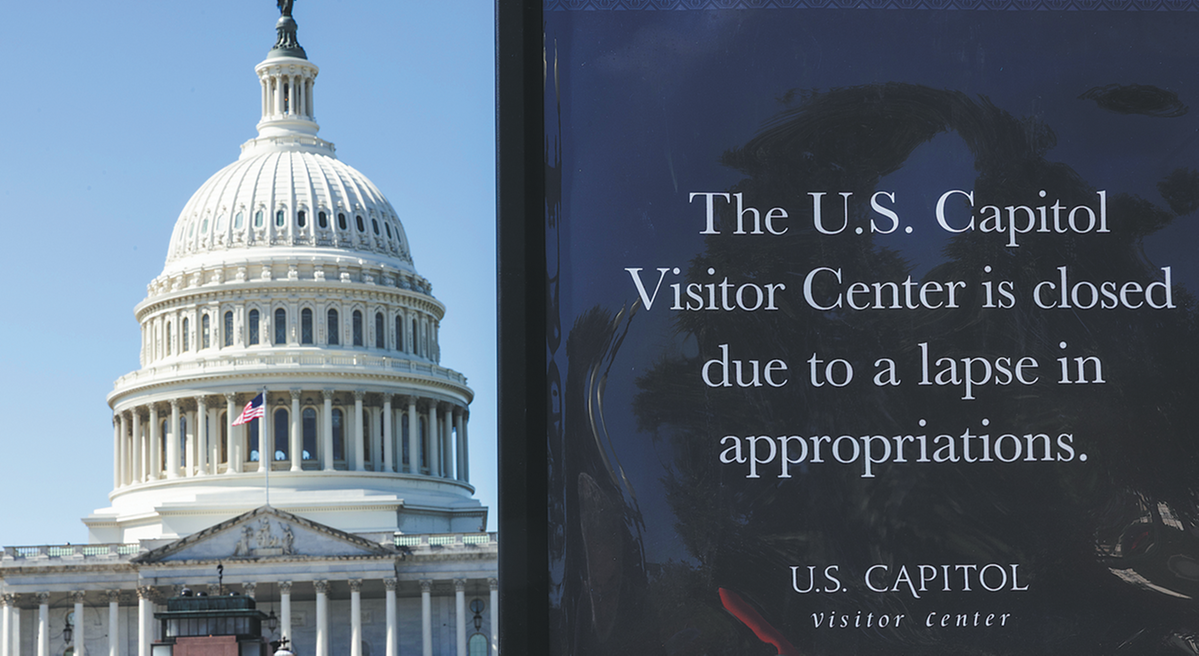
The year 2025 has only a few days left, yet the United States has already begun to tally the costs of one of the most difficult and divided years in recent history.
The federal government experienced a record 43-day shutdown from Oct 1 to Nov 12.
The high-profile Department of Government Efficiency, or DOGE, launched on US President Donald Trump's inauguration day amid promises of trillions in savings, was quietly dissolved in November. Most of the office's functions, according to reports, have been absorbed by the Office of Personnel Management, the federal government's human resources agency.
The lingering effects of DOGE's cuts continue to surface: At the end of November, agencies report an additional nearly $300 million in terminated contracts, while critics highlight opaque accounting and a large number of deaths from slashed foreign aid programs.
Protests that began in Los Angeles in June contributed to a broader wave that, by mid-2025, had pushed the cumulative share of protest-hosting counties above 60 percent, according to Harvard researchers.
A Pew Research Center survey in July found that 80 percent of US adults say Republican and Democratic voters not only disagree on plans and policies, but also cannot agree on basic facts, a level comparable to the highest in recent tracking history.
Anthony Moretti, an associate professor in communications at Robert Morris University, described the overall state of US society and politics in 2025 as "unsettled".
Immigration enforcement this year, for example, is characterized by ambitious goals and an overwhelmed system.
The US administration moved with unusual speed on immigration. By the end of December, travel bans had been extended to citizens of 39 countries.
In September, the registration fee for H-1B skilled-worker visas surged to $100,000 per application, a massive jump from previous costs. The Congress approved a massive reconciliation bill providing approximately $170 billion over four years for border security, immigration enforcement, and deportation operations, the largest such funding infusion in US history.
The consequences quickly outpaced the system's ability to manage them. In early October, the quarterly report from the US Citizenship and Immigration Services data for FY2025 Q3 (April-June) showed the net backlog surging to about 5.4 million cases.
The Visa Bulletin for December 2025 advanced final action dates modestly for employment-based categories but warned of potential regression in early 2026 due to surging demand.
Moretti said the increased enforcement measures, such as raids and processing pauses, "defy common sense". He argued that the US has historically been built on a philosophy of open doors, welcoming people in need of humanitarian assistance.
"None of this seems to make sense if you look at past practice," he said, adding the policies appear to target specific countries or regions, creating "an unforced error".
On the backlog, Moretti said longer processing times raise questions of safety and feasibility for migrants. "The longer it takes, the more they face dangerous living conditions or the prospect of being returned," he said.
He described the situation as having "knock-on effects", where potential immigrants may decide not to take the risk, seeing little welcome or safety. "If that's the strategy the White House wants, that seems particularly cruel and particularly un-American," Moretti said.
The American Immigration Council, a nonpartisan advocacy organization, warned in a November 2025 blog post that the US administration's "new mass deportation playbook" is deploying federal agents to terrorize community members, creating widespread fear and humanitarian challenges not seen in recent years, while overwhelming administrative capacity through expanded enforcement.
The post emphasized that these policies are erecting new barriers to legal immigration and exacerbating distress for vulnerable populations.
In a September 2025 fact-check from The Connecticut Mirror, citing data from Syracuse University's Transactional Records Access Clearinghouse, the overall immigration court backlog had reached nearly 3.8 million active cases as of the third quarter of 2025, with a significant share involving asylum seekers waiting years for hearings, leading to prolonged uncertainty and increased strain on border and humanitarian resources.





