


How China's initiatives are paving a new path to a better world










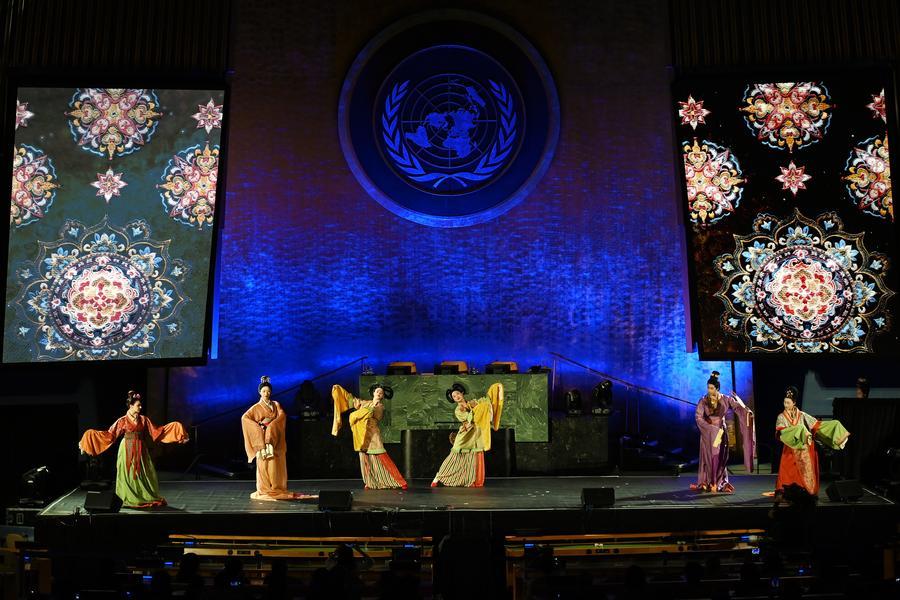
China has also expanded dialogue on governance and development through mechanisms such as the Communist Party of China in Dialogue with World Political Parties High-Level Meeting, the High-level Dialogue on Global Development, the China-EU Human Rights Dialogue, and the China-Latin America Human Rights Roundtable.
In addition, China has signed cooperation agreements with more than 100 countries in areas such as culture, cultural heritage and tourism, and has advanced cooperation in joint archaeology, world heritage protection and the mutual translation of classical works, safeguarding its own cultural roots while contributing to the preservation of humanity's shared heritage.
In an increasingly interconnected world, the coexistence, exchanges and mutual learning among civilizations are vital for advancing global modernization and enriching a diverse tapestry of world civilization. The GCI offers a framework for countries to pursue modernization paths that are grounded in their own traditions while being open to the shared wisdom of humanity.
A bold experiment for better global governance
Some countries remain entrenched in the outdated belief that "might makes right." Their hegemonic mindset and practices have stalled the reform of global rules, weakening the world's collective capacity to act in the face of an ineffective global governance system.
New challenges, such as the exploration of deep-sea resources, the commercial use of polar shipping routes, the definition of outer space resource rights, and cross-border data flows, are emerging rapidly, yet corresponding international rules remain largely absent or fragmented.
At the same time, some Western countries, leveraging long-established advantages, dominate major multilateral institutions in global economic and financial governance. By contrast, Global South countries, which account for more than 80 percent of the world's population and over 40 percent of global economic output, remain underrepresented in international organizations, with their legitimate concerns ineffectively addressed.
Moreover, some countries bypass or coerce multilateral mechanisms, resorting to withdrawals and sanctions, further fragmenting global governance.
This continuous weakening of governance effectiveness has caused insufficient provision of global public goods, leaving responses to many global challenges mired in prolonged deliberation without decision, and decisions without implementation.





