


Embroidery converses across centuries
Su stitching techniques give needlework remarkable dimensionality, creating dialogue with multiple generations, Wang Qian reports.










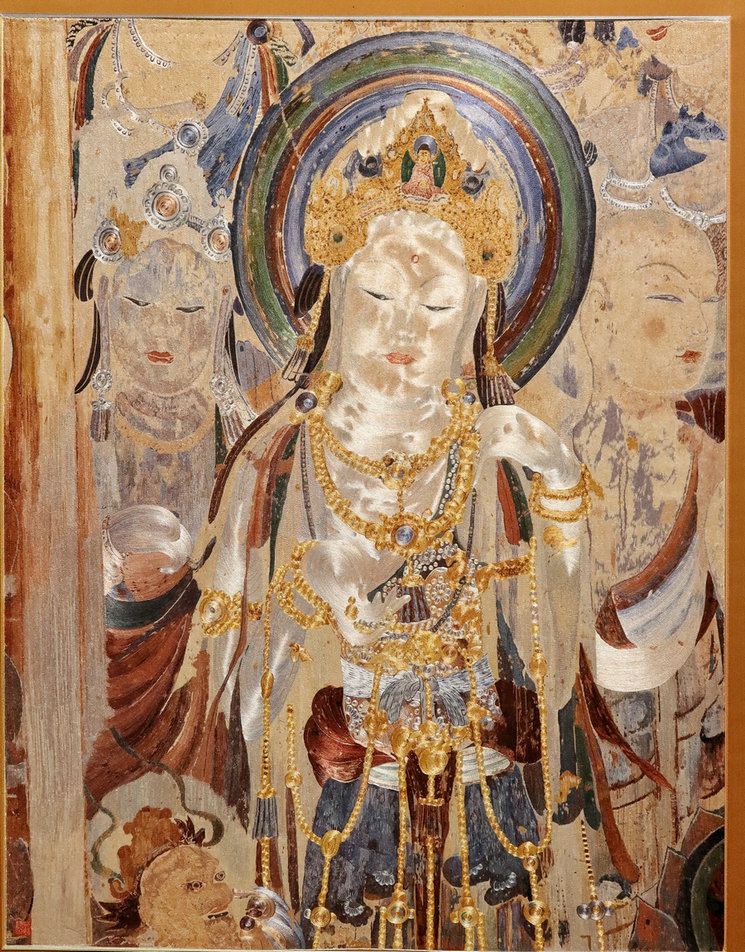
That story finds its most profound voice in Sekong Bu'er (emptiness is form), a rendering of Guanyin (the Bodhisattva of Mercy) mural at the Dunhuang Mogao Caves in Gansu province, known widely for its beautifulness and elegance.
Using the split needle stitch and the didi stitch, she spent three years in dialogue with long-ago embroiderers. She rotated individual silk filaments to catch the light, making the bodhisattva's serene expression and flowing robes shift with a viewer's movements.
If Zou's innovation is in depth and technique, the question of breadth — how this rarefied art connects with a new, broader public — finds its answer in the generation watching from beside her frame. Her son, Zou Yuanhan, grew up with the whisper of silk being drawn through linen.
"My grandmother embroidered kittens and goldfish. My mother began to develop her own expression," Zou Yuanhan, 28, says. "I watched her spend years re-creating a lost piece for Dunhuang. That left a deep mark. It wasn't just a craft; it was a cultural act."





