



Group of Friends tangible fruit of GGI: China Daily editorial









On Sept 1 this year, President Xi Jinping put forward the Global Governance Initiative at the Tianjin Summit of the Shanghai Cooperation Organization. It is a strategic proposal aimed at addressing the deficits in global governance capabilities and enhancing international cooperation.
With the aim of shaping a community with a shared future for humanity that embodies fairness, inclusivity, solidarity and shared responsibility, the GGI outlines five guiding principles — adhering to sovereign equality, abiding by international rule of law, practicing multilateralism, advocating the people-centered approach, and focusing on taking concrete actions — as the cornerstone of global governance.
The initiative underscores China's growing role on the world stage and its commitment to participating actively in resolving global challenges and reforming existing international frameworks to better reflect the realities of the world today, particularly by addressing the historical underrepresentation of emerging markets and developing nations in global governance.
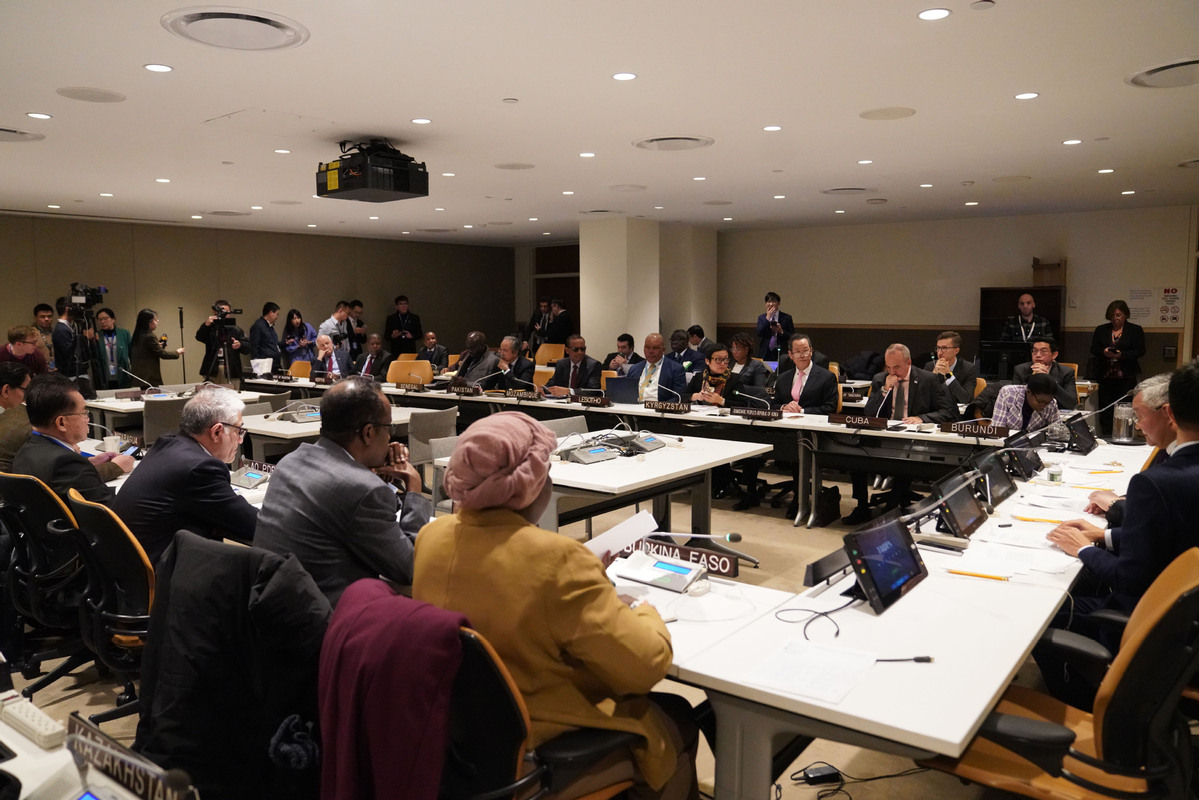
If putting forward the GGI was a demonstration of China's recognition that global governance needs to be reformed to better deal with the changing realities and grave challenges of the times, the Group of Friends of Global Governance that was officially established at the United Nations headquarters in New York on Tuesday is a manifestation of China's will to act in order to put the GGI into practice.
This new group promoted by China aims to bring countries together on an inclusive platform to draw on collective wisdom and mobilize joint efforts for reform and improvement of the global governance system.
As Fu Cong, China's permanent representative to the UN, said at the launch meeting, China hopes to join hands with like-minded countries to deepen exchanges and cooperation on major global governance issues.
By fostering dialogue and cooperation among a diverse array of nations, the Group of Friends of Global Governance seeks to build consensus on key issues and develop innovative solutions that are reflective of the interests and needs of the global community.
The meeting was attended by representatives of nearly 40 founding members of the group, who said in a joint statement issued after the meeting that the members "commit to deepening dialogue and coordination on global governance issues, engaging with relevant stakeholders, amplifying our collective voice, building and expanding consensus, and delivering concrete outcomes that respond to the yearnings of our peoples and the legitimate aspirations of our nations".
The establishment of the group highlights China's commitment to working within the UN framework to promote peace, stability and sustainable development. Moreover, it signals China's resolve to bring countries together to pool their strength, uphold the banner of multilateralism and work together for a future of inclusivity and fairness.
This approach contributes to building a more resilient and responsive international order capable of addressing the complex challenges of the 21st century.
As Fu rightly noted, the UN was created for the purpose of upholding a global order of fairness and justice. The two world wars taught the international community a lesson that effective global governance was needed to avoid another. And the UN has indeed played an important role in that respect.
Yet, the rise of unilateralism and trade protectionism, the military conflicts between some countries, especially that between Russia and Ukraine, the widening divide between the Global South and its developed Western counterpart, the bickering concerning the global endeavors to tackle climate change and ecological conservation all pose severe challenges to the UN system and establishment of a fair and just global order.
By establishing the Group of Friends of Global Governance, China is manifesting its belief that a more effective global governance system calls for the equal participation of as many countries as possible, to first build consensus and then take action.
That explains why the group extended an invitation to other like-minded UN member states to join the initiative.
China's establishment of the group and its putting forward of the GGI, along with the Global Development Initiative, Global Security Initiative and Global Civilization Initiative, show it is playing an increasingly constructive role in shaping the global landscape for the building of a community with a shared future for humanity.





