



Shanghai Esports Masters further establishes legitimacy of esports profession









His transition from grassroots gamer to pro was tough. Though he had a stable live-streaming income, Qu left comfort for esports, initially pursuing it without earning steady pay, until Valorant obtained its domestic license.
"Two moments stand out," Qu recalled. "One was when the domestic license came through — it gave us a long-awaited chance to prove esports' legitimacy. The other was during the early AIC period, when the league was still unregulated. My teammates and I worked together like a close-knit family to reach our goals, and that experience touched me deeply."
This resolve fueled his over 15 hours of daily training early on. While peers enjoyed campus life, his days were filled with practice, reviews, and tactical discussions. Now, Qu plans scientifically, cutting his training down to 12 to 14 hours a day in order to prioritize sleep, eye rest, and weekly workouts to avoid burnout.
Qu's growth is rooted in Shanghai's thriving esports ecosystem. Per the 2025 H1 Shanghai esports industry development report released at the Shanghai-hosted Global Esports Games in August, the city's revenue from esports competitions hit 508 million yuan in the first six months of the year, up 1.69 percent year-on-year — accounting for almost half of the nation's total.

"Esports has grown from a niche hobby to a 100-billion-yuan industry — a key part of the digital economy carrying youth's dreams," Zhu Qinqin, secretary-general of the Shanghai Esports Association, said.
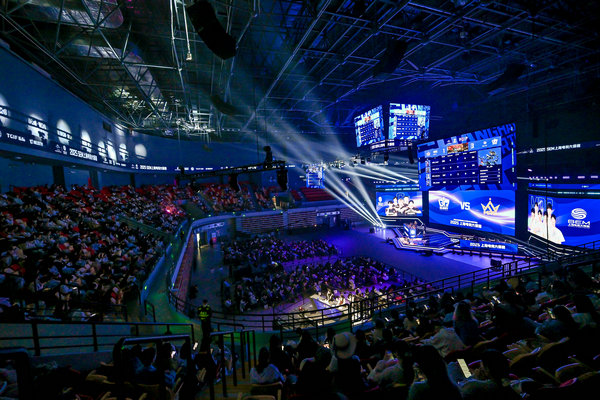
Such robust industry support was fully reflected in this year's Masters Tournament.
"Over 10 events applied, we selected only four to ensure quality," Zhu noted, highlighting Shanghai-based Moonton's MLBB. As a new 2026 Asian Games esports event, it gained strong attention in its Masters debut, underscoring the tournament's role in promoting emerging competitive titles.
On-field results, such as Guangzhou's GZG staged a thrilling 2-1 comeback against ASEAN champion YBG to claim its first MLBB title on Dec 3, has further validated the industry's progress.
"This Shanghai win gives us unshakable confidence for the World Championship," the team exclaimed post-match.
Beyond domestic triumphs, the tournament also earned international acclaim. Mongolia's The MongolZ player Shenlynn praised the Shanghai venue as "one of the best I've played at", and voiced his ambition to represent his country at the Asian Games.
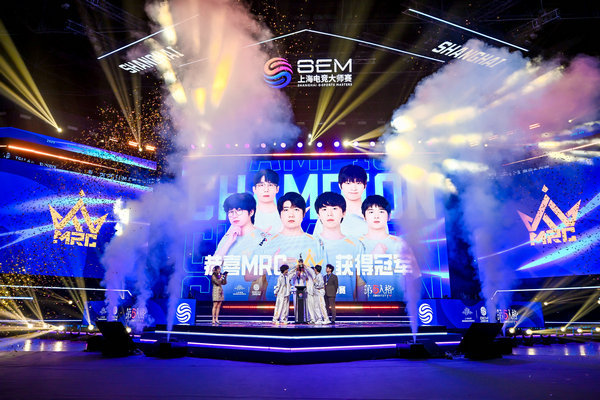
Against this backdrop of growing domestic and international recognition, Zhu announced plans to upgrade the 2026 tournament.
"We'll extend the schedule to cover prime time and invite top teams with their full rosters, aiming to make it a world-class esports showcase," Zhu said.
Amid these positive developments, Qu's reflections captured the spirit of the new generation. "I chase no regrets and value process over results," Qu said. "As long as I've tried my best, that's enough."
His words resonate with many young esports athletes, who — nurtured by supportive ecosystem — are redefining esports as a respected profession through perseverance and professionalism.















