



China-Germany partnership stressed









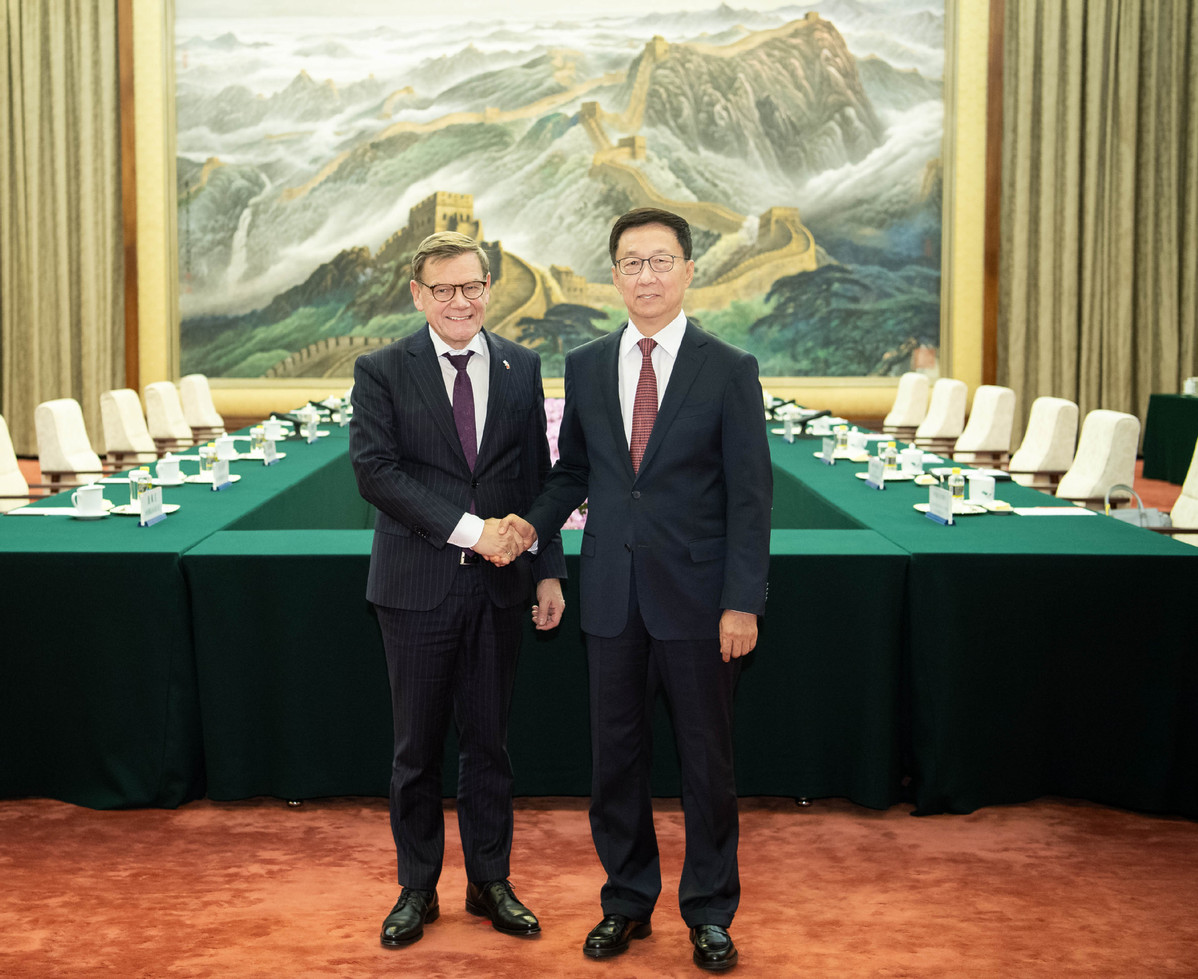
China and Germany are important economic and trading partners which can achieve win-win results through mutually beneficial cooperation, Vice-President Han Zheng said on Monday as he met in Beijing with visiting German Foreign Minister Johann Wadephul.
China is willing to work with Germany to deliver on the important common understandings between the leaders of the two countries, enhance communication and dialogue, and work to bring the China-Germany all-around strategic partnership to a new level, Han said.
He noted that the Taiwan question is at the center of China's core interests, and China hopes that the German side will abide by the one-China principle. China also expects Germany, as a core major country in the European Union, to play an active role in promoting the healthy development of China-EU relations, he added.
Wadephul said that the new German government, which was formed in May, attaches great importance to developing ties with China and firmly adheres to the one-China policy. Germany looks forward to closer high-level exchanges with China and deepened cooperation on all fronts, and is willing to be a reliable partner of cooperation with China, he said.
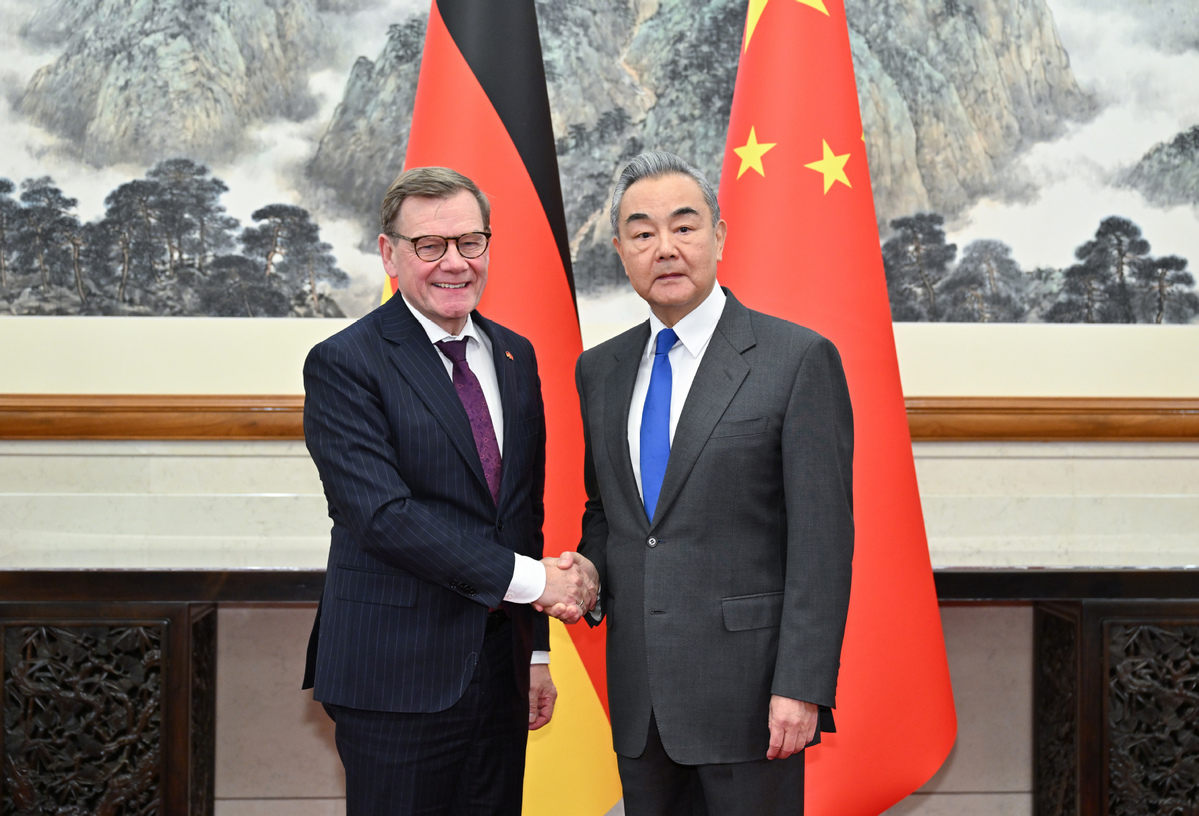
Also on Monday, the top German diplomat met separately with Foreign Minister Wang Yi and Minister of Commerce Wang Wentao.
Wang Yi told Wadephul that although the latter's visit, which was originally scheduled in October, had gone through several twists and turns, there is a Chinese saying: "Good things never come easy".
Whether one comes early or late is not the point, what matters is the purpose of the visit, the Chinese foreign minister said, noting that the purpose should be to seek cooperation and enhance understanding, not to amplify differences.
It is reported that Wadephul's trip is aimed at paving the way for a potential visit by German Chancellor Friedrich Merz early next year.
At a regular news briefing on Monday, Foreign Ministry spokesman Guo Jiakun said that over the past 53 years since the establishment of diplomatic relations, ties between China and Germany have maintained a sound momentum of development and delivered tangible results for both countries and their peoples.
Observers said that European countries have been more aware of the Chinese market's indispensable role, and of the need to gain a more accurate understanding of the world's second-largest economy.
Jin Ling, director of the China Institute of International Studies' Department for Global Governance and International Organizations, said that China and European countries have had close high-level exchanges this year, with leaders of the two sides reaching important common understandings on further growing the strategic partnership and deepening mutually beneficial cooperation.
Prior to Wadephul's visit, Beijing hosted French President Emmanuel Macron last week and Spain's King Felipe VI last month. German Vice-Chancellor and Federal Minister of Finance Lars Klingbeil also made a four-day visit to China last month.
Jin said that Germany and other European countries have realized that China represents a "tremendous opportunity" for them, whether in terms of their economic recovery or economic transformation.
According to Germany's Federal Statistical Office, China reclaimed its position as Germany's largest trading partner in the first nine months of 2025, with Germany's total trade with China during the same period reaching 185.9 billion euros ($217 billion), up 0.6 percent year-on-year.
"No matter how much political noise there is, it cannot override the business community's strong motivation to cooperate," Jin said, adding that Europe's long-standing anxieties and misconceptions about China have hindered the long-term development of China-EU ties.
Given the ongoing changes in the EU's relations with the United States, Europe has realized that it cannot safeguard its own interests or maintain influence amid global shifts without engaging with China and correctly understanding China, she said.
"Direct communication can help reduce misunderstandings and develop strategic consensus on major international issues, thereby helping strengthen mutual trust," Jin added.










