


The heroes of Tai Po










Hard calls
In the face of an ever-changing situation on the ground, with temperatures running as high as 700 Celsius and the possibility of flare-ups, working out how to get those trapped out alive was the most challenging part of the operation, according to Yeung.
Extra support was needed and firefighters, trucks and other resources were called in from surrounding areas.
Lee Kwok-chun, a senior station officer at Fanling Fire Staion, was one of many firefighters from neighboring regions to be called to assist at Tai Po when the fire escalated quickly. Arriving at the scene at 3:10 pm, Lee Kwok-chun was initially detailed to help with firefighting and rescues at Wang Cheong House.
As soon as he entered the building, his vision was severely limited, with raging thick smoke filling the lobby. Coming across a number of injured people lying on the ground, he and his comrades took them outside and handed them over to paramedics.
Before making a second attempt to barge into the inferno, Lee Kwok-chun was informed that his colleague Ho Wai-ho had suffered an injury while fighting the fire at Wang Tai House. Lee Kwok-chun and his colleagues rushed to the scene, but it was too late to prevent Ho from succumbing to his injuries.
The firefighters handed Ho over to other rescue workers and turned around and entered Wang Tai House.
Lee Kwok-chun had no time to mourn his colleague, or think too much about his feelings, as he described it.
"Many difficult decisions were made," Andy Yeung Yan-kin said.
One of these decisions involved a distress call from two survivors who were stranded on the rooftop of Wang Tai House.
When the call for help was received, Lee Kwok-chun had just learned of the death of Ho Wai-ho.
"As an onsite commander of the breathing apparatus team, I had to make many decisions. All tough ones," Lee Kwok-chun said.
On one hand, Lee Kwok-chun couldn't ensure the safety of the firefighting teams. On the other hand, rescue operations had to continue.
A follow-up call to the trapped residents made the decision easier, smoke was already climbing to the rooftop and the heat was encroaching.
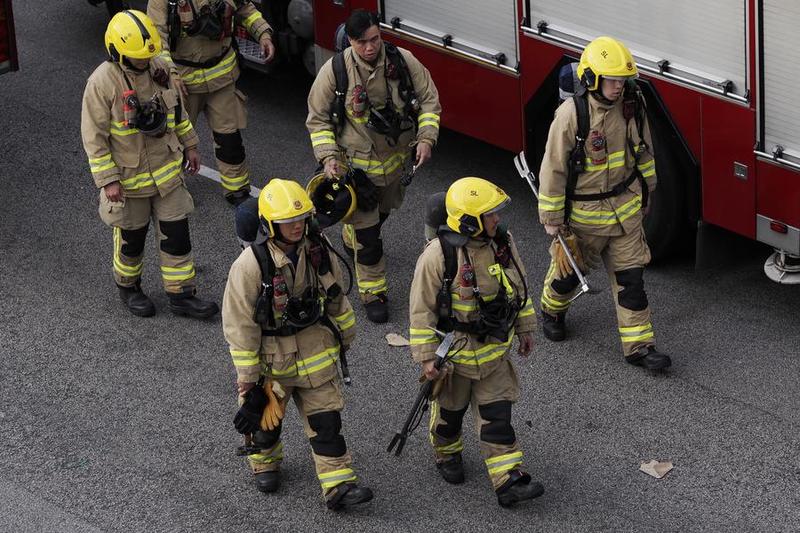
Breathing apparatus teams were sent up, while drones were flown close to check the conditions. The climb up for the rescue teams was relatively smooth, though they had to stop now and then to assess the fires ravaging different floors. With the clock ticking down for the stranded residents on the roof, the breathing apparatus teams, with no time to put out the fire floor by floor, decided to brave it and charged into the inferno to get to the rooftop as quickly as possible.
When they reached the trapped residents, the situation had worsened, with smoke already blocking vision and flare-ups happening all around them. Making their way back down would be fraught with danger. In the end, they used the front and back stairs alternately to give themselves the best possible chance of survival.
During the operation, Lee Kwok-chun used a walkie-talkie, phone calls and other means to stay in contact with the trapped residents and their rescuers. In total, it took four breathing apparatus teams to get the two residents safely from the rooftop to the ground.





