



Policy tools to smooth economic fluctuations









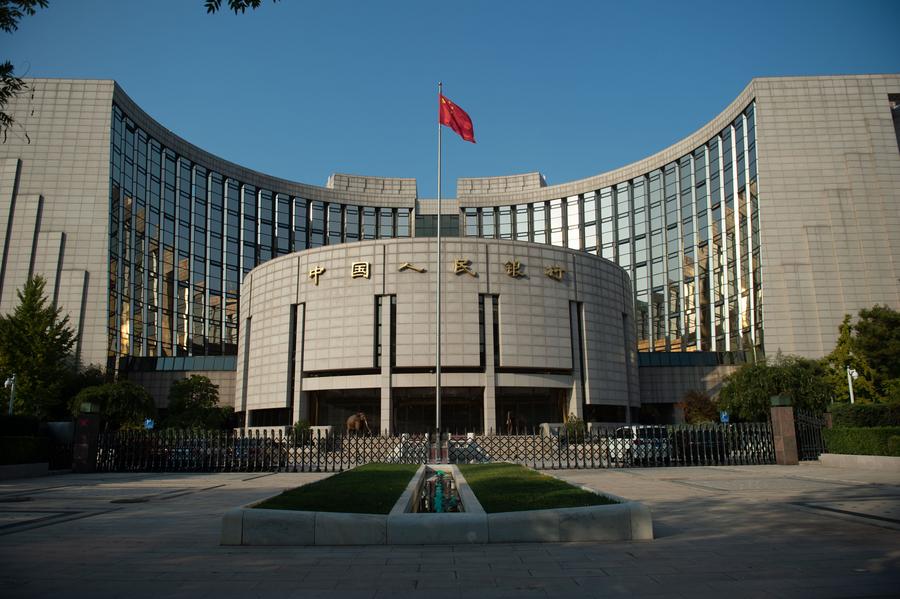
As the country approaches the 15th Five-Year Plan period (2026-30), top policymakers are sharpening their focus on steady and prudent macroeconomic management, with the central bank's latest messaging underscoring that China would avoid both aggressive easing and disruptive policy reversals as it pursues high-quality growth.
Pan Gongsheng, governor of the People's Bank of China, the country's central bank, said China will make full use of various monetary policy tools to strengthen countercyclical adjustments and to forcefully and effectively smooth economic fluctuations.
In a signed article in People's Daily on Thursday, Pan's remarks indicated a strong focus on cushioning cyclical downward pressures.
Pan vowed to maintain cross-cyclical balance, which means that policy plays a positive role across ups and downs in the economic cycle, and to prevent excessive, and aggressive easing or tightening that could dilute policy effectiveness or create long-term side effects.
In the article, Pan reiterated that President Xi Jinping had stressed the need to maintain a prudent monetary policy.
Lou Feipeng, a researcher at the Postal Savings Bank of China, said the article reinforced assurances that macroeconomic policies would remain consistent and steady throughout the upcoming 15th Five-Year Plan period.
"It signals that China will pursue more targeted, effective and sustainable macroeconomic policy measures, giving equal importance to growth and risks," Lou said, adding that interest rate adjustments are likely to be more utilized to ease credit costs and promote reflation, yet drastic, abrupt rate cuts would be unlikely.
Liu Xiaoguang, deputy dean of the National Academy of Development and Strategy at Renmin University of China, said monetary conditions are likely to stay supportive in 2026, as the market expects the Central Economic Work Conference — usually held in December — to set the tone for next year's economic policies.
"Further actions should be taken to deliver on the commitment to a moderately accommodative monetary policy, including reducing banks' required reserves to pave the way for interest rate cuts," Liu said, adding that such measures would help stabilize expectations amid weak consumption, property market adjustment, and subdued inflation.
Beyond monetary policy, the central bank governor emphasized strengthening the monitoring and assessment of systemic financial risks to build a comprehensive macroprudential regulatory system, which experts said refers to a framework focused on the stability of the entire financial system, not just individual institutions.
Pan pledged efforts to enrich the macroprudential policy toolkit in areas such as systemically important financial institutions, broad credit, real estate finance and cross-border capital flows, adding that strengthening macroprudential management of real estate finance is essential to promote the stable, healthy development of the property market.
Ming Ming, chief economist at CITIC Securities, said policy tools — such as a property stabilization fund and expanded government-backed purchases of existing homes for affordable housing — could help reduce property inventories and ease developers' liquidity pressure.
Ming said the Central Economic Work Conference may further stress stabilizing expectations, forestalling risks and bolstering demand in the property market, with first-tier cities likely to ease purchase restrictions and lower homebuying costs.
Lou, from the Postal Savings Bank of China, added that a prudent monetary policy system, together with a wide-ranging macroprudential regulatory system, will provide the "institutional cornerstone" for safeguarding financial stability while providing sustained support for high-quality development in the coming years.
Zhang Chenxu contributed to this story.











