



Envoy praises ROK-China bilateral ties
Nations urged to explore cooperation in fields like AI, biomedicine, new energy









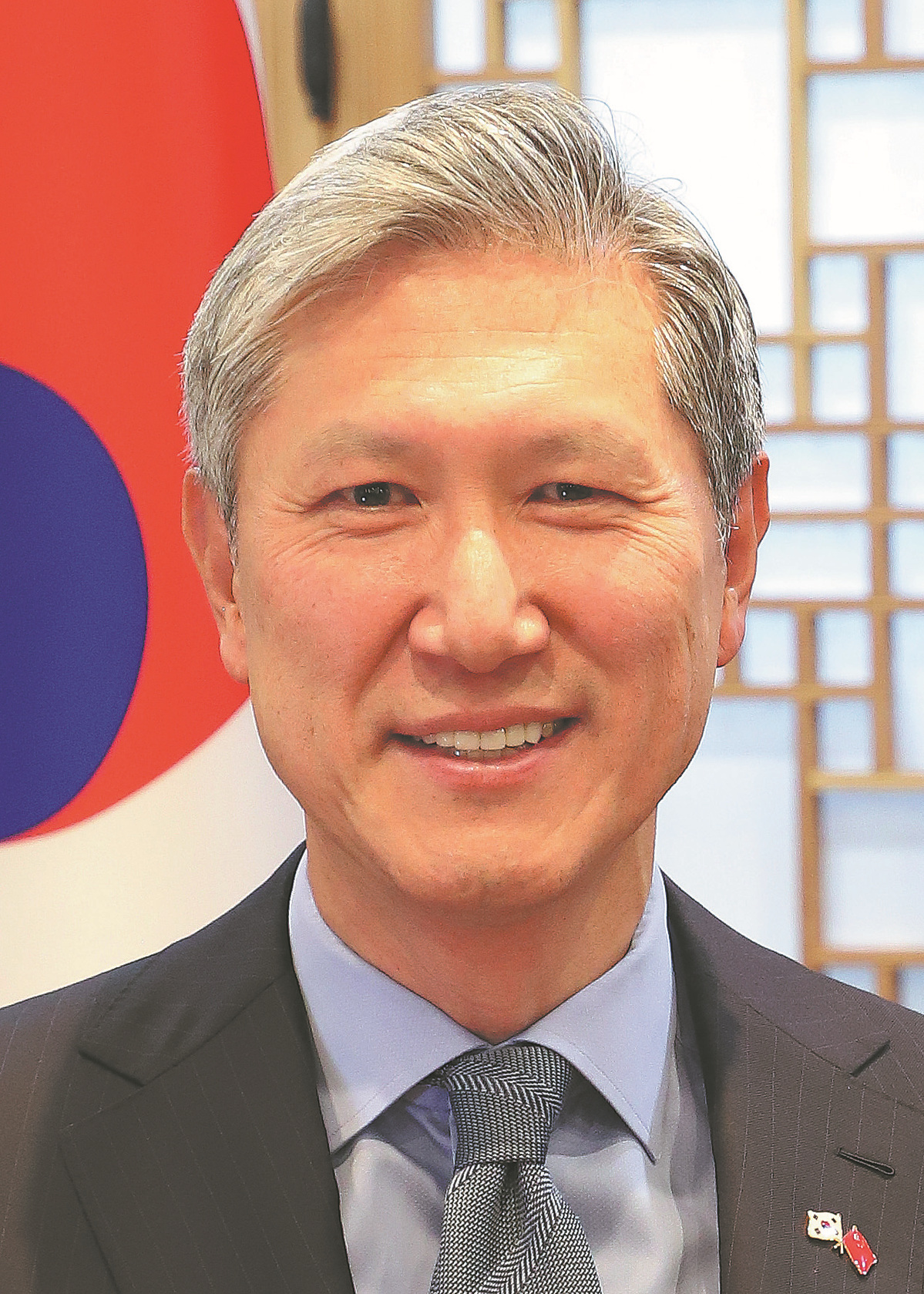
President Xi Jinping's visit to the Republic of Korea last month, his first in 11 years, has ushered bilateral relations into a new period of development, said ROK Ambassador to China Ro Jae-hun, adding that both sides are in communication regarding a potential China visit by ROK President Lee Jae-myung.
The meeting between the two heads of state in Gyeongju provided an important opportunity not only for driving the two countries' common development, but also for contributing to regional and global peace, development and prosperity, Ro told China Daily in an exclusive interview.
He noted that Xi has extended an invitation to Lee to visit China and the two sides have begun discussions through diplomatic channels on the timing, arrangements and potential outcomes of the visit.
Despite the changes in domestic and international environments, the fact that mutually beneficial cooperation has driven economic growth in both countries remains unchanged, Ro said, emphasizing that in the process, the two nations have gained experience in overcoming challenges.
In 2024, trade between the two countries reached $328.08 billion, a year-on-year increase of 5.6 percent. China has remained the ROK's largest trading partner for 21 consecutive years, while the ROK continues to be China's second-largest trading partner.
This year marks the 10th anniversary of the bilateral free trade agreement, and the two sides have agreed to accelerate the second-phase negotiations for the FTA, which will cover service industries such as culture and tourism.
Ro said that economic cooperation between the ROK and China has built a solid foundation in terms of both scale and quality.
Affected by trade protectionism and the restructuring of global supply chains, some ROK companies are facing difficulties, such as a decline in exports to China, he noted.
However, these challenges also underscore the need for deeper cooperation between the two countries, he said, adding that if the two sides work together to explore new models of collaboration, they could not only overcome the difficulties, but also continue to advance complementary development.
As the structure of bilateral economic cooperation shifts from a vertical division of labor to a more horizontal partnership, Ro said it is important to explore cooperation in new areas such as artificial intelligence, robotics, biomedicine and new energy.
The new ROK ambassador, who assumed office in October, shares a special bond with China. His father, Ro Tae-woo, laid the foundation for the establishment of bilateral diplomatic ties in 1992 as then president of the ROK. Ro Tae-woo visited China later the same year, becoming the first ROK president to make an official trip to the country.
Influenced by his father, Ro Jaehun developed a deep interest in China, and he has been actively involved in bilateral exchanges. Ro said he feels that it is his mission and responsibility to carry forward the wisdom and courage of the older generations and contribute to new progress in bilateral relations.
ROK-China relations are rooted in the will of the two peoples, and in this regard, the friendly sentiments between the two peoples are of incomparable importance, Ro said.
Speaking of what impressed him deeply in bilateral friendly exchanges, the ambassador mentioned the story of giant panda Fu Bao, who was born in the ROK under a conservation program and was sent to China last year.
"Both Korean and Chinese people adore her, and this attention and affection truly transcend nationalities," Ro said, mentioning that he even visited the panda base in Sichuan province to see Fu Bao in person.
"What we commonly cherish brings our two peoples closer to one another, to share love, attention and care," he said, adding that he hopes this feeling of goodwill will further strengthen the bonds between the two peoples.
In November 2024, China implemented a visa-free policy for ROK citizens entering the country for tourism or business purposes, and the ROK reciprocated with a similar policy for Chinese group tourists in September this year, triggering an increase in cross-border travel.
Ro called for intensifying interactions among local governments, media organizations, think tanks, academic institutions and, especially, young people to help deepen mutual understanding and foster friendship between the two peoples.










