



An enduring enchantment with Peking Opera









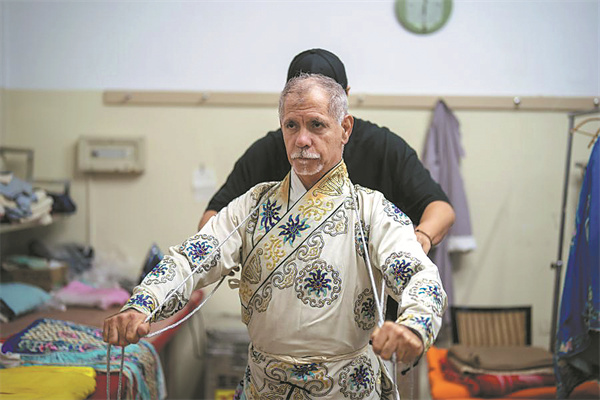
Love at first sight
Pourazar's lifelong passion for Peking Opera began by chance. In 1993, the then 32-year-old computer animator attended a performance at London's Queen Elizabeth Hall and was instantly captivated.
"I was crying," he says. "I previously had a passion for a number of art forms, including acting, dancing and mime but at that moment, everything else faded away. I saw the convergence of all these arts in Peking Opera."
He went backstage after the show and made friends with the performers. "We didn't speak each other's language, but they could see my passion," he says.
With the help of the head of the troupe, Pourazar enrolled at an opera school in Beijing. Just three months after his first exposure to Peking Opera, he left his life in Britain behind and moved to Beijing to train in martial art roles.
Starting as an adult was not easy, as Peking Opera is a complex blend of vocal performance, mime, martial arts, dance, and acrobatics. "My classmates were all children," he says. "As an adult without any basic skills, it was very hard to practice the movements."
In addition to the physical demands, mastering Chinese was another hurdle. "I was constantly reciting the subtitles and songs, whether I was eating, bathing, walking, or even dreaming," Pourazar adds.
"Though there were some extremely painful days, I enjoyed every moment," he says.
Initially, he focused on portraying soldiers and generals like Wu Song and Lin Chong, before eventually transitioning to the iconic role of the Monkey King.


Today's Top News
- Typhoon Dolphin threatens eastern China amid active cyclone season
- Narrative a comforting illusion for bruised egos
- How to make citizens permanent residents in name and nature
- NDB building bridges, not barriers in global finance
- From Bosporus to Yangtze: Turkiye-China ties at 55
- Xi's thought resonates with Latin America





