



Guizhou flavor spreads across US
In New York, Chinese entrepreneur finds his calling: beef rice noodles from home









In the Flushing neighborhood of New York City's Queens borough, Chen Yuzhu opened his first Chinese beef rice noodles restaurant in 2014. He then took the authentic flavor of his childhood memory to three other states in the US, building a recognized brand.
The rice noodles are mixed with stewed beef, beef broth, vegetables and a soup base made with more than 40 kinds of Chinese herbs. It originated in the Huaxi district of Guiyang, Guizhou province.
Chen's 13 restaurants in New York, Texas, North Carolina and California operate 12 hours a day, serving mainly neighboring residents and office workers.
The selection of flavors-from plain, sour and spicy to tomato, soybean milk and matcha-as well as the unique snacks, videos and styles of decoration from ethnic groups, show the culture of Guizhou.
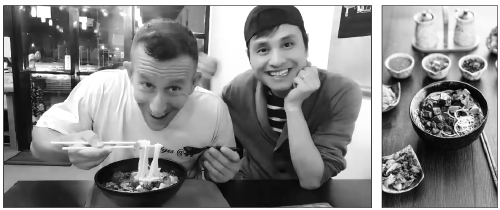
The restaurants have attracted a lot of customers, about 30 percent of whom are not Chinese. Monthly revenue runs between $80,000 and $160,000. Now his stores have become hot spots for vloggers, and he has made himself famous among locals as the "Rice Noodle Prince".
The early days of entrepreneurship were not easy. After graduating from Guizhou Normal University in 2008, Chen joined a Chinese wood export company. He was sent in 2009 to do business in the US. Disappointed with the sluggish market, he quit the job in 2014 and decided to start his own catering business, which he thought had great potential.
Chen, who was 29 at the time, learned from his uncle who runs a rice noodle restaurant in Bijie in Guizhou, their hometown. Then, he went to the US and worked for a restaurant for several months. Finally, he invested in the first establishment, together with two Chinese partners.
As the smallest investor, Chen thought he should do more. He frequently worked 18 hours a day, transported food at 2 am and promoted the restaurant near the New York City subway entrance by yelling, "Special noodles from my hometown Guizhou!"
It didn't work well. During the first two weeks, daily sales were only $200 at most, which wasn't enough to pay the rent.
"At first we strictly obeyed the cooking methods of Guizhou, but customers thought the flavor was too plain. Few people wanted to try. I felt anxious and afraid of failure," he said.
To turn things around, Chen conducted flavor surveys to optimize the taste for the market. After a month, daily revenue surpassed $1,000. But Chen was exhausted from sending out advertising leaflets, cooking and guiding workers. He was hospitalized a week.
However, he said "the process to learn, strive and get inspired was cool".
The business expanded as its reputation spread. Chen opened more restaurants. Some of the investors were his customers. He gave a thumbs-up to the business environment in the US, because he "was lucky to get subsidies and low-interest loans".
When the COVID-19 pandemic forced many offline stores to close, Chen's restaurants were among them. Yet the business saw unusual growth online.
"Our sales surged from six to seven times before the pandemic. Some stores sold more than 1,000 bowls a day," he said. "When offline business was struck hard, we turned to online, selling semi-finished rice noodles that take only 2 minutes to heat and eat. This proved popular."
While the Omicron variant is wreaking havoc globally, it has had little impact on his business, he said, as "everybody seems to get used to it, and there is no panic".
Chen said he plans to open 1,000 to 2,000 stores in Canada, Europe, Southeast Asia and first-tier cities in China over the next three to five years to help more people understand Guizhou culture.
"At first, running restaurants was for survival, but then I felt a sense of achievements in entrepreneurship. I became more open, inclusive and made a lot of friends."
Dwight Howard Trudy, a customer from Africa, learned about the restaurant on Facebook. He visited it every week, saying he was interested in the "flavor of Guizhou" and wanted to learn more about the "mysterious place".
Aamir Khan-Kimi, an Indian engineer in San Francisco, said he favors the strong-flavored soup. "The boss is very cute and talkative. We are friends," Khan-Kimi said.
Li Dandan, a visitor from Guizhou, said she was excited to taste the flavor of her hometown during her first time in the US. She drove about 1 hour to get there, bringing her husband and friends.
"The boss often gives us a discount," she said.
Wang Jin in Guiyang contributed to this story.


Today's Top News
- Yulin's blueprint for greening the desert
- Lai's agenda digresses from path to peace
- Breathing new life into villages amid urbanization
- Foreign trade posts faster, more balanced growth
- Xi: Ensure stable supply chains
- Flame arrives in Changchun for 2027 Winter Universiade





